
Headlines
Estonia in New Push to Get EU to Seize Russian Assets for Ukraine
Published by Global Banking & Finance Review®
Posted on February 23, 2025
3 min readLast updated: February 27, 2026
Add as preferred source on Google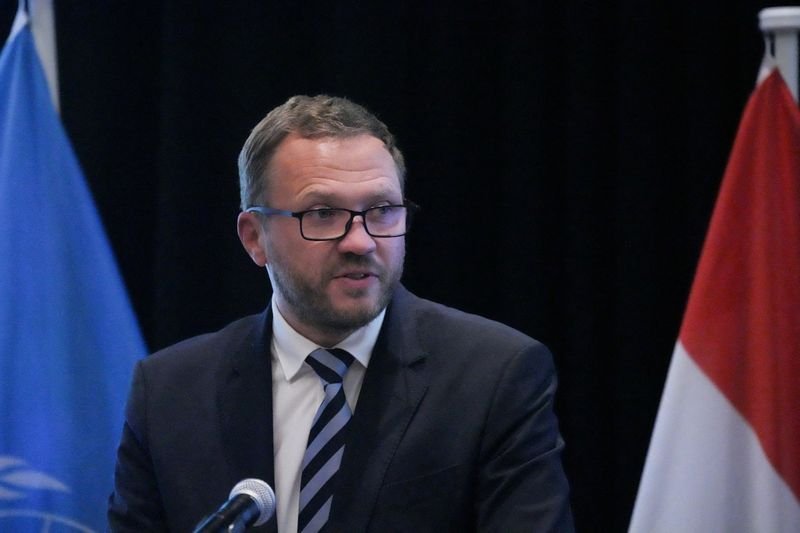
Published by Global Banking & Finance Review®
Posted on February 23, 2025
3 min readLast updated: February 27, 2026
Add as preferred source on GoogleEstonia urges the EU to seize frozen Russian assets to aid Ukraine, dismissing Russia's proposal. EU foreign ministers will discuss the issue.
By Andrew Gray
BRUSSELS (Reuters) - Estonia has launched a new push to get fellow EU members to agree to seize frozen Russian assets and use them to help Ukraine, dismissing a Russian idea on how the money could be used as part of a peace deal.
The Baltic country has sent a discussion paper on the issue to European Union partners and will raise it at a meeting of EU foreign ministers in Brussels on Monday, officials said.
Some 210 billion euros ($219.62 billion) in Russian assets are immobilised in the EU by sanctions as part of an international crackdown on Moscow for its 2022 invasion of Ukraine.
Last year, the G7 group of nations – including the EU – agreed to use profits from frozen Russian assets to fund a $50 billion loan for Ukraine. But the assets themselves remain untouched.
"The decision to use the windfall profits was a step in the right direction. I see that the time is ripe now to take the next step," Estonian Foreign Minister Margus Tsahkna told Reuters.
On Friday, Reuters reported that Moscow could agree to allow Russian assets frozen in Europe to be used for reconstruction in Ukraine but would insist part of the money is spent on the part of the country controlled by its forces.
Tsahkna dismissed that idea.
"Giving Russia some of the assets to use in the occupied areas means accepting Russia’s occupation of some parts of Ukraine," he said.
The EU has insisted Ukraine’s territorial integrity must be respected in any peace deal.
Several EU countries, including Baltic states and Poland, have said they are ready to consider seizing the assets. But Germany, France, Belgium and the European Central Bank have been wary, warning of legal challenges and undermining the euro as a reserve currency.
Belgium-based clearing house Euroclear holds most of the Russian assets frozen in Europe.
But the issue has resurfaced on the political agenda, particularly as the Trump administration has said it expects Europe to take on a larger share of support for Ukraine.
The Estonian paper, seen by Reuters, tries to address its partners' concerns. It says asset seizure can be justified under international law, as a countermeasure to Moscow's war and because "Russia refuses to engage in reparations".
It also says joint action by the EU and international partners could mitigate any risk to the euro as a reserve currency.
($1 = 0.9562 euros)
(Reporting by Andrew Gray; Editing by Andrew Cawthorne)
Estonia has proposed that EU members agree to seize frozen Russian assets to help Ukraine, dismissing alternative suggestions from Russia.
Approximately 210 billion euros ($219.62 billion) in Russian assets are immobilized in the EU due to sanctions related to Russia's invasion of Ukraine.
The G7 agreed to use profits from frozen Russian assets to fund a $50 billion loan for Ukraine, although the assets themselves remain untouched.
Countries like Germany, France, and Belgium have expressed caution, warning of potential risks associated with seizing the assets.
Estonia's discussion paper argues that asset seizure can be justified under international law as a countermeasure to Russia's actions in Ukraine.
Explore more articles in the Headlines category