Headlines
Lvmh Eyes US Workshop Expansion, but Any Shift Will Likely Be Limited
Published by Global Banking & Finance Review®
Posted on January 29, 2025
3 min readLast updated: January 27, 2026
Add as preferred source on Google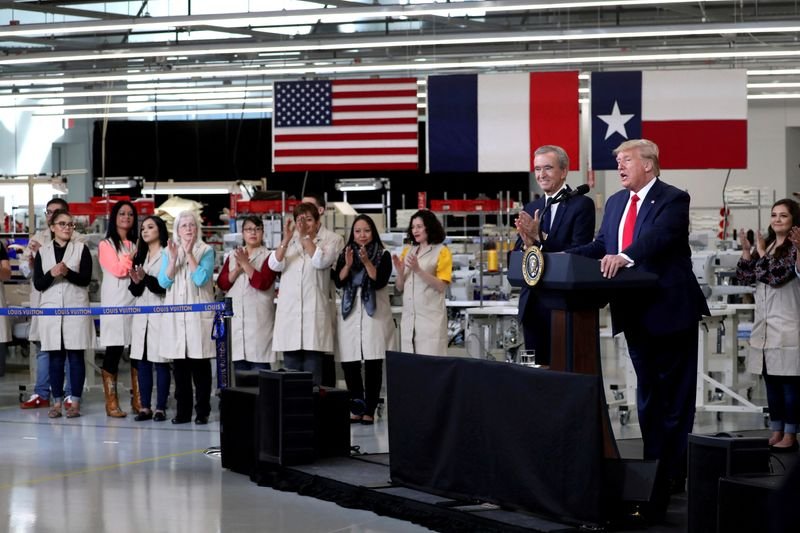
Published by Global Banking & Finance Review®
Posted on January 29, 2025
3 min readLast updated: January 27, 2026
Add as preferred source on GoogleLVMH is considering expanding its US production due to potential French tax hikes. The move is expected to be limited, with existing US sites already in place.
By Mimosa Spencer and Tassilo Hummel
PARIS (Reuters) - LVMH chief executive Bernard Arnault has sparked a debate over France's attractivity for business.
In post-earnings remarks late on Tuesday, the billionaire said his company - known for its high-end products made in France and Italy - has been "seriously considering" bulking up its production capacities in the United States.
Arnault cited a "wind of optimism" in the U.S. that contrasted with a "cold shower" of potentially higher corporate taxes in France.
But any move to production on the other side of the Atlantic would likely be limited in scope, said investors.
European luxury companies are looking to tap into American wealth, boosted by stock-market highs and a strong dollar at a time when Chinese appetite for designer fashion remains weakened amid a property crisis.
Louis Vuitton, LVMH's biggest label, reaps high profit margins for its mostly European-made fashion and leather goods. It makes the vast majority of its handbags - famous for the 'LV' monogram - in France, but already has several sites in the United States.
Arnault, who attended U.S. President Donald Trump's inauguration for a second term earlier this month with his family, opened a factory in Texas in 2019 under the president's previous tenure.
His luxury conglomerate also has two sites in California, opened in 1990 and 2011, and acquired jewellery workshops with LVMH's $16 billion purchase of American label Tiffany & Co. in 2021.
"American clients accept 'made in the U.S.'... so we can consider the United States," LVMH CFO Jean-Jacques Guiony told reporters on Tuesday.
"It's clear that we are being strongly pushed by the American authorities to continue to build out our presence," Arnault said. "In the current context, this is something that we're looking at seriously."
The comments from Arnault, France's richest businessman, drew a swift reaction from the French government. The government, under pressure to plug budget gaps, has said it may levy corporate tax hikes on the country's largest companies. Spokeswoman Sophie Primas said on Wednesday that the tax hikes would be temporary and the administration remained pro-business.
"I know Bernard Arnault is attached to his country," she said, describing LVMH as "the pride of France."
TAKING TIME
The group is already focused on adding European workshops at Dior, its second-largest label after Vuitton.
Dior's plans to significantly increase in-house production of its luxury clothing and accessories are "taking time," Guiony said. The group pledged to bring in-house Dior manufacturing to levels closer to that of its Louis Vuitton brand, around 60%, after an investigation by Italian prosecutors turned up alleged sweatshop-like conditions at subcontractors for the label.
For now, the priority of high-end fashion manufacturers will likely remain France and Italy.
Rising sales in the United States may spur companies to consider producing there, but wages are high and quality will need to be top-notch, said Stefan Bauknecht, portfolio manager at DWS.
"I can't imagine a Birkin or Kelly bag being produced in the United States," said Bauknecht, referring to Hermes' most iconic handbags.
The Hermes-made handbags, which can carry prices upwards of $10,000, are made in workshops in France by leather workers with years of training.
"I think ultimately if someone's paying more than a thousand (dollars), you want that to be made in France," said Markus Hansen, portfolio manager at Vontobel.
(Reporting by Mimosa Spencer, Tassilo Hummel and Sudip Kar-Gupta, Editing by Rosalba O'Brien)
Bernard Arnault mentioned that LVMH is 'seriously considering' expanding production in the U.S. due to a more optimistic business environment compared to France.
The French government responded swiftly, indicating potential corporate tax hikes to address budget gaps, emphasizing that LVMH is a source of national pride.
Challenges include high wages and the need for top-notch quality, as highlighted by industry experts who doubt the feasibility of producing iconic luxury items like the Birkin bag in the U.S.
LVMH is currently focused on increasing in-house production at its second-largest label, Dior, while maintaining a strong emphasis on its traditional manufacturing bases in France and Italy.
The U.S. market is seen as a significant opportunity for luxury brands, especially with rising sales and a strong dollar, prompting companies to consider production there despite potential challenges.
Explore more articles in the Headlines category