Banking
Czech Central Bank Will Interrupt Rate Cut Path, Analysts Say: Reuters Poll
Published by Uma Rajagopal
Posted on December 16, 2024
2 min readLast updated: January 28, 2026
Add as preferred source on Google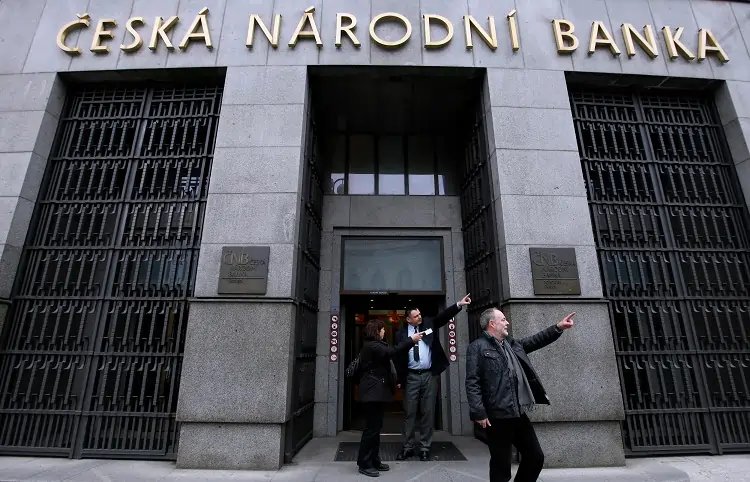
Published by Uma Rajagopal
Posted on December 16, 2024
2 min readLast updated: January 28, 2026
Add as preferred source on Google(This Dec. 13 story has been corrected to remove two erroneous bullet points)
(This Dec. 13 story has been corrected to remove two erroneous bullet points)
By Jan Lopatka
PRAGUE (Reuters) – The Czech National Bank (CNB) will interrupt its policy-easing cycle next week after a year of consecutive rate cuts, but will return to easing in the first quarter next year, a Reuters poll suggested on Friday.
The central bank has cut rates by 300 basis points to 4.0% since last December, but persistent growth in the prices of services and a recovery in food prices that had previously weighed on inflation have added to reasons for a pause.
All 14 analysts in the poll said there would be no change in interest rates on Dec. 19.
A pause has been well flagged by central bankers, including Governor Ales Michl.
Vice-Governor Eva Zamrazilova told Reuters this week that a pause was warranted, but rate cuts may again come into consideration if inflation starts falling in January from an uptick to the 3% area expected in December, and if annual repricing by traders in January points to disinflation next year.
In central Europe, Hungary’s central bank – which like its Czech peer had been cutting rates since last year – paused in October and November as falls in the forint raised price pressure concerns.
Manufacturing sluggishness caused by weak demand from trade partners including Germany has slowed the Czech recovery, otherwise driven by a consumer rebound.
Inflation has edged up from early-2024 lows to 2.8% year-on-year in November, staying within but close to the boundary of the 1-percentage-point tolerance band around the 2% target.
In the poll, 9 out of 12 analysts predicted the central bank would return to cuts in the first quarter, when the board holds two policy meetings, in February and March. Five saw the first move in February.
Seven saw one 25-basis-point easing in the first quarter while two predicted the repo rate would be 50 basis points lower by March at 3.50%.
(Reporting by Jan Lopatka, additional reporting by Alan Charlish, editing by Andrew Heavens)
Monetary policy refers to the actions taken by a country's central bank to control the money supply and interest rates to achieve macroeconomic objectives such as controlling inflation, consumption, growth, and liquidity.
Interest rates are the cost of borrowing money or the return on savings, expressed as a percentage of the amount borrowed or saved. They are influenced by central bank policies and economic conditions.
Inflation is the rate at which the general level of prices for goods and services rises, eroding purchasing power. It is typically measured by the Consumer Price Index (CPI) or Producer Price Index (PPI).
A central bank manages a country's currency, money supply, and interest rates. It oversees the banking system and aims to maintain financial stability and economic growth.
Economic growth is the increase in the production of goods and services in an economy over time, typically measured by the rise in Gross Domestic Product (GDP).
Explore more articles in the Banking category