Search
00
GBAF Logo
trophy
Top StoriesInterviewsBusinessFinanceBankingTechnologyInvestingTradingVideosAwardsMagazinesHeadlinesTrends

Subscribe to our newsletter

Get the latest news and updates from our team.

Global Banking & Finance Review®

Global Banking & Finance Review® - Subscribe to our newsletter

Company

    GBAF Logo
    • About Us
    • Profile
    • Privacy & Cookie Policy
    • Terms of Use
    • Contact Us
    • Advertising
    • Submit Post
    • Latest News
    • Research Reports
    • Press Release
    • Awards▾
      • About the Awards
      • Awards TimeTable
      • Submit Nominations
      • Testimonials
      • Media Room
      • Award Winners
      • FAQ
    • Magazines▾
      • Global Banking & Finance Review Magazine Issue 79
      • Global Banking & Finance Review Magazine Issue 78
      • Global Banking & Finance Review Magazine Issue 77
      • Global Banking & Finance Review Magazine Issue 76
      • Global Banking & Finance Review Magazine Issue 75
      • Global Banking & Finance Review Magazine Issue 73
      • Global Banking & Finance Review Magazine Issue 71
      • Global Banking & Finance Review Magazine Issue 70
      • Global Banking & Finance Review Magazine Issue 69
      • Global Banking & Finance Review Magazine Issue 66
    Top StoriesInterviewsBusinessFinanceBankingTechnologyInvestingTradingVideosAwardsMagazinesHeadlinesTrends

    Global Banking & Finance Review® is a leading financial portal and online magazine offering News, Analysis, Opinion, Reviews, Interviews & Videos from the world of Banking, Finance, Business, Trading, Technology, Investing, Brokerage, Foreign Exchange, Tax & Legal, Islamic Finance, Asset & Wealth Management.
    Copyright © 2010-2026 GBAF Publications Ltd - All Rights Reserved. | Sitemap | Tags | Developed By eCorpIT

    Editorial & Advertiser disclosure

    Global Banking & Finance Review® is an online platform offering news, analysis, and opinion on the latest trends, developments, and innovations in the banking and finance industry worldwide. The platform covers a diverse range of topics, including banking, insurance, investment, wealth management, fintech, and regulatory issues. The website publishes news, press releases, opinion and advertorials on various financial organizations, products and services which are commissioned from various Companies, Organizations, PR agencies, Bloggers etc. These commissioned articles are commercial in nature. This is not to be considered as financial advice and should be considered only for information purposes. It does not reflect the views or opinion of our website and is not to be considered an endorsement or a recommendation. We cannot guarantee the accuracy or applicability of any information provided with respect to your individual or personal circumstances. Please seek Professional advice from a qualified professional before making any financial decisions. We link to various third-party websites, affiliate sales networks, and to our advertising partners websites. When you view or click on certain links available on our articles, our partners may compensate us for displaying the content to you or make a purchase or fill a form. This will not incur any additional charges to you. To make things simpler for you to identity or distinguish advertised or sponsored articles or links, you may consider all articles or links hosted on our site as a commercial article placement. We will not be responsible for any loss you may suffer as a result of any omission or inaccuracy on the website.

    Home > Top Stories > World’s dams to lose a quarter of storage capacity by 2050 – UN research
    Top Stories

    World’s dams to lose a quarter of storage capacity by 2050 – UN research

    Published by Jessica Weisman-Pitts

    Posted on January 12, 2023

    2 min read

    Last updated: February 2, 2026

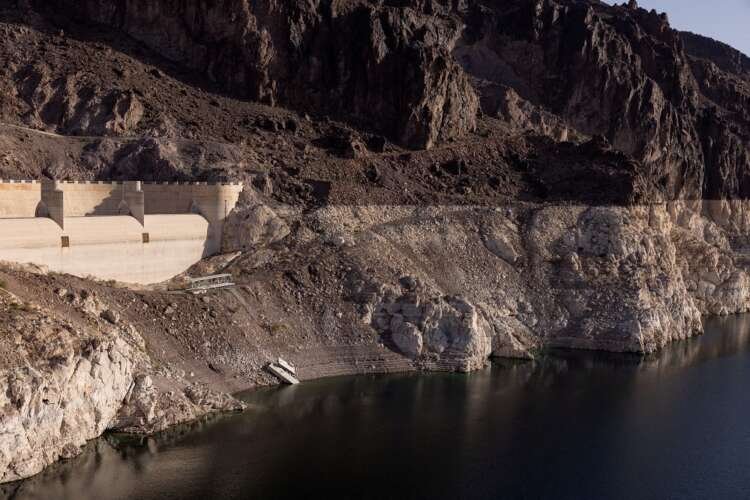
    This image showcases a dam affected by sedimentation, highlighting the UN's research on the loss of storage capacity due to sediment buildup, impacting water security worldwide.
    A dam with sediment buildup illustrating the global water crisis - Global Banking & Finance Review
    Why waste money on news and opinion when you can access them for free?

    Take advantage of our newsletter subscription and stay informed on the go!

    Subscribe

    Tags:sustainabilityresearchHydropowerClimate Changeenvironmental issues

    Quick Summary

    SHANGHAI (Reuters) – Nearly 50,000 large dams worldwide could lose more than a quarter of their storage capacity by 2050 as a result of sedimentation build-ups, eroding global water and energy security, according to United Nations research on Wednesday.

    SHANGHAI (Reuters) – Nearly 50,000 large dams worldwide could lose more than a quarter of their storage capacity by 2050 as a result of sedimentation build-ups, eroding global water and energy security, according to United Nations research on Wednesday.

    Dam capacity is expected to drop from 6 trillion cubic metres (cu m) to 4.655 trillion cu m by 2050, and action must be taken to address the problem and protect vital storage infrastructure, the United Nations University said.

    Silt accumulates in reservoirs as a result of the disruption of natural water flows. It can cause damage to hydroelectric turbines and cut power generation.

    Impeding sediment flows along a river can also make upstream regions more prone to flooding and erode downstream habitats.

    The U.N. study looked at data from more than 47,000 dams in 150 countries and said 16% of original capacity had already been lost. It said the United States is facing losses of 34% by 2050, with Brazil estimated to lose 23%, India 26% and China 20%.

    Critics have long warned that the long-term social and environmental costs of giant dams far outweigh their benefits.

    Vladimir Smakhtin, director of the UN University’s Institute for Water, Environment and Health and one of the study’s authors, said dam building worldwide had already declined significantly, with around 50 a year now being built, compared to 1,000 in the middle of the last century.

    “I would argue that the question we should now be asking is what are the alternatives to dams – including in generating power – considering that they are being phased out,” he said.

    China continues to dam major rivers, with hydropower a key part of its plans to cut fossil fuel use and control greenhouse gas emissions, but projects like the Three Gorges – the world’s biggest hydroelectric facility – have been socially and environmentally disruptive.

    Dams built by China on the Mekong river have also disrupted the flow of sediment into downstream countries, transforming the landscape and jeopardising the livelihoods of millions of farmers, according to Reuters research last year.

    (Reporting by David Stanway; Editing by Kim Coghill)

    Frequently Asked Questions about World’s dams to lose a quarter of storage capacity by 2050 – UN research

    1What is sedimentation?

    Sedimentation is the process by which particles settle out of a fluid, such as water, and accumulate at the bottom of a reservoir. This can reduce the storage capacity of dams over time.

    2What is hydropower?

    Hydropower is a form of renewable energy that generates electricity by using the flow of water, typically from rivers or dams, to turn turbines.

    3What is the impact of climate change on water resources?

    Climate change can alter precipitation patterns, increase evaporation rates, and lead to more extreme weather events, all of which can negatively affect water availability and quality.

    More from Top Stories

    Explore more articles in the Top Stories category

    Image for Lessons From the Ring and the Deal Table: How Boxing Shapes Steven Nigro’s Approach to Banking and Life
    Lessons From the Ring and the Deal Table: How Boxing Shapes Steven Nigro’s Approach to Banking and Life
    Image for Joe Kiani in 2025: Capital, Conviction, and a Focused Return to Innovation
    Joe Kiani in 2025: Capital, Conviction, and a Focused Return to Innovation
    Image for Marco Robinson – CLOSE THE DEAL AND SUDDENLY GROW RICH
    Marco Robinson – CLOSE THE DEAL AND SUDDENLY GROW RICH
    Image for Digital Tracing: Turning a regulatory obligation into a commercial advantage
    Digital Tracing: Turning a regulatory obligation into a commercial advantage
    Image for Exploring the Role of Blockchain and the Bitcoin Price Today in Education
    Exploring the Role of Blockchain and the Bitcoin Price Today in Education
    Image for Inside the World’s First Collection Industry Conglomerate: PCA Global’s Platform Strategy
    Inside the World’s First Collection Industry Conglomerate: PCA Global’s Platform Strategy
    Image for Chase Buchanan Private Wealth Management Highlights Key Autumn 2025 Budget Takeaways for Expats
    Chase Buchanan Private Wealth Management Highlights Key Autumn 2025 Budget Takeaways for Expats
    Image for PayLaju Strengthens Its Position as Malaysia’s Trusted Interest-Free Sharia-Compliant Loan Provider
    PayLaju Strengthens Its Position as Malaysia’s Trusted Interest-Free Sharia-Compliant Loan Provider
    Image for A Notable Update for Employee Health Benefits:
    A Notable Update for Employee Health Benefits:
    Image for Creating Equity Between Walls: How Mohak Chauhan is Using Engineering, Finance, and Community Vision to Reengineer Affordable Housing
    Creating Equity Between Walls: How Mohak Chauhan is Using Engineering, Finance, and Community Vision to Reengineer Affordable Housing
    Image for Upcoming Book on Real Estate Investing: Harvard Grace Capital Founder Stewart Heath’s Puts Lessons in Print
    Upcoming Book on Real Estate Investing: Harvard Grace Capital Founder Stewart Heath’s Puts Lessons in Print
    Image for ELECTIVA MARKS A LANDMARK FIRST YEAR WITH MAJOR SENIOR APPOINTMENTS AND EXPANSION MILESTONES
    ELECTIVA MARKS A LANDMARK FIRST YEAR WITH MAJOR SENIOR APPOINTMENTS AND EXPANSION MILESTONES
    View All Top Stories Posts
    Previous Top Stories PostEuropean shares rise as investors await U.S. inflation data
    Next Top Stories PostGerman home solar power firm sees bright future as demand soars