Search
00
GBAF Logo
trophy
Top StoriesInterviewsBusinessFinanceBankingTechnologyInvestingTradingVideosAwardsMagazinesHeadlinesTrends

Subscribe to our newsletter

Get the latest news and updates from our team.

Global Banking & Finance Review®

Global Banking & Finance Review® - Subscribe to our newsletter

Company

    GBAF Logo
    • About Us
    • Profile
    • Privacy & Cookie Policy
    • Terms of Use
    • Contact Us
    • Advertising
    • Submit Post
    • Latest News
    • Research Reports
    • Press Release
    • Awards▾
      • About the Awards
      • Awards TimeTable
      • Submit Nominations
      • Testimonials
      • Media Room
      • Award Winners
      • FAQ
    • Magazines▾
      • Global Banking & Finance Review Magazine Issue 79
      • Global Banking & Finance Review Magazine Issue 78
      • Global Banking & Finance Review Magazine Issue 77
      • Global Banking & Finance Review Magazine Issue 76
      • Global Banking & Finance Review Magazine Issue 75
      • Global Banking & Finance Review Magazine Issue 73
      • Global Banking & Finance Review Magazine Issue 71
      • Global Banking & Finance Review Magazine Issue 70
      • Global Banking & Finance Review Magazine Issue 69
      • Global Banking & Finance Review Magazine Issue 66
    Top StoriesInterviewsBusinessFinanceBankingTechnologyInvestingTradingVideosAwardsMagazinesHeadlinesTrends

    Global Banking & Finance Review® is a leading financial portal and online magazine offering News, Analysis, Opinion, Reviews, Interviews & Videos from the world of Banking, Finance, Business, Trading, Technology, Investing, Brokerage, Foreign Exchange, Tax & Legal, Islamic Finance, Asset & Wealth Management.
    Copyright © 2010-2026 GBAF Publications Ltd - All Rights Reserved. | Sitemap | Tags | Developed By eCorpIT

    Editorial & Advertiser disclosure

    Global Banking & Finance Review® is an online platform offering news, analysis, and opinion on the latest trends, developments, and innovations in the banking and finance industry worldwide. The platform covers a diverse range of topics, including banking, insurance, investment, wealth management, fintech, and regulatory issues. The website publishes news, press releases, opinion and advertorials on various financial organizations, products and services which are commissioned from various Companies, Organizations, PR agencies, Bloggers etc. These commissioned articles are commercial in nature. This is not to be considered as financial advice and should be considered only for information purposes. It does not reflect the views or opinion of our website and is not to be considered an endorsement or a recommendation. We cannot guarantee the accuracy or applicability of any information provided with respect to your individual or personal circumstances. Please seek Professional advice from a qualified professional before making any financial decisions. We link to various third-party websites, affiliate sales networks, and to our advertising partners websites. When you view or click on certain links available on our articles, our partners may compensate us for displaying the content to you or make a purchase or fill a form. This will not incur any additional charges to you. To make things simpler for you to identity or distinguish advertised or sponsored articles or links, you may consider all articles or links hosted on our site as a commercial article placement. We will not be responsible for any loss you may suffer as a result of any omission or inaccuracy on the website.

    Home > Top Stories > Why some heatwaves prove deadlier than others
    Top Stories

    Why some heatwaves prove deadlier than others

    Published by Jessica Weisman-Pitts

    Posted on August 2, 2022

    4 min read

    Last updated: February 5, 2026

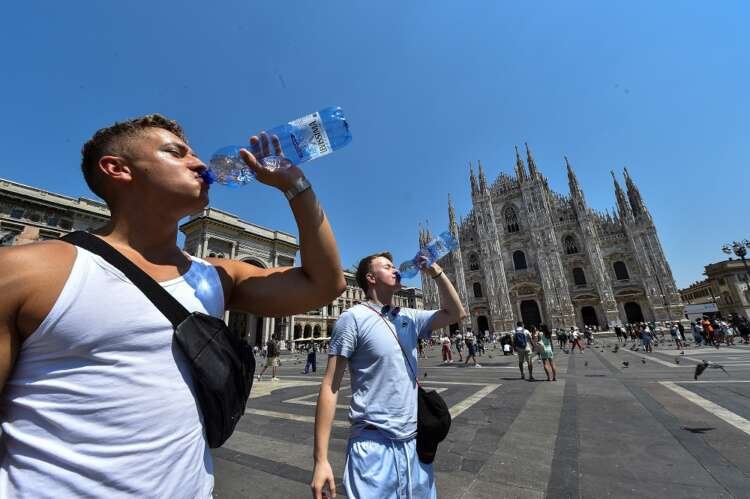
    This image depicts a sunlit street in Italy during a severe summer heatwave, highlighting the extreme temperatures affecting Europe. The article discusses the deadly consequences of heatwaves, emphasizing the rising mortality rates during such events.
    A sun-drenched street in Italy during a summer heatwave - Global Banking & Finance Review
    Why waste money on news and opinion when you can access them for free?

    Take advantage of our newsletter subscription and stay informed on the go!

    Subscribe

    Tags:Climate ChangePublic Healthsustainabilityresearch

    By Gloria Dickie

    LONDON (Reuters) – Europe’s record-breaking heatwave last month saw England and Wales register https://www.ons.gov.uk/peoplepopulationandcommunity/birthsdeathsandmarriages/deaths/bulletins/deathsregisteredweeklyinenglandandwalesprovisional/weekending22july2022 nearly 1,700 extra deaths in just one week, early data shows, while Portugal and Spain counted another 1,700.

    The figures, which will likely change as records are updated, give the first indication of heat-related deaths when temperatures from London to Madrid hit nearly 40 degrees Celsius or higher.

    The data for England and Wales released on Tuesday by Britain’s Office for National Statistics counts registered deaths during July 16-22 against what would be expected over the same period, based on 5-year mortality averages.

    The toll for the Iberian Peninsula from the World Health Organization is also provisional.

    But the figures from July came nowhere near the 70,000 heat-related deaths during a European heatwave in 2003.

    Here are some of the factors that make some heatwaves deadlier than others.

    SITUATIONAL

    When and where a heatwave hits matters.

    The 2003 heatwave hit in the first two weeks of August, closing businesses, wiping out crops and drying up rivers.

    France’s Paris region felt the effects most. Heatwaves are more intense in cities as concrete and asphalt absorb and retain heat.

    The peak coincided with the traditional holiday period, when many children were out of school and families on holiday, in some cases leaving elderly relatives behind.

    Of the nearly 15,000 people who died in France, more than 11,000 https://www.ncbi.nlm.nih.gov/pmc/articles/PMC1950160/#:~:text=The%20number%20of%20excess%20deaths,aged%2035%20to%2074%20years were over the age of 75.

    “A fair number of people said goodbye to grandma sitting in her house and went on vacation,” said Matthew Huber, a global expert on heat stress at Purdue University. “Normally, there would have been people checking in” on them.

    Doctors were also on holiday. “Emergency services weren’t so prepared, and they didn’t have people on call,” said Mathilde Pascal, a researcher with the French Public Health Agency.

    France is now baking in its third heatwave of the 2022 summer, hitting wildlife as well as humans.

    ADAPTATION

    After the 2003 disaster, many European countries created heatwave action plans and began issuing early warnings. Experts say preparing for extreme heat can save lives.

    “More people know what to do in response to a heatwave,” said Chloe Brimicombe, a heatwave researcher at the University of Reading in Britain. But some countries are simply better equipped than others: almost 90% https://www.eia.gov/todayinenergy/detail.php?id=52558 of U.S. homes have air conditioning, compared with just 20% https://www.eurekalert.org/news-releases/671829 of European households, according to U.S. federal statistics.

    But technology can’t always help. This year, Palestinians living on the crowded Gaza Strip are living through a searing summer heatwave that has been made worse by power cuts that leave them without electricity for as much as 10 hours a day.

    Nearly a third of the U.S. population was under a heat warning last month, with forecasts predicting more extreme heat this month.

    People living in poorer communities and the homeless are at higher risk.

    During last year’s heatwave in Phoenix, Arizona, 130 of the 339 people who died were homeless, local health officials said.

    Some U.S. cities, including Phoenix, have hired ‘heat officers’ to help communities cope by handing out water bottles or guiding people to air-conditioned cooling centers.

    “The risk of heat-associated death among our unsheltered neighbors is 200 to 300 times higher than the rest of the population,” Phoenix heat officer David Hondula said.

    PHYSIOLOGICAL RESPONSE

    People who live in warm-weather countries have typically acclimated to high heat. As a person is repeatedly exposed to high temperatures, they develop a lower heart rate and core body temperature over time, improving their tolerance.

    So the temperature at which people start to die from heat-related illness varies depending on location https://www.nature.com/articles/s41467-019-12663-y, as does the related ‘Minimum Mortality Temperature'(MMT) when all deaths from natural causes reach their lowest point.

    “If you’re living in India, the MMT is much higher than if you’re in the UK,” Huber said.

    Recent research also suggests that the MMT of an area can increase as heat rises. For every 1C rise in average summertime temperatures in Spain between 1978 and 2017, for example, scientists found a 0.73C increase in MMT, a study https://iopscience.iop.org/article/10.1088/1748-9326/ac5dee/data published in April in Environmental Research Letters journal said.

    But with much still unknown about extreme heat and human endurance, scientists are not sure if the changes they are seeing in MMTs over time might also be related to people being more aware of the dangers, or better equipped to deal with them.

    “There are several possible explanations, and we still don’t know which is the most important cause,” Huber said.

    (Reporting by Gloria Dickie in London; Additional reporting by Ned Parker in New York; Editing by Katy Daigle and Alexander Smith)

    Frequently Asked Questions about Why some heatwaves prove deadlier than others

    1What is adaptation in the context of climate change?

    Adaptation refers to the adjustments made in response to the effects of climate change, aiming to minimize damage and enhance resilience against extreme weather events.

    2What is the Minimum Mortality Temperature (MMT)?

    The Minimum Mortality Temperature (MMT) is the temperature at which the lowest number of deaths from natural causes occurs, varying by geographic location and climate.

    More from Top Stories

    Explore more articles in the Top Stories category

    Image for Lessons From the Ring and the Deal Table: How Boxing Shapes Steven Nigro’s Approach to Banking and Life
    Lessons From the Ring and the Deal Table: How Boxing Shapes Steven Nigro’s Approach to Banking and Life
    Image for Joe Kiani in 2025: Capital, Conviction, and a Focused Return to Innovation
    Joe Kiani in 2025: Capital, Conviction, and a Focused Return to Innovation
    Image for Marco Robinson – CLOSE THE DEAL AND SUDDENLY GROW RICH
    Marco Robinson – CLOSE THE DEAL AND SUDDENLY GROW RICH
    Image for Digital Tracing: Turning a regulatory obligation into a commercial advantage
    Digital Tracing: Turning a regulatory obligation into a commercial advantage
    Image for Exploring the Role of Blockchain and the Bitcoin Price Today in Education
    Exploring the Role of Blockchain and the Bitcoin Price Today in Education
    Image for Inside the World’s First Collection Industry Conglomerate: PCA Global’s Platform Strategy
    Inside the World’s First Collection Industry Conglomerate: PCA Global’s Platform Strategy
    Image for Chase Buchanan Private Wealth Management Highlights Key Autumn 2025 Budget Takeaways for Expats
    Chase Buchanan Private Wealth Management Highlights Key Autumn 2025 Budget Takeaways for Expats
    Image for PayLaju Strengthens Its Position as Malaysia’s Trusted Interest-Free Sharia-Compliant Loan Provider
    PayLaju Strengthens Its Position as Malaysia’s Trusted Interest-Free Sharia-Compliant Loan Provider
    Image for A Notable Update for Employee Health Benefits:
    A Notable Update for Employee Health Benefits:
    Image for Creating Equity Between Walls: How Mohak Chauhan is Using Engineering, Finance, and Community Vision to Reengineer Affordable Housing
    Creating Equity Between Walls: How Mohak Chauhan is Using Engineering, Finance, and Community Vision to Reengineer Affordable Housing
    Image for Upcoming Book on Real Estate Investing: Harvard Grace Capital Founder Stewart Heath’s Puts Lessons in Print
    Upcoming Book on Real Estate Investing: Harvard Grace Capital Founder Stewart Heath’s Puts Lessons in Print
    Image for ELECTIVA MARKS A LANDMARK FIRST YEAR WITH MAJOR SENIOR APPOINTMENTS AND EXPANSION MILESTONES
    ELECTIVA MARKS A LANDMARK FIRST YEAR WITH MAJOR SENIOR APPOINTMENTS AND EXPANSION MILESTONES
    View All Top Stories Posts
    Previous Top Stories PostMan charged under Britain’s Treason Act over Christmas Day incident at queen’s home
    Next Top Stories PostCredit Suisse shares falter on bleak ratings news