Search
00
GBAF Logo
trophy
Top StoriesInterviewsBusinessFinanceBankingTechnologyInvestingTradingVideosAwardsMagazinesHeadlinesTrends

Subscribe to our newsletter

Get the latest news and updates from our team.

Global Banking and Finance Review

Global Banking & Finance Review

Company

    GBAF Logo
    • About Us
    • Profile
    • Privacy & Cookie Policy
    • Terms of Use
    • Contact Us
    • Advertising
    • Submit Post
    • Latest News
    • Research Reports
    • Press Release
    • Awards▾
      • About the Awards
      • Awards TimeTable
      • Submit Nominations
      • Testimonials
      • Media Room
      • Award Winners
      • FAQ
    • Magazines▾
      • Global Banking & Finance Review Magazine Issue 79
      • Global Banking & Finance Review Magazine Issue 78
      • Global Banking & Finance Review Magazine Issue 77
      • Global Banking & Finance Review Magazine Issue 76
      • Global Banking & Finance Review Magazine Issue 75
      • Global Banking & Finance Review Magazine Issue 73
      • Global Banking & Finance Review Magazine Issue 71
      • Global Banking & Finance Review Magazine Issue 70
      • Global Banking & Finance Review Magazine Issue 69
      • Global Banking & Finance Review Magazine Issue 66
    Top StoriesInterviewsBusinessFinanceBankingTechnologyInvestingTradingVideosAwardsMagazinesHeadlinesTrends

    Global Banking & Finance Review® is a leading financial portal and online magazine offering News, Analysis, Opinion, Reviews, Interviews & Videos from the world of Banking, Finance, Business, Trading, Technology, Investing, Brokerage, Foreign Exchange, Tax & Legal, Islamic Finance, Asset & Wealth Management.
    Copyright © 2010-2025 GBAF Publications Ltd - All Rights Reserved.

    Editorial & Advertiser disclosure

    Global Banking and Finance Review is an online platform offering news, analysis, and opinion on the latest trends, developments, and innovations in the banking and finance industry worldwide. The platform covers a diverse range of topics, including banking, insurance, investment, wealth management, fintech, and regulatory issues. The website publishes news, press releases, opinion and advertorials on various financial organizations, products and services which are commissioned from various Companies, Organizations, PR agencies, Bloggers etc. These commissioned articles are commercial in nature. This is not to be considered as financial advice and should be considered only for information purposes. It does not reflect the views or opinion of our website and is not to be considered an endorsement or a recommendation. We cannot guarantee the accuracy or applicability of any information provided with respect to your individual or personal circumstances. Please seek Professional advice from a qualified professional before making any financial decisions. We link to various third-party websites, affiliate sales networks, and to our advertising partners websites. When you view or click on certain links available on our articles, our partners may compensate us for displaying the content to you or make a purchase or fill a form. This will not incur any additional charges to you. To make things simpler for you to identity or distinguish advertised or sponsored articles or links, you may consider all articles or links hosted on our site as a commercial article placement. We will not be responsible for any loss you may suffer as a result of any omission or inaccuracy on the website.

    Home > Top Stories > The Central Bank Trade
    Top Stories

    The Central Bank Trade

    The Central Bank Trade

    Published by Gbaf News

    Posted on October 17, 2012

    Featured image for article about Top Stories

    Phil McHugh, senior analyst Currencies Direct

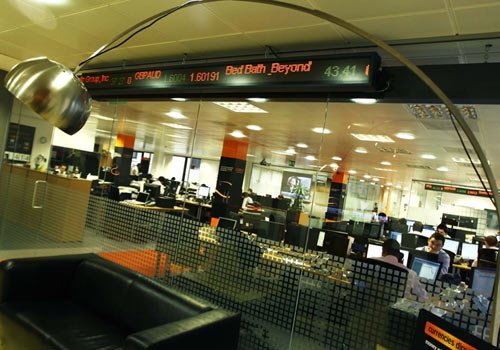
    The financial crisis which erupted in 2008 is still hanging over the world economy, almost five years on. When the original crisis hit, which shook the global economy into cardiac arrest, governments and central banks had to step in to prevent a full scale meltdown of the financial markets.  Since then we have witnessed an unprecedented array of monetary easing from central banks and a race to the zero bound as they cut interest rates aggressively.  The aim was to get credit flowing again for businesses and consumers but lower interest rates were also aimed at influencing exchange rates and stimulating countries export sectors. While this is fine in theory, in practice easing by one central bank usually prompts action by another and we have seen large swings in most markets on the back of monetary stimulus as each country try’s to pursue domestic policy objectives at the expense of other nations by devaluing exchange rates. We now inhabit markets almost completely controlled by central banks, with the US central bank leading the way in unconventional measures.IMG 6345
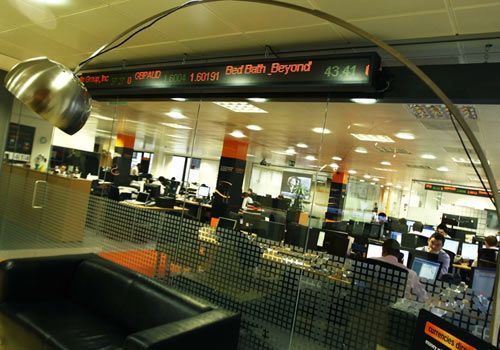
    Most recently the Federal Reserve sparked a speculative frenzy into risk by announcing QE3 in the form of unlimited $40 billion monthly purchases of mortgage backed securities (MBS), low rates until at least 2015 and the continuation of “Operation Twist” in an effort to stimulate labour market growth.  The Fed has upped the ante on easing in their latest announcement and the move followed the ECB-POLICY-CENTENO-a52f21b9-8975-4dc5-9a21-8c5e8267aa43>ECB agreeing to fund unlimited purchases of Eurozone debt to protect struggling sovereigns.  We have also seen similar central bank action from across the globe with Switzerland, Turkey, the UK, China and Japan. The sheer length, depth and scale of ongoing monetary easing is astounding and seemingly endless with the Federal Reserve’s latest escapade being dubbed “QEinfinity” in the financial markets.

    In the aftermath of the Fed decision we saw a distinct rally into nearly all asset classes as a defined move into risk abounded driving the USD lower across the markets.  The unprecedented action has once again reignited a fierce debate that QE3 will exacerbate currency related conflict as the market jumps out of the risk-haven USD into risk-based assets with the hope of riding higher.   Commodity based currencies and emerging market currencies fear the brunt of this shift into risk with an appreciation on their domestic currencies.  Such appreciation can lead to the introduction of, or at the very least the threat of measures to stem the unwanted appreciation.  IMG 6215
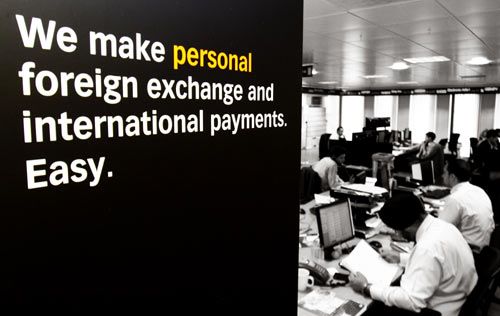
    Back in 2010 Brazilian finance minister Guido Mantega coined the phrase “currency wars” in anticipation of QE2 in the US two years ago.  Mantega argued that “besides the direct measures of trade protectionism in the US, we now have quantitative easing, which is an indirect form of protectionism because it debases the dollar by reducing its value and one of the objectives of a weaker dollar is it can lead to greater American exports”. Brazil implemented a number of capital controls to limit the upward momentum of their currency and was joined by Mexico, Peru, Columbia, Taiwan, Korea, Poland, South Africa and Russia.  These counter moves were to be expected, and were actively encouraged by the IMF amid concerns of further USD debasement.

    As it transpires the Brazilian real is now much weaker against the USD than back in 2010 and in fact risk oriented emerging market currencies have seen an overall retreat. It could be argued that the emerging markets are winning the currency war as their weakening currency values lead to a competitive advantage and a battle won.  However this would cloud the main reason for the downturn in demand being that the world economy has fallen prey to a coordinated economic slowdown with a cooling China and uncertain Eurozone. In addition the steps taken to curb a stronger currency will have certainly had an impact.IMG 6217-v2
    The speculative frenzy that surrounded QE3 has once again raised the chatter of currency wars but it is arguable whether this is valid.Since QE3 we have seen a shift out of USD and it is notable that currencies which have already intervened or threatened to do so have underperformed, whereas those with a lack of intervention history or appetite for intervention have gained.  The Mexican Peso and the Czech Koruna have lost the most ground prompting the governor of the Czech Central Bank to raise the prospect of forex intervention, whereas Mexico’s Central Bank has signalled that it is happy with currency appreciation. The Brazilian real has weakened due to Alexandre Tombini‘s dogged stance on protecting currency appreciation and the Yen has been avoided due to its frequent intervention activity and the anticipation of more. The Indian Rupee has been a popular choice due to reforms from the Indian Government to attract more foreign direct investment (FDI) and is seen as unlikely to intervene to stem any appreciation in the Rupee.  Conversely, the Chinese Renminbi has just hit a 19 year high against the USD, appreciating over 2 per cent in the last month since QE3.  Currencies-Direct

    We have a schizophrenic market that is reacting to the central bank stimulus and searching for ever decreasing opportunities.  Ironically central bank action is endeavouring to drive risk in a market full of fear and it is this fear which is pegging back momentum in the currency markets.Markets are jostling as a reaction to the Fed’s easing and swings in and out of currencies as a result.  The scale of QE3 has naturally caused a knee jerk reaction in the markets due to its audacity and open-endedness.  The question is whether the Federal Reserve,the European Central Bank and other central banks maintain this systematic boost of stimulus and will it continue to drive the markets higher in spite of the severe economic headwinds.

    The dynamics of central bank interventions is driving the focus away from fundamentals and onto what the central banks do next.  The markets are facing a psychological fight on the credibility of global central banks to continue driving sentiment over and above the underlying ‘real’ economy.   The foreign exchange market is struggling to adjust to this environment as investors try to gauge how to make money in a market driven by the central banks and fear with tightening interest rate differentials and even tighter currency ranges.  Phil-McHugh

    In the months ahead we will learn more about the known risks and uncertainties in the market such as the Eurozone crisis, the US election and the approaching US fiscal cliff.  A clear-out of the uncertainties could change the dynamics by fuelling momentum into currencies and even more into risk.  This would certainly raise the tensions on a continuation of central bank action and increase friction between competing currencies.

    Phil McHugh is a senior analyst at leading European FX specialists, Currencies Direct.

    Related Posts
    Inside the World’s First Collection Industry Conglomerate: PCA Global’s Platform Strategy
    Inside the World’s First Collection Industry Conglomerate: PCA Global’s Platform Strategy
    Chase Buchanan Private Wealth Management Highlights Key Autumn 2025 Budget Takeaways for Expats
    Chase Buchanan Private Wealth Management Highlights Key Autumn 2025 Budget Takeaways for Expats
    PayLaju Strengthens Its Position as Malaysia’s Trusted Interest-Free Sharia-Compliant Loan Provider
    PayLaju Strengthens Its Position as Malaysia’s Trusted Interest-Free Sharia-Compliant Loan Provider
    A Notable Update for Employee Health Benefits:
    A Notable Update for Employee Health Benefits:
    Creating Equity Between Walls: How Mohak Chauhan is Using Engineering, Finance, and Community Vision to Reengineer Affordable Housing
    Creating Equity Between Walls: How Mohak Chauhan is Using Engineering, Finance, and Community Vision to Reengineer Affordable Housing
    Upcoming Book on Real Estate Investing: Harvard Grace Capital Founder Stewart Heath’s Puts Lessons in Print
    Upcoming Book on Real Estate Investing: Harvard Grace Capital Founder Stewart Heath’s Puts Lessons in Print
    ELECTIVA MARKS A LANDMARK FIRST YEAR WITH MAJOR SENIOR APPOINTMENTS AND EXPANSION MILESTONES
    ELECTIVA MARKS A LANDMARK FIRST YEAR WITH MAJOR SENIOR APPOINTMENTS AND EXPANSION MILESTONES
    Hebbia Processes One Billion Pages as Financial Institutions Deploy AI Infrastructure at Unprecedented Scale
    Hebbia Processes One Billion Pages as Financial Institutions Deploy AI Infrastructure at Unprecedented Scale
    Beyond Governance Fatigue: Making ESG Integration Work in Financial Markets
    Beyond Governance Fatigue: Making ESG Integration Work in Financial Markets
    Why I-9 Verification Matters for Financial Institutions: Building a Culture of Compliance and Trust
    Why I-9 Verification Matters for Financial Institutions: Building a Culture of Compliance and Trust
    Curvestone AI partners with The White Rose Finance Group to enhance compliance file reviews
    Curvestone AI partners with The White Rose Finance Group to enhance compliance file reviews
    LinkedIn Influence in 2025: Insights from Stevo Jokic on Building Authority and Trust
    LinkedIn Influence in 2025: Insights from Stevo Jokic on Building Authority and Trust

    Why waste money on news and opinions when you can access them for free?

    Take advantage of our newsletter subscription and stay informed on the go!

    Subscribe

    Previous Top Stories PostMaking the most of the Asian funds goldrush
    Next Top Stories PostFinancial and professional services employment in London up in 2012

    More from Top Stories

    Explore more articles in the Top Stories category

    Should You Take the Dealer’s Bike Insurance or Buy Online Yourself? Here’s the Real Difference

    Should You Take the Dealer’s Bike Insurance or Buy Online Yourself? Here’s the Real Difference

    ID-Pal Unveils ID-Detect Enhancements to Counter Surge in Digital Manipulation and Deepfakes

    ID-Pal Unveils ID-Detect Enhancements to Counter Surge in Digital Manipulation and Deepfakes

    TRUST TAKES THE LEAD: HALF OF UK SHOPPERS HAVE ABANDONED ONLINE PURCHASES OVER SECURITY CONCERNS

    TRUST TAKES THE LEAD: HALF OF UK SHOPPERS HAVE ABANDONED ONLINE PURCHASES OVER SECURITY CONCERNS

    Why Choose Premium Driver Service in Miami Over Rideshare Apps for Business Travel and Special Events?

    Why Choose Premium Driver Service in Miami Over Rideshare Apps for Business Travel and Special Events?

    Over 30 Million Users Benefit From Ant International’s Bettr Credit Tech Solutions

    Over 30 Million Users Benefit From Ant International’s Bettr Credit Tech Solutions

    Side-Hustle Economics: How Part-Time Service Work Can Strengthen Your Financial Plan

    Side-Hustle Economics: How Part-Time Service Work Can Strengthen Your Financial Plan

    London to Host Major Summit on “New Horizons” for Islamic Economy in the UK

    London to Host Major Summit on “New Horizons” for Islamic Economy in the UK

    BLOXX Launches World’s First Home Equity Subscription, Creating a New Residential Asset Class

    BLOXX Launches World’s First Home Equity Subscription, Creating a New Residential Asset Class

    LiaFi Addresses Gap Between Business Transaction and Savings Accounts

    LiaFi Addresses Gap Between Business Transaction and Savings Accounts

    Ant Group Chairman Eric Jing Outlines Strategy for Inclusive AI, Collaboration on Tokenised Settlement

    Ant Group Chairman Eric Jing Outlines Strategy for Inclusive AI, Collaboration on Tokenised Settlement

    Deeply Cultivating the Syndicated Loan and Cross-Border Financing Fields: Empowering Chinese Banks’ Global Expansion with Professional Excellence

    Deeply Cultivating the Syndicated Loan and Cross-Border Financing Fields: Empowering Chinese Banks’ Global Expansion with Professional Excellence

    Ant International’s Antom Launches AI‑Powered MSME App for Finance and Business Operations

    Ant International’s Antom Launches AI‑Powered MSME App for Finance and Business Operations

    View All Top Stories Posts