
Top Stories
Portugal Targets 2025 Tap Sale as More Than 12 Potential Buyers Show Interest
Published by Uma Rajagopal
Posted on November 9, 2024
2 min readLast updated: January 28, 2026
Add as preferred source on Google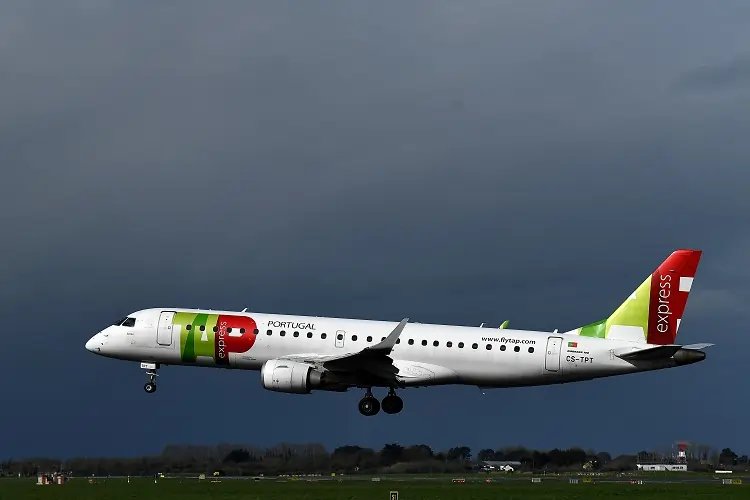
Published by Uma Rajagopal
Posted on November 9, 2024
2 min readLast updated: January 28, 2026
Add as preferred source on GoogleBy Sergio Goncalves
LISBON (Reuters) – Portugal’s government plans to resume the sale of flag carrier TAP in 2025, the country’s infrastructure minister said, after receiving interest from more than a dozen potential buyers.
A previous Socialist administration approved the privatisation of at least 51% of TAP in September 2023, but the sale did not go ahead as Portugal held a snap election in March which was won by a centre-right alliance.
“We will start the process of privatising the company in 2025 and, to that end, we have listened to all interested parties”, said Miguel Pinto Luz.
The infrastructure minister told a parliamentary committee late on Thursday that TAP “has also been strengthening itself in financial terms, with operating results in line with or higher than its European peers.
“Whatever the final privatisation model,” Pinto Luz said, TAP’s brand and its Lisbon hub will be maintained, adding that “strategic routes to the Portuguese diaspora”, which includes Brazil, Angola, Mozambique and the U.S., would not be reduced.
Portugal’s Prime Minister Luis Montenegro, who had previously insisted on a total privatisation of TAP, signalled a month ago that a partial sale was a possibility.
Pinto Luz said “there have been expressions of interest from more than a dozen national and international interested parties,” including from outside Europe.
The government has confirmed meetings with Air France-KLM, Lufthansa and British Airways-owner IAG.
Reuters reported in September that Lufthansa was eyeing a 19.9% stake in TAP, below the 20% threshold that would require European Commission approval.
And Air France-KLM is open to various options, including purchasing a minority stake, Reuters reported.
(Reporting by Sergio Goncalves; Editing by Inti Landauro and Alexander Smith)
TAP Air Portugal is the flag carrier airline of Portugal, known for its extensive network connecting Europe with destinations in Africa and the Americas.
A minority stake refers to owning less than 50% of a company's shares, which typically does not provide control over the company's operations.
A strategic route is a key travel path that is essential for connecting specific markets or communities, often serving significant populations like diasporas.
Explore more articles in the Top Stories category











