
Top Stories
Portugal Airline TAP’s Profit Drops on Forex Losses, Higher Wage Costs
Published by Uma Rajagopal
Posted on November 18, 2024
2 min readLast updated: January 28, 2026
Add as preferred source on Google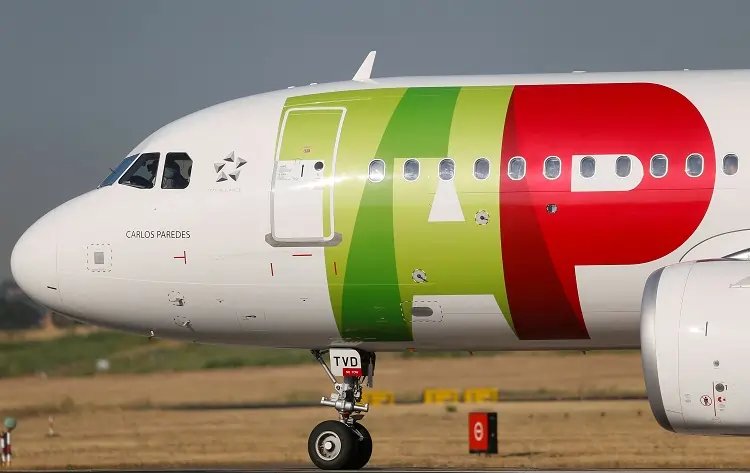
Published by Uma Rajagopal
Posted on November 18, 2024
2 min readLast updated: January 28, 2026
Add as preferred source on GoogleLISBON (Reuters) – Portugal’s flag carrier TAP reported a 35% slump in third-quarter net profit on Monday to 118 million euros ($124 million), hurt by
LISBON (Reuters) – Portugal’s flag carrier TAP reported a 35% slump in third-quarter net profit on Monday to 118 million euros ($124 million), hurt by foreign exchange losses and a big jump in wage costs.
Operating costs rose 6.5% at the airline, which is slated for privatisation, to 1.05 billion euros. That was driven by a 26% surge in wage costs after the reversal of pay cuts imposed under a tough restructuring plan following a pandemic-induced bailout.
The airline’s operating income rose 2% to 1.284 billion euros on a 0.5% increase in passenger revenues. Passenger numbers rose 1.3% to around 4.6 million in the quarter and TAP said bookings for the fourth quarter were slightly higher than a year ago.
Chief Executive Luis Rodrigues said management was pleased with the performance, “despite the two major challenges we faced: the difficult situation of managing European airspace, and significant currency devaluations.”
TAP’s recurring earnings before interest, taxes, depreciation and amortisation (EBITDA) fell 4.8% to 372 million euros and its EBITDA margin – a measure of profitability – fell to 29% from 31% a year ago.
Portugal’s new centre-right government plans to resume TAP’s privatisation in 2025 and said it had received interest from over a dozen potential buyers, including Lufthansa, Air France-KLM and British Airways owner IAG.
($1 = 0.9465 euros)
(Reporting by Patrícia Vicente Rua; Editing by Andrei Khalip and Bernadette Baum)
Foreign exchange refers to the global marketplace for trading national currencies against one another. It is essential for international trade and investment, allowing businesses and individuals to convert one currency into another.
Operating income is a company's profit after deducting operating expenses such as wages, depreciation, and cost of goods sold. It is a key indicator of a company's operational efficiency.
EBITDA stands for Earnings Before Interest, Taxes, Depreciation, and Amortization. It is a measure used to analyze a company's operating performance without the effects of capital structure and tax rates.
Explore more articles in the Top Stories category











