
Top Stories
ECB Does Not Need to Stimulate Economy, Schnabel Says
Published by Uma Rajagopal
Posted on October 31, 2024
2 min readLast updated: January 29, 2026
Add as preferred source on Google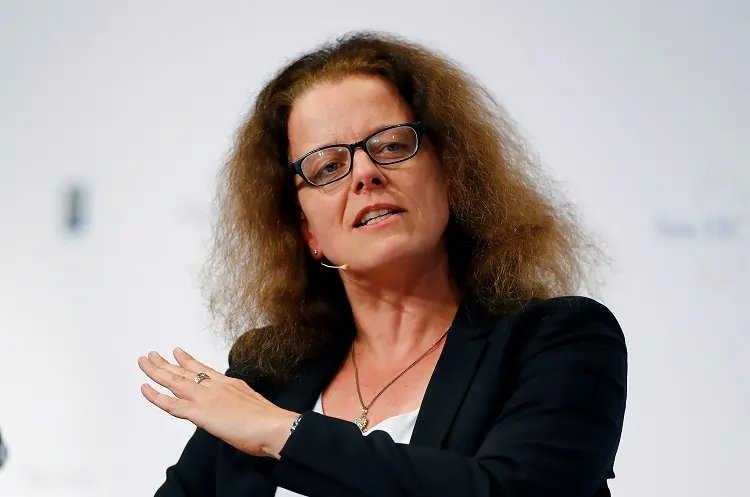
Published by Uma Rajagopal
Posted on October 31, 2024
2 min readLast updated: January 29, 2026
Add as preferred source on GoogleFRANKFURT (Reuters) -European Central Bank board member Isabel Schnabel pushed back on Wednesday against calls for ultra-easy monetary policy, arguing that inflation was unlikely to ease below its 2% target so gradual rates cuts remained appropriate.
Policy doves, mostly from the euro zone’s south, raised concern last week that inflation could fall too far and this may require the ECB to cut rates to below the so-called ‘neutral level’, where it neither stimulates nor holds back economic growth.
Conservatives, still holding the majority on the 26-member Governing Council, quickly pushed back and Schnabel, an outspoken policy hawk, added her voice to their chorus of resistance.
“The risk of meaningful and persistent undershooting of the inflation target remains small,” Schnabel said in a presentation for a speech in Frankfurt. “Projected growth in 2025 is close to potential, (so there is) no need to go below neutral.”
She argued that disinflation remains on track but the fight against inflation is not yet won so a gradual approach to removing restrictions remains appropriate.
As we soon get closer to neutral territory, we will need more time to assess how restrictive policy still is on the basis of our outlook and incoming data,” she said.
Those comments are likely aimed at policymakers who say the ECB should even consider a 50 basis point rate cut in December given the risk that it acts too late.
Markets had given such a move a 40-50% change in recent days but largely priced out a bigger step after third quarter growth came in well above expectations on Wednesday, indicating that the economy is holding up just fine.
“This week’s data strengthens the case for maintaining the 25 basis point easing pace in December, while a 50 basis point cut remains far off, in our view,” Barclays said in a research note.
(Reporting by Tom Sims; writing by Balazs KoranyiEditing by Gareth Jones)
Monetary policy refers to the actions taken by a central bank to manage the money supply and interest rates in an economy to achieve macroeconomic objectives such as controlling inflation and stabilizing currency.
Inflation is the rate at which the general level of prices for goods and services rises, eroding purchasing power. Central banks attempt to limit inflation to maintain economic stability.
The European Central Bank (ECB) is the central bank for the euro and is responsible for monetary policy within the Eurozone, aiming to maintain price stability and oversee the financial system.
Interest rates are the amount charged by lenders to borrowers for the use of money, expressed as a percentage of the principal. They influence economic activity and inflation.
Economic growth is the increase in the production of goods and services in an economy over a period of time, typically measured by the growth rate of real GDP.
Explore more articles in the Top Stories category











