
Top Stories
Czech Central Bank Chief: Rates Likely to Rise in June if Forecast Confirmed
Published by Wanda Rich
Posted on May 22, 2022
2 min readLast updated: February 7, 2026
Add as preferred source on Google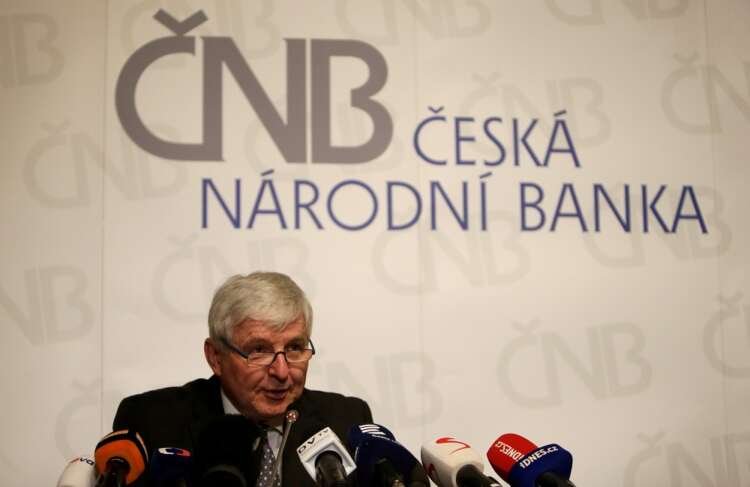
Published by Wanda Rich
Posted on May 22, 2022
2 min readLast updated: February 7, 2026
Add as preferred source on GooglePRAGUE (Reuters) – The Czech central bank will likely raise interest rate further in June if data from the economy are in line with the bank’s latest macroeconomic forecast, Governor Jiri Rusnok said on Sunday.
PRAGUE (Reuters) – The Czech central bank will likely raise interest rate further in June if data from the economy are in line with the bank’s latest macroeconomic forecast, Governor Jiri Rusnok said on Sunday.
“If the current forecast is being confirmed, the probability is high,” he said in a Czech Television debate.
Rusnok, who will leave his post a week after the June 22 policy meeting, said it was possible the main rate, now at 5.75%, would go over the 6% mark in June but did not say how likely that was.
Rusnok will be succeeded in July by board member Ales Michl, who has opposed all 550 basis points worth of rate hikes the bank has delivered over the past year, and has said he expected to propose rate stability for some time after he takes over.
His selection prompted a selloff of the crown currency, leading the central bank to intervene in the foreign exchange market earlier this month to avoid currency weakness from raising inflation further through import prices.
The bank’s latest quarterly forecast issued in May saw official interest rates peaking around 8% this quarter, but the policymaking board took a path somewhat closer to an alternative scenario modelling a slower inflation drop amid a lower rate path.
The bank expects inflation to peak at 15% in June, far from its 2% target. The majority of the bank’s board has seen a demand component of inflation, largely from tight domestic labour market, which required response from monetary policy.
(Reporting by Jan Lopatka)
A central bank is a financial institution responsible for managing a country's currency, money supply, and interest rates. It oversees the banking system and implements monetary policy.
Inflation is the rate at which the general level of prices for goods and services rises, eroding purchasing power. It is often measured by the Consumer Price Index (CPI).
Monetary policy refers to the actions taken by a central bank to control the money supply and interest rates to achieve macroeconomic objectives such as controlling inflation and stabilizing currency.
An interest rate is the amount charged by a lender to a borrower for the use of assets, expressed as a percentage of the principal. It can influence borrowing and spending in the economy.
Economic growth is an increase in the production of goods and services in an economy over a period of time, typically measured by the rise in Gross Domestic Product (GDP).
Explore more articles in the Top Stories category











