Search
00
GBAF Logo
trophy
Top StoriesInterviewsBusinessFinanceBankingTechnologyInvestingTradingVideosAwardsMagazinesHeadlinesTrends

Subscribe to our newsletter

Get the latest news and updates from our team.

Global Banking and Finance Review

Global Banking & Finance Review

Company

    GBAF Logo
    • About Us
    • Profile
    • Privacy & Cookie Policy
    • Terms of Use
    • Contact Us
    • Advertising
    • Submit Post
    • Latest News
    • Research Reports
    • Press Release
    • Awards▾
      • About the Awards
      • Awards TimeTable
      • Submit Nominations
      • Testimonials
      • Media Room
      • Award Winners
      • FAQ
    • Magazines▾
      • Global Banking & Finance Review Magazine Issue 79
      • Global Banking & Finance Review Magazine Issue 78
      • Global Banking & Finance Review Magazine Issue 77
      • Global Banking & Finance Review Magazine Issue 76
      • Global Banking & Finance Review Magazine Issue 75
      • Global Banking & Finance Review Magazine Issue 73
      • Global Banking & Finance Review Magazine Issue 71
      • Global Banking & Finance Review Magazine Issue 70
      • Global Banking & Finance Review Magazine Issue 69
      • Global Banking & Finance Review Magazine Issue 66
    Top StoriesInterviewsBusinessFinanceBankingTechnologyInvestingTradingVideosAwardsMagazinesHeadlinesTrends

    Global Banking & Finance Review® is a leading financial portal and online magazine offering News, Analysis, Opinion, Reviews, Interviews & Videos from the world of Banking, Finance, Business, Trading, Technology, Investing, Brokerage, Foreign Exchange, Tax & Legal, Islamic Finance, Asset & Wealth Management.
    Copyright © 2010-2025 GBAF Publications Ltd - All Rights Reserved.

    Editorial & Advertiser disclosure

    Global Banking and Finance Review is an online platform offering news, analysis, and opinion on the latest trends, developments, and innovations in the banking and finance industry worldwide. The platform covers a diverse range of topics, including banking, insurance, investment, wealth management, fintech, and regulatory issues. The website publishes news, press releases, opinion and advertorials on various financial organizations, products and services which are commissioned from various Companies, Organizations, PR agencies, Bloggers etc. These commissioned articles are commercial in nature. This is not to be considered as financial advice and should be considered only for information purposes. It does not reflect the views or opinion of our website and is not to be considered an endorsement or a recommendation. We cannot guarantee the accuracy or applicability of any information provided with respect to your individual or personal circumstances. Please seek Professional advice from a qualified professional before making any financial decisions. We link to various third-party websites, affiliate sales networks, and to our advertising partners websites. When you view or click on certain links available on our articles, our partners may compensate us for displaying the content to you or make a purchase or fill a form. This will not incur any additional charges to you. To make things simpler for you to identity or distinguish advertised or sponsored articles or links, you may consider all articles or links hosted on our site as a commercial article placement. We will not be responsible for any loss you may suffer as a result of any omission or inaccuracy on the website.

    Home > Top Stories > Blending chalk and cheese: assembling a government for Germany
    Top Stories

    Blending chalk and cheese: assembling a government for Germany

    Blending chalk and cheese: assembling a government for Germany

    Published by Jessica Weisman-Pitts

    Posted on September 28, 2021

    Featured image for article about Top Stories

    By Thomas Escritt

    BERLIN (Reuters) – Whether the Social Democrats’ Olaf Scholz or a conservative becomes the next German chancellor, they will probably need to bring into their coalition two smaller parties that are far apart on many of the issues that will shape Germany’s future.

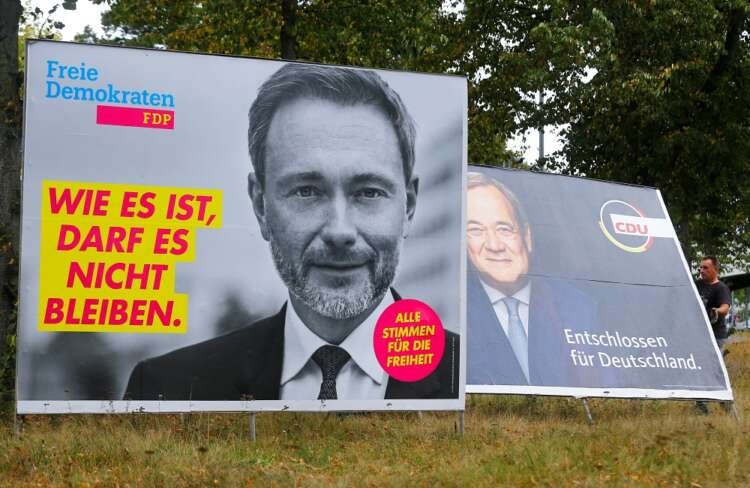
    Any majority will rest on the Greens, led by former competitive athlete Annalena Baerbock and novelist Robert Habeck, and the business-friendly Free Democrats, led by former energy trader Christian Lindner, finding areas of agreement.

    “Christian Lindner and I are about the same age, and both he and Robert Habeck are men,” joked Baerbock when asked about the seemingly scant areas of agreement between the two parties.

    But while her progressive environmentalists and Lindner’s libertarians are further from each other than either is from the Social Democrats or the conservatives, their youthful voter bases give them some things in common, especially on social and foreign policy.

    CLIMATE CHANGE

    The Greens want to achieve net zero greenhouse gas emissions within 20 years through “a massive expansion offensive for renewables”. The FDP wants Germany to achieve climate neutrality by 2050. The SPD and conservatives can wait until 2045.

    The Greens also seek to set a general speed limit on Germany’s ‘no limits’ motorways, an idea the FDP hates, and the two also disagree on whether combustion-powered cars should be banned in the medium term, and on taxing air travel more.

    HOW TO BALANCE THE BOOKS?

    The FDP seeks to cut taxes for everyone – a giveaway the IW institute estimates will cost 60 billion euros ($70.3 billion), which would be almost 20% of federal tax revenue. The Greens want to lower the threshold for those paying the top tax rate of 45% and to introduce a 48% band for ultra-high earners. They also want to reform the debt brake to promote public investment.

    The conservative CDU/CSU bloc wants gradual tax cuts, while the Social Democrats (SPD) want to help those on small and medium incomes and hike taxes for the top 5%.

    WHAT ABOUT EUROPE?

    Along with the conservatives, the FDP rejects a “debt union” and want to ensure that joint EU borrowing to finance the 27-nation bloc’s coronavirus recovery package remains a one-off.

    The Greens favour a common European fiscal policy to support investment in the environment, research, infrastructure and education.

    The SPD regards the recovery package as the basis for building new trust in Europe and has talked about taking steps towards a fiscal union.

    AND THE WORLD?

    The Greens and the FDP are more wary of China than the SPD or the conservatives, agreeing that Chinese firms should have no part in the building of Germany’s next-generation telecoms networks in order to keep them secure.

    The Greens say the Nord Stream 2 pipeline, a Kremlin-backed project that would boost Germany’s reliance on Russian gas, should not be allowed to come into operation. The FDP don’t go as far, but are more sceptical than the SPD.

    LONELY STANDS

    In some areas the Greens are a lonely minority: alone among the four parties that could enter government, they oppose increasing German military spending to NATO’s target of 2% of economic output.

    In other areas, the FDP is on its own. The three other parties would increase the minimum hourly wage to 12 euros ($14). The FDP says this is not a matter for the government.

    THE ANTI-FAX ALLIANCE

    Both Greens and FDP are strongly in favour of investment to improve digital infrastructure. The parties share a young voter base that is increasingly exasperated by Germany’s fax- and phone-bound public administration.

    The broad consensus here could be useful when it comes to papering over the parties’ sharp differences in fiscal policy.

    HAPPILY EVER AFTER?

    The Greens and the FDP would both legalise cannabis sales tomorrow, as would the SPD. They would also allow people to vote from 16 years of age.

    All three parties would be prepared to allow dual citizenship – a huge change for thousands of ethnic Turks, many of whom remain foreign nationals despite having lived, worked and paid taxes in Germany for decades.

    The Greens and the FDP would allow civil servants to wear religious headscarves at work. The SPD and conservatives would not.

    ($1 = 0.8537 euros)

    (Reporting by Thomas Escritt; Editing by Mark Heinrich)

    By Thomas Escritt

    BERLIN (Reuters) – Whether the Social Democrats’ Olaf Scholz or a conservative becomes the next German chancellor, they will probably need to bring into their coalition two smaller parties that are far apart on many of the issues that will shape Germany’s future.

    Any majority will rest on the Greens, led by former competitive athlete Annalena Baerbock and novelist Robert Habeck, and the business-friendly Free Democrats, led by former energy trader Christian Lindner, finding areas of agreement.

    “Christian Lindner and I are about the same age, and both he and Robert Habeck are men,” joked Baerbock when asked about the seemingly scant areas of agreement between the two parties.

    But while her progressive environmentalists and Lindner’s libertarians are further from each other than either is from the Social Democrats or the conservatives, their youthful voter bases give them some things in common, especially on social and foreign policy.

    CLIMATE CHANGE

    The Greens want to achieve net zero greenhouse gas emissions within 20 years through “a massive expansion offensive for renewables”. The FDP wants Germany to achieve climate neutrality by 2050. The SPD and conservatives can wait until 2045.

    The Greens also seek to set a general speed limit on Germany’s ‘no limits’ motorways, an idea the FDP hates, and the two also disagree on whether combustion-powered cars should be banned in the medium term, and on taxing air travel more.

    HOW TO BALANCE THE BOOKS?

    The FDP seeks to cut taxes for everyone – a giveaway the IW institute estimates will cost 60 billion euros ($70.3 billion), which would be almost 20% of federal tax revenue. The Greens want to lower the threshold for those paying the top tax rate of 45% and to introduce a 48% band for ultra-high earners. They also want to reform the debt brake to promote public investment.

    The conservative CDU/CSU bloc wants gradual tax cuts, while the Social Democrats (SPD) want to help those on small and medium incomes and hike taxes for the top 5%.

    WHAT ABOUT EUROPE?

    Along with the conservatives, the FDP rejects a “debt union” and want to ensure that joint EU borrowing to finance the 27-nation bloc’s coronavirus recovery package remains a one-off.

    The Greens favour a common European fiscal policy to support investment in the environment, research, infrastructure and education.

    The SPD regards the recovery package as the basis for building new trust in Europe and has talked about taking steps towards a fiscal union.

    AND THE WORLD?

    The Greens and the FDP are more wary of China than the SPD or the conservatives, agreeing that Chinese firms should have no part in the building of Germany’s next-generation telecoms networks in order to keep them secure.

    The Greens say the Nord Stream 2 pipeline, a Kremlin-backed project that would boost Germany’s reliance on Russian gas, should not be allowed to come into operation. The FDP don’t go as far, but are more sceptical than the SPD.

    LONELY STANDS

    In some areas the Greens are a lonely minority: alone among the four parties that could enter government, they oppose increasing German military spending to NATO’s target of 2% of economic output.

    In other areas, the FDP is on its own. The three other parties would increase the minimum hourly wage to 12 euros ($14). The FDP says this is not a matter for the government.

    THE ANTI-FAX ALLIANCE

    Both Greens and FDP are strongly in favour of investment to improve digital infrastructure. The parties share a young voter base that is increasingly exasperated by Germany’s fax- and phone-bound public administration.

    The broad consensus here could be useful when it comes to papering over the parties’ sharp differences in fiscal policy.

    HAPPILY EVER AFTER?

    The Greens and the FDP would both legalise cannabis sales tomorrow, as would the SPD. They would also allow people to vote from 16 years of age.

    All three parties would be prepared to allow dual citizenship – a huge change for thousands of ethnic Turks, many of whom remain foreign nationals despite having lived, worked and paid taxes in Germany for decades.

    The Greens and the FDP would allow civil servants to wear religious headscarves at work. The SPD and conservatives would not.

    ($1 = 0.8537 euros)

    (Reporting by Thomas Escritt; Editing by Mark Heinrich)

    Related Posts
    Inside the World’s First Collection Industry Conglomerate: PCA Global’s Platform Strategy
    Inside the World’s First Collection Industry Conglomerate: PCA Global’s Platform Strategy
    Chase Buchanan Private Wealth Management Highlights Key Autumn 2025 Budget Takeaways for Expats
    Chase Buchanan Private Wealth Management Highlights Key Autumn 2025 Budget Takeaways for Expats
    PayLaju Strengthens Its Position as Malaysia’s Trusted Interest-Free Sharia-Compliant Loan Provider
    PayLaju Strengthens Its Position as Malaysia’s Trusted Interest-Free Sharia-Compliant Loan Provider
    A Notable Update for Employee Health Benefits:
    A Notable Update for Employee Health Benefits:
    Creating Equity Between Walls: How Mohak Chauhan is Using Engineering, Finance, and Community Vision to Reengineer Affordable Housing
    Creating Equity Between Walls: How Mohak Chauhan is Using Engineering, Finance, and Community Vision to Reengineer Affordable Housing
    Upcoming Book on Real Estate Investing: Harvard Grace Capital Founder Stewart Heath’s Puts Lessons in Print
    Upcoming Book on Real Estate Investing: Harvard Grace Capital Founder Stewart Heath’s Puts Lessons in Print
    ELECTIVA MARKS A LANDMARK FIRST YEAR WITH MAJOR SENIOR APPOINTMENTS AND EXPANSION MILESTONES
    ELECTIVA MARKS A LANDMARK FIRST YEAR WITH MAJOR SENIOR APPOINTMENTS AND EXPANSION MILESTONES
    Hebbia Processes One Billion Pages as Financial Institutions Deploy AI Infrastructure at Unprecedented Scale
    Hebbia Processes One Billion Pages as Financial Institutions Deploy AI Infrastructure at Unprecedented Scale
    Beyond Governance Fatigue: Making ESG Integration Work in Financial Markets
    Beyond Governance Fatigue: Making ESG Integration Work in Financial Markets
    Why I-9 Verification Matters for Financial Institutions: Building a Culture of Compliance and Trust
    Why I-9 Verification Matters for Financial Institutions: Building a Culture of Compliance and Trust
    Curvestone AI partners with The White Rose Finance Group to enhance compliance file reviews
    Curvestone AI partners with The White Rose Finance Group to enhance compliance file reviews
    LinkedIn Influence in 2025: Insights from Stevo Jokic on Building Authority and Trust
    LinkedIn Influence in 2025: Insights from Stevo Jokic on Building Authority and Trust

    Why waste money on news and opinions when you can access them for free?

    Take advantage of our newsletter subscription and stay informed on the go!

    Subscribe

    Previous Top Stories PostSmart becomes the first SSP to collaborate with White Bullet to safeguard quality in the digital media landscape
    Next Top Stories PostBritain begs drivers: Don’t fill old water bottles with fuel at gas stations

    More from Top Stories

    Explore more articles in the Top Stories category

    Should You Take the Dealer’s Bike Insurance or Buy Online Yourself? Here’s the Real Difference

    Should You Take the Dealer’s Bike Insurance or Buy Online Yourself? Here’s the Real Difference

    ID-Pal Unveils ID-Detect Enhancements to Counter Surge in Digital Manipulation and Deepfakes

    ID-Pal Unveils ID-Detect Enhancements to Counter Surge in Digital Manipulation and Deepfakes

    TRUST TAKES THE LEAD: HALF OF UK SHOPPERS HAVE ABANDONED ONLINE PURCHASES OVER SECURITY CONCERNS

    TRUST TAKES THE LEAD: HALF OF UK SHOPPERS HAVE ABANDONED ONLINE PURCHASES OVER SECURITY CONCERNS

    Why Choose Premium Driver Service in Miami Over Rideshare Apps for Business Travel and Special Events?

    Why Choose Premium Driver Service in Miami Over Rideshare Apps for Business Travel and Special Events?

    Over 30 Million Users Benefit From Ant International’s Bettr Credit Tech Solutions

    Over 30 Million Users Benefit From Ant International’s Bettr Credit Tech Solutions

    Side-Hustle Economics: How Part-Time Service Work Can Strengthen Your Financial Plan

    Side-Hustle Economics: How Part-Time Service Work Can Strengthen Your Financial Plan

    London to Host Major Summit on “New Horizons” for Islamic Economy in the UK

    London to Host Major Summit on “New Horizons” for Islamic Economy in the UK

    BLOXX Launches World’s First Home Equity Subscription, Creating a New Residential Asset Class

    BLOXX Launches World’s First Home Equity Subscription, Creating a New Residential Asset Class

    LiaFi Addresses Gap Between Business Transaction and Savings Accounts

    LiaFi Addresses Gap Between Business Transaction and Savings Accounts

    Ant Group Chairman Eric Jing Outlines Strategy for Inclusive AI, Collaboration on Tokenised Settlement

    Ant Group Chairman Eric Jing Outlines Strategy for Inclusive AI, Collaboration on Tokenised Settlement

    Deeply Cultivating the Syndicated Loan and Cross-Border Financing Fields: Empowering Chinese Banks’ Global Expansion with Professional Excellence

    Deeply Cultivating the Syndicated Loan and Cross-Border Financing Fields: Empowering Chinese Banks’ Global Expansion with Professional Excellence

    Ant International’s Antom Launches AI‑Powered MSME App for Finance and Business Operations

    Ant International’s Antom Launches AI‑Powered MSME App for Finance and Business Operations

    View All Top Stories Posts