Search
00
GBAF Logo
trophy
Top StoriesInterviewsBusinessFinanceBankingTechnologyInvestingTradingVideosAwardsMagazinesHeadlinesTrends

Subscribe to our newsletter

Get the latest news and updates from our team.

Global Banking and Finance Review

Global Banking & Finance Review

Company

    GBAF Logo
    • About Us
    • Profile
    • Privacy & Cookie Policy
    • Terms of Use
    • Contact Us
    • Advertising
    • Submit Post
    • Latest News
    • Research Reports
    • Press Release
    • Awards▾
      • About the Awards
      • Awards TimeTable
      • Submit Nominations
      • Testimonials
      • Media Room
      • Award Winners
      • FAQ
    • Magazines▾
      • Global Banking & Finance Review Magazine Issue 79
      • Global Banking & Finance Review Magazine Issue 78
      • Global Banking & Finance Review Magazine Issue 77
      • Global Banking & Finance Review Magazine Issue 76
      • Global Banking & Finance Review Magazine Issue 75
      • Global Banking & Finance Review Magazine Issue 73
      • Global Banking & Finance Review Magazine Issue 71
      • Global Banking & Finance Review Magazine Issue 70
      • Global Banking & Finance Review Magazine Issue 69
      • Global Banking & Finance Review Magazine Issue 66
    Top StoriesInterviewsBusinessFinanceBankingTechnologyInvestingTradingVideosAwardsMagazinesHeadlinesTrends

    Global Banking & Finance Review® is a leading financial portal and online magazine offering News, Analysis, Opinion, Reviews, Interviews & Videos from the world of Banking, Finance, Business, Trading, Technology, Investing, Brokerage, Foreign Exchange, Tax & Legal, Islamic Finance, Asset & Wealth Management.
    Copyright © 2010-2025 GBAF Publications Ltd - All Rights Reserved.

    ;
    Editorial & Advertiser disclosure

    Global Banking and Finance Review is an online platform offering news, analysis, and opinion on the latest trends, developments, and innovations in the banking and finance industry worldwide. The platform covers a diverse range of topics, including banking, insurance, investment, wealth management, fintech, and regulatory issues. The website publishes news, press releases, opinion and advertorials on various financial organizations, products and services which are commissioned from various Companies, Organizations, PR agencies, Bloggers etc. These commissioned articles are commercial in nature. This is not to be considered as financial advice and should be considered only for information purposes. It does not reflect the views or opinion of our website and is not to be considered an endorsement or a recommendation. We cannot guarantee the accuracy or applicability of any information provided with respect to your individual or personal circumstances. Please seek Professional advice from a qualified professional before making any financial decisions. We link to various third-party websites, affiliate sales networks, and to our advertising partners websites. When you view or click on certain links available on our articles, our partners may compensate us for displaying the content to you or make a purchase or fill a form. This will not incur any additional charges to you. To make things simpler for you to identity or distinguish advertised or sponsored articles or links, you may consider all articles or links hosted on our site as a commercial article placement. We will not be responsible for any loss you may suffer as a result of any omission or inaccuracy on the website.

    Home > Banking > BEWARE OF TOXIC UNICORNS
    Banking

    BEWARE OF TOXIC UNICORNS

    BEWARE OF TOXIC UNICORNS

    Published by Gbaf News

    Posted on June 14, 2016

    Featured image for article about Banking

    Filippo De Montis,  Director Global Industry Solutions for Banking and Insurance at Software AG

    In the spirit of “coopetition,” high street banks are cozying up to Fintech start-ups, but the prospect of partnering with a “toxic” one looms large.

    Filippo De Montis

    Filippo De Montis

    Rather than try to compete directly with disruptive Fintech firms, banks are making decisions whether to partner with, or even buy, start-ups that offer a quick way into true innovation, whether in payments, blockchain or lending.

    No one doubts that Fintech, together with blockchain, is one of today’s hottest topics in financial services, with dozens of start-ups in London alone. Of the startups to make the Fintech50 list this year, 29 were in London. Most have been around for just two to five years. The lucky ones that reach the magic valuation of $1 billion are known as “unicorns.” Their products range from payments to mortgage lending to bond market social networking, and most have solid backing by venture capital. A staggering $13.8 billion in VC was invested in Fintechs last year, up from $6.7bn in 2014, according to a report by KPMG and CB Insights.

    Banks are certainly attracted by Fintechs’ innovation, and Fintechs on their end are attracted by banks’ user bases and reach. Initiatives for creating a more collaborative environment confirm this mutual interest. The question is whether this is going to be a fairy tale of mutual benefits or if the risks involved with innovation will curb the benefits.

    Banks are justifiably concerned about Fintech’s stability. High profile flame-outs, such as toxic Fintech Powa in February, demonstrate the potential risks of dealing with a startup – which by definition of Lean Startup’s Author Eric Ries is “a human institution designed to create a new product or service under conditions of extreme uncertainty.”

    If there is one thing that banks like above all else it is certainty. Ideally banks would like their business partners, Fintechs included, to be well managed, well governed and low risk. Similar concern is shared by the UK’s Financial Stability Board, which wants to evaluate any potential for “systemic risk posed by emerging innovations in financial technology.”

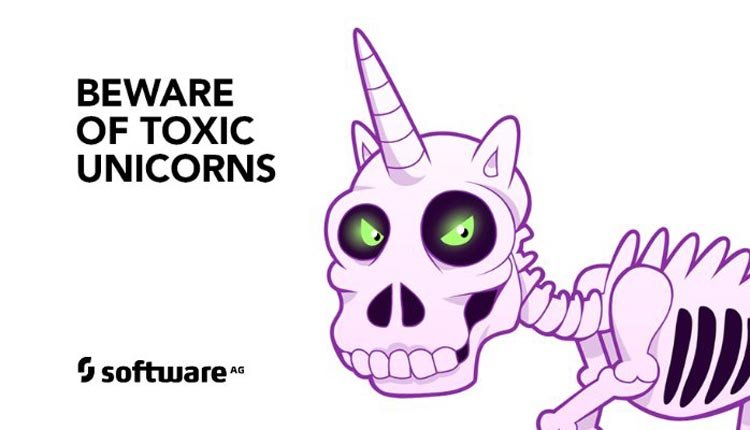
    Beware of Toxic Unicorns

    Today’s banks are lacking the culture, skills and resources to innovate at the speed that the market dictates and Fintechs represent their fastest option to remaining relevant in their offerings while they transform themselves. So can banks protect themselves from partnering with uncertainty? How?

    Today the greatest attention is given to integration, a lot of focus is given to easy and fast onboarding of Fintechs at product and process level (API management is one topic), but very little is said about the need for a quick offboarding of these partners. To do that, banks need to have the right processes and governance in place to reduce any impact a difficult partnership could have on their core business.

    Real-time monitoring of partner activities will also allow banks to protect themselves from toxicity among their Fintech partners. Whether it is due to a Fintech initiating a transaction with a blacklisted country, or due to negative press coverage, a toxic partner could damage the most valuable asset a bank has today – its reputation.

    Finally, governance, risk and compliance, which is costing banks so much money in fines and in managing regulations, and which up until now Fintechs have been able to smartly avoid, will eventually land on the Fintech world. Fintechs must prepare for that and partnering with banks will ease that process; banks have the skills, tools and resources to ease the transition for their most valuable business partners.

    As consultancy EY said: “Executives must ask themselves why, what and how they are innovating — and have great confidence that each answer is grounded in a robust growth strategy and protected by a digital risk platform.”

    Banks want to do business with Fintechs and vice-versa, and the party is just starting. Let’s make sure no toxic ingredient poisons the punch bowl.

    Related Posts
    DeFi and banking are converging. Here’s what banks can do.
    DeFi and banking are converging. Here’s what banks can do.
    Are Neo Banks Offering Better Metal Debit Cards Than Traditional Banks?
    Are Neo Banks Offering Better Metal Debit Cards Than Traditional Banks?
    Banking at the Intersection: From Nashville to Cannes, A Strategic Call to Action
    Banking at the Intersection: From Nashville to Cannes, A Strategic Call to Action
    Driving Efficiency and Profit Through Customer-Centric Banking
    Driving Efficiency and Profit Through Customer-Centric Banking
    How Ecosystem Partnerships Are Redefining Deposit Products
    How Ecosystem Partnerships Are Redefining Deposit Products
    CIBC Private Banking wins four 2025 Global Banking & Finance Awards
    CIBC Private Banking wins four 2025 Global Banking & Finance Awards
    How Banks Can Put AI to Work Now and Prove ROI in 90 Days
    How Banks Can Put AI to Work Now and Prove ROI in 90 Days
    Top 5 AI quality assurance framework providers for Banks and Financial Services firms.
    Top 5 AI quality assurance framework providers for Banks and Financial Services firms.
    The Unbanked Paradox: How Banking Access Creates Economic Resilience
    The Unbanked Paradox: How Banking Access Creates Economic Resilience
    Hyper-Personalised Banking - Shaping the Future of Finance
    Hyper-Personalised Banking - Shaping the Future of Finance
    The End of Voice Trust: How AI Deepfakes Are Forcing Banks to Rethink Authentication
    The End of Voice Trust: How AI Deepfakes Are Forcing Banks to Rethink Authentication
    Predicting and Preventing Customer Churn in Retail Banking
    Predicting and Preventing Customer Churn in Retail Banking

    Why waste money on news and opinions when you can access them for free?

    Take advantage of our newsletter subscription and stay informed on the go!

    Subscribe

    Previous Banking PostWHY ARE BANKS STRUGGLING TO SWITCH CUSTOMERS FROM ANALOGUE TO DIGITAL?
    Next Banking PostHOW EMERGING BANKS ARE DISRUPTING THE MARKET

    More from Banking

    Explore more articles in the Banking category

    Growth and Impact: Banreservas Leads Dominican Republic Economic Expansion

    Growth and Impact: Banreservas Leads Dominican Republic Economic Expansion

    Turning Insight into Impact: Making AI and Analytics Work in Retail Banking

    Turning Insight into Impact: Making AI and Analytics Work in Retail Banking

    KeyBank Embraces Next-Generation AI Platform to Transform Fraud and Financial Crime Prevention

    KeyBank Embraces Next-Generation AI Platform to Transform Fraud and Financial Crime Prevention

    Understanding Association Banking: Financial Solutions for Community Success

    Understanding Association Banking: Financial Solutions for Community Success

    Applying Symbiosis for advantage in APAC banking

    Applying Symbiosis for advantage in APAC banking

    AmBank Islamic Berhad Earns Triple Recognition for Excellence in Islamic Banking

    AmBank Islamic Berhad Earns Triple Recognition for Excellence in Islamic Banking

    FinTok Strategy: How Banks Are Reaching Gen Z Through Social Media

    FinTok Strategy: How Banks Are Reaching Gen Z Through Social Media

    Rethinking Retail Banking Sustainability: Why the ATM is an Asset in the Sustainable Transition

    Rethinking Retail Banking Sustainability: Why the ATM is an Asset in the Sustainable Transition

    How private banks can survive the neo-broker revolution

    How private banks can survive the neo-broker revolution

    Next-Gen Bank Branches: The Evolution from Transaction Hubs to Experience Centers

    Next-Gen Bank Branches: The Evolution from Transaction Hubs to Experience Centers

    The Banking Talent Crunch: How Financial Institutions Are Competing for Digital-Native Skills

    The Banking Talent Crunch: How Financial Institutions Are Competing for Digital-Native Skills

    Beyond Interest: How Banks Are Reimagining Revenue in the Digital Age

    Beyond Interest: How Banks Are Reimagining Revenue in the Digital Age

    View All Banking Posts