Search
00
GBAF Logo
trophy
Top StoriesInterviewsBusinessFinanceBankingTechnologyInvestingTradingVideosAwardsMagazinesHeadlinesTrends

Subscribe to our newsletter

Get the latest news and updates from our team.

Global Banking & Finance Review®

Global Banking & Finance Review® - Subscribe to our newsletter

Company

    GBAF Logo
    • About Us
    • Profile
    • Privacy & Cookie Policy
    • Terms of Use
    • Contact Us
    • Advertising
    • Submit Post
    • Latest News
    • Research Reports
    • Press Release
    • Awards▾
      • About the Awards
      • Awards TimeTable
      • Submit Nominations
      • Testimonials
      • Media Room
      • Award Winners
      • FAQ
    • Magazines▾
      • Global Banking & Finance Review Magazine Issue 79
      • Global Banking & Finance Review Magazine Issue 78
      • Global Banking & Finance Review Magazine Issue 77
      • Global Banking & Finance Review Magazine Issue 76
      • Global Banking & Finance Review Magazine Issue 75
      • Global Banking & Finance Review Magazine Issue 73
      • Global Banking & Finance Review Magazine Issue 71
      • Global Banking & Finance Review Magazine Issue 70
      • Global Banking & Finance Review Magazine Issue 69
      • Global Banking & Finance Review Magazine Issue 66
    Top StoriesInterviewsBusinessFinanceBankingTechnologyInvestingTradingVideosAwardsMagazinesHeadlinesTrends

    Global Banking & Finance Review® is a leading financial portal and online magazine offering News, Analysis, Opinion, Reviews, Interviews & Videos from the world of Banking, Finance, Business, Trading, Technology, Investing, Brokerage, Foreign Exchange, Tax & Legal, Islamic Finance, Asset & Wealth Management.
    Copyright © 2010-2026 GBAF Publications Ltd - All Rights Reserved. | Sitemap | Tags | Developed By eCorpIT

    Editorial & Advertiser disclosure

    Global Banking & Finance Review® is an online platform offering news, analysis, and opinion on the latest trends, developments, and innovations in the banking and finance industry worldwide. The platform covers a diverse range of topics, including banking, insurance, investment, wealth management, fintech, and regulatory issues. The website publishes news, press releases, opinion and advertorials on various financial organizations, products and services which are commissioned from various Companies, Organizations, PR agencies, Bloggers etc. These commissioned articles are commercial in nature. This is not to be considered as financial advice and should be considered only for information purposes. It does not reflect the views or opinion of our website and is not to be considered an endorsement or a recommendation. We cannot guarantee the accuracy or applicability of any information provided with respect to your individual or personal circumstances. Please seek Professional advice from a qualified professional before making any financial decisions. We link to various third-party websites, affiliate sales networks, and to our advertising partners websites. When you view or click on certain links available on our articles, our partners may compensate us for displaying the content to you or make a purchase or fill a form. This will not incur any additional charges to you. To make things simpler for you to identity or distinguish advertised or sponsored articles or links, you may consider all articles or links hosted on our site as a commercial article placement. We will not be responsible for any loss you may suffer as a result of any omission or inaccuracy on the website.

    Home > Top Stories > Analysis-France may be next test of the euro’s foundations
    Top Stories

    Analysis-France may be next test of the euro’s foundations

    Published by Uma Rajagopal

    Posted on June 26, 2024

    5 min read

    Last updated: January 30, 2026

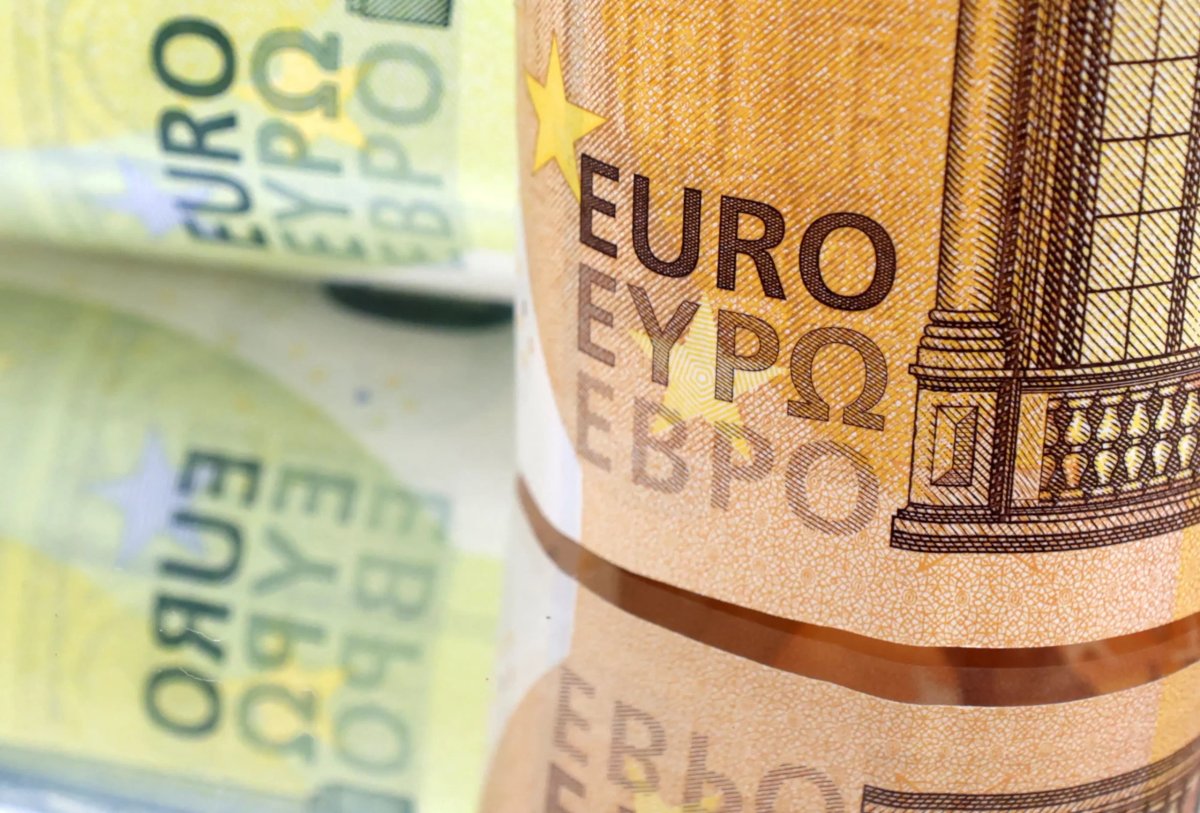
    This image captures the essence of France's political climate as it faces a critical election that may affect the euro's stability. The analysis highlights the implications of a potential eurosceptic government on financial markets and the European Union's cohesion.
    Analysis of France's potential impact on the euro amidst political changes - Global Banking & Finance Review
    Why waste money on news and opinion when you can access them for free?

    Take advantage of our newsletter subscription and stay informed on the go!

    Subscribe

    Tags:European Central Bankfinancial crisismonetary policyFiscal consolidationdebt sustainability

    Analysis-France may be next test of the euro’s foundations

    By Francesco Canepa and Leigh Thomas

    FRANKFURT/PARIS (Reuters) – “Because it’s France” was how Jean-Claude Juncker, European Commission president at the time, explained Brussels’ decision in 2016 to give leeway to the large, founder member of the European Union on the bloc’s budget rules.

    That patience continued even as the EU endured a sovereign debt crisis that almost sunk the euro and forced smaller, more indebted nations such as Greece and Portugal to adopt swingeing austerity measures.

    But any indulgence for French exceptionalism may come to an end if France’s snap election produces a eurosceptic, far-right government in Paris that could strain ties with other European capitals and test the very foundations of the euro project.

    Marine Le Pen’s National Rally (RN) insists it would not blow up the French budget. But questions persist about how it would fund costly spending plans within the eurozone’s newly minted budget rules and whether the European Central Bank could step in to help if financial markets turn on France.

    If a country can just ignore the rules and be helped by the central bank, you’ll get a lot of doubts about the future value of the euro and the future cohesion of the euro,” said Holger Schmieding, an economist at Berenberg.

    Such concerns are not on the official agenda of Thursday’s EU summit. But with the RN leading polls in the two-round vote starting June 30, they are bound to occupy the minds of President Emmanuel Macron’s fellow leaders.

    Senior German government sources said they were dismayed by Macron’s surprise decision to call elections that could usher in an RN-led government. One compared it to former UK premier David Cameron’s ill-fated gamble on an “in-out” Brexit referendum.

    In Italy, with an even bigger debt pile than France, a tinge of Schadenfreude over France’s misfortunes is offset by fears that a French crisis could extend across the Alps, said Francesco Galietti of Rome-based political risk consultant Policy Sonar.

    Otmar Issing, the ECB’s first chief economist and one of the euro’s architects, compared the debt of Italy and France to “a sword of Damocles hanging over the monetary union”, bound to fall unless the problem is tackled.

    You can pull the hair by which it is attached but it cannot hold for ever,” he said in an interview.

    Even Greece is not cutting France any slack, with central bank governor Yannis Stournaras stressing that all member states needed to respect EU rules.

    NO MORE INDULGENCE

    Polling points to the RN emerging as the largest party, with or without a clear majority to pursue an awkward “cohabitation” with Macron until the 2027 presidential election.

    France’s fiscal credibility is already at stake with the International Monetary Fund questioning how it will reduce a budget deficit running at around 5.1% this year and its credit rating downgraded by two agencies.

    In truth, France’s fiscal sins far pre-date Macron. It has run budget deficits greater than the EU-mandated 3% for most of the 25 years since those rules came into force.

    Brigitte Granville, economist at London’s Queen Mary University and author of “What ails France?”, said its rejection in the 1990s of German proposals for more complete political union reflected a desire to retain sovereignty over its finances.

    She expected the RN, which long ago dropped calls to leave a single currency broadly accepted by French voters, to moderate its plans just enough to please Brussels if it came to power.

    “They don’t have a choice unless they want to leave the euro,” Granville said in an interview.

    RN statements to that effect have reassured investors, who were demanding a premium of just 70 basis points to own 10-year French bonds rather than their safer German counterparts – a far cry from peaks of 190 points for France and nearly 560 points for Italy during the 2011 debt crisis.

    ECB chief economist Philip Lane told Reuters the moves in the French bond market did not appear “disorderly”, meaning they don’t meet one of the conditions for the central bank’s intervention.

    CAUTIONARY TALES

    Observers point to cautionary tales ranging from Greece, where a leftwing government was brought to its knees by financial and political pressure, to Britain, where Prime Minister Liz Truss was forced to resign after unveiling a budget that unnerved investors.

    Most analysts emphasise the ECB has the tools to stem contagion from a French crisis by buying bonds of other countries that do respect the EU’s fiscal framework, meaning Paris might find itself isolated at times of need.

    “There is, of course, a possibility that Frankfurt would intervene if the problems with France were to have some kind of external negative effects on other countries, like Italy,” former ECB policymaker Ewald Nowotny said.

    An EU official cited Rome as a model for Paris after Prime Minister Giorgia Meloni toned down her anti-EU rhetoric once elected in 2022.

    This, along with her support for the EU’s stance on conflicts in Ukraine and Gaza, has helped Italy keep the Commission and financial markets on-side despite repeatedly raising its deficit forecasts.

    Jeromin Zettelmeyer, director of the Bruegel economics think tank in Brussels, said RN’s rhetoric thus far did not suggest it was seeking a major confrontation with the Commission that could trigger a financial crisis.

    However he said that if its officials ended up running key ministries, they could hamper EU moves to reform energy markets, advance the green transition and boost the bloc’s competitiveness by reforming its capital markets.

    “If the far-right gets elected that is bad news for EU integration because they would control the government positions involved in most dimensions of EU policy-making,’ he said.

    “The question is whether that is reversible or existential.”

    (Additional reporting by Maria Martinez and Andreas; Rinke in Berlin, Gavin Jones in Rome, Leftheris Papadimas in Athens, Philip Blenkinsop in Brussels, Yoruk Bahceli in London; Mark John in London; editing by Mark John and Christina Fincher)

    Frequently Asked Questions about Analysis-France may be next test of the euro’s foundations

    1What is the European Central Bank?

    The European Central Bank (ECB) is the central bank for the euro and is responsible for monetary policy within the Eurozone, aiming to maintain price stability.

    2What is monetary policy?

    Monetary policy involves the management of money supply and interest rates by a central bank to achieve macroeconomic objectives such as controlling inflation and stabilizing currency.

    3What is debt sustainability?

    Debt sustainability refers to a country's ability to manage its debt without requiring debt relief or accumulating further debt, ensuring it can meet its financial obligations.

    4What is a financial crisis?

    A financial crisis is a situation in which the value of financial institutions or assets drops rapidly, leading to a loss of confidence and often resulting in economic downturn.

    More from Top Stories

    Explore more articles in the Top Stories category

    Image for Lessons From the Ring and the Deal Table: How Boxing Shapes Steven Nigro’s Approach to Banking and Life
    Lessons From the Ring and the Deal Table: How Boxing Shapes Steven Nigro’s Approach to Banking and Life
    Image for Joe Kiani in 2025: Capital, Conviction, and a Focused Return to Innovation
    Joe Kiani in 2025: Capital, Conviction, and a Focused Return to Innovation
    Image for Marco Robinson – CLOSE THE DEAL AND SUDDENLY GROW RICH
    Marco Robinson – CLOSE THE DEAL AND SUDDENLY GROW RICH
    Image for Digital Tracing: Turning a regulatory obligation into a commercial advantage
    Digital Tracing: Turning a regulatory obligation into a commercial advantage
    Image for Exploring the Role of Blockchain and the Bitcoin Price Today in Education
    Exploring the Role of Blockchain and the Bitcoin Price Today in Education
    Image for Inside the World’s First Collection Industry Conglomerate: PCA Global’s Platform Strategy
    Inside the World’s First Collection Industry Conglomerate: PCA Global’s Platform Strategy
    Image for Chase Buchanan Private Wealth Management Highlights Key Autumn 2025 Budget Takeaways for Expats
    Chase Buchanan Private Wealth Management Highlights Key Autumn 2025 Budget Takeaways for Expats
    Image for PayLaju Strengthens Its Position as Malaysia’s Trusted Interest-Free Sharia-Compliant Loan Provider
    PayLaju Strengthens Its Position as Malaysia’s Trusted Interest-Free Sharia-Compliant Loan Provider
    Image for A Notable Update for Employee Health Benefits:
    A Notable Update for Employee Health Benefits:
    Image for Creating Equity Between Walls: How Mohak Chauhan is Using Engineering, Finance, and Community Vision to Reengineer Affordable Housing
    Creating Equity Between Walls: How Mohak Chauhan is Using Engineering, Finance, and Community Vision to Reengineer Affordable Housing
    Image for Upcoming Book on Real Estate Investing: Harvard Grace Capital Founder Stewart Heath’s Puts Lessons in Print
    Upcoming Book on Real Estate Investing: Harvard Grace Capital Founder Stewart Heath’s Puts Lessons in Print
    Image for ELECTIVA MARKS A LANDMARK FIRST YEAR WITH MAJOR SENIOR APPOINTMENTS AND EXPANSION MILESTONES
    ELECTIVA MARKS A LANDMARK FIRST YEAR WITH MAJOR SENIOR APPOINTMENTS AND EXPANSION MILESTONES
    View All Top Stories Posts
    Previous Top Stories PostMiner BHP’s carbon emissions to rise slightly this year
    Next Top Stories PostOil ticks up on inventory drawdown outlook, Middle East risks