
Top Stories
Yen Set for Biggest Run of Gains in More Than 2 Years
Published by Wanda Rich
Posted on August 2, 2022
2 min readLast updated: February 5, 2026
Add as preferred source on Google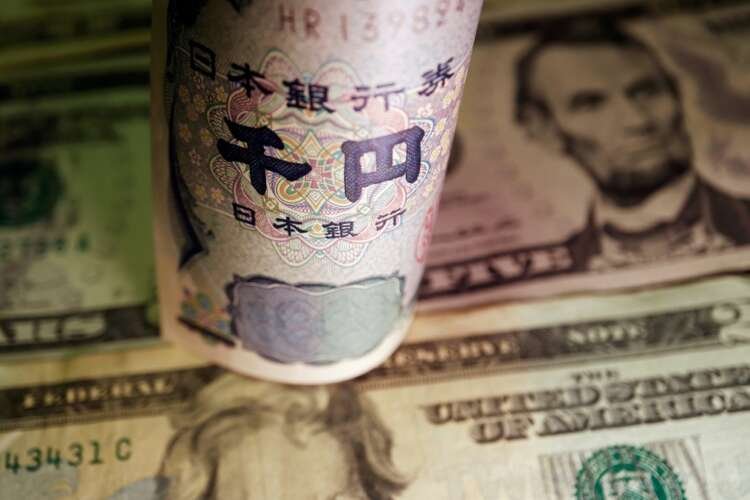
Published by Wanda Rich
Posted on August 2, 2022
2 min readLast updated: February 5, 2026
Add as preferred source on GoogleBy Saikat Chatterjee
LONDON (Reuters) – The yen was on track for its biggest run of gains since the depths of the coronavirus crisis in March 2020, as rising U.S.-China tensions over Taiwan and deepening worries about a global economic slowdown boosted the appeal of safe-haven assets.
Against the dollar, the Japanese currency was on track for a fifth consecutive session of gains on Tuesday, taking its cumulative increase to nearly 4.5% in five trading sessions. In early London trading, the currency was up 0.6% at 130.78 yen, just below a high of 130.40 yen, a level last seen in early June.
Jitters about the impact of an impending visit to Taiwan by U.S. House of Representatives Speaker Nancy Pelosi weighed on stocks and sent investors scurrying into U.S. Treasuries.
The benchmark 10-year Treasury yield fell to 2.516%, its lowest since April, further narrowing the gap between ten-year U.S. debt and equivalent Japanese bonds to 236 basis points (bps), the lowest since early April.
The U.S. economy shrank for a second straight quarter, data released last week showed, intensifying an ongoing debate over whether the country is, or will soon be, in recession, with traders keenly watching for U.S. jobs data on Friday.
“U.S. data releases and the reaction in U.S. yields through the end of this week will be critical as JPY momentum has built a considerable head of steam here,” said John Hardy, head of FX strategy at Saxo Bank.
The Australian dollar fell nearly 1.5% after the Reserve Bank of Australia raised rates by 50 bps to 1.85%, in line with expectations.
The bank said that even though more tightening was expected, it was not on a pre-set path, which some investors interpreted as future policy tightening may not be as aggressive.
China’s offshore yuan touched 6.7957 per dollar, its weakest since mid-May. Some analysts attributed this partly to the tensions around Pelosi’s visit as well as poor economic data from China over the weekend.
The dollar index, which measures the greenback against six peers, rose 0.3% to 105.65.
(Reporting by Saikat Chatterjee; additional reporting by Alun John in HONG KONG; Editing by Mark Potter)
The Japanese Yen is the official currency of Japan, symbolized as ¥. It is one of the most traded currencies in the world and is considered a safe-haven asset during times of economic uncertainty.
A safe-haven asset is an investment that is expected to retain or increase in value during times of market turbulence. Common examples include gold, U.S. Treasuries, and the Japanese Yen.
Currency hedging is a financial strategy used to protect against potential losses from fluctuations in exchange rates. Investors use various financial instruments to mitigate risks associated with currency movements.
Economic growth refers to an increase in the production of goods and services in an economy over a period of time, typically measured by the rise in Gross Domestic Product (GDP).
Financial markets are platforms where buyers and sellers engage in the trade of assets such as stocks, bonds, currencies, and derivatives. They play a crucial role in the economy by facilitating capital allocation.
Explore more articles in the Top Stories category











