Search
00
GBAF Logo
trophy
Top StoriesInterviewsBusinessFinanceBankingTechnologyInvestingTradingVideosAwardsMagazinesHeadlinesTrends

Subscribe to our newsletter

Get the latest news and updates from our team.

Global Banking & Finance Review®

Global Banking & Finance Review® - Subscribe to our newsletter

Company

    GBAF Logo
    • About Us
    • Profile
    • Privacy & Cookie Policy
    • Terms of Use
    • Contact Us
    • Advertising
    • Submit Post
    • Latest News
    • Research Reports
    • Press Release
    • Awards▾
      • About the Awards
      • Awards TimeTable
      • Submit Nominations
      • Testimonials
      • Media Room
      • Award Winners
      • FAQ
    • Magazines▾
      • Global Banking & Finance Review Magazine Issue 79
      • Global Banking & Finance Review Magazine Issue 78
      • Global Banking & Finance Review Magazine Issue 77
      • Global Banking & Finance Review Magazine Issue 76
      • Global Banking & Finance Review Magazine Issue 75
      • Global Banking & Finance Review Magazine Issue 73
      • Global Banking & Finance Review Magazine Issue 71
      • Global Banking & Finance Review Magazine Issue 70
      • Global Banking & Finance Review Magazine Issue 69
      • Global Banking & Finance Review Magazine Issue 66
    Top StoriesInterviewsBusinessFinanceBankingTechnologyInvestingTradingVideosAwardsMagazinesHeadlinesTrends

    Global Banking & Finance Review® is a leading financial portal and online magazine offering News, Analysis, Opinion, Reviews, Interviews & Videos from the world of Banking, Finance, Business, Trading, Technology, Investing, Brokerage, Foreign Exchange, Tax & Legal, Islamic Finance, Asset & Wealth Management.
    Copyright © 2010-2026 GBAF Publications Ltd - All Rights Reserved. | Sitemap | Tags | Developed By eCorpIT

    Editorial & Advertiser disclosure

    Global Banking & Finance Review® is an online platform offering news, analysis, and opinion on the latest trends, developments, and innovations in the banking and finance industry worldwide. The platform covers a diverse range of topics, including banking, insurance, investment, wealth management, fintech, and regulatory issues. The website publishes news, press releases, opinion and advertorials on various financial organizations, products and services which are commissioned from various Companies, Organizations, PR agencies, Bloggers etc. These commissioned articles are commercial in nature. This is not to be considered as financial advice and should be considered only for information purposes. It does not reflect the views or opinion of our website and is not to be considered an endorsement or a recommendation. We cannot guarantee the accuracy or applicability of any information provided with respect to your individual or personal circumstances. Please seek Professional advice from a qualified professional before making any financial decisions. We link to various third-party websites, affiliate sales networks, and to our advertising partners websites. When you view or click on certain links available on our articles, our partners may compensate us for displaying the content to you or make a purchase or fill a form. This will not incur any additional charges to you. To make things simpler for you to identity or distinguish advertised or sponsored articles or links, you may consider all articles or links hosted on our site as a commercial article placement. We will not be responsible for any loss you may suffer as a result of any omission or inaccuracy on the website.

    Home > Top Stories > With strict targets looming, European aviation races to make green fuel
    Top Stories

    With strict targets looming, European aviation races to make green fuel

    Published by Wanda Rich

    Posted on March 31, 2023

    5 min read

    Last updated: February 2, 2026

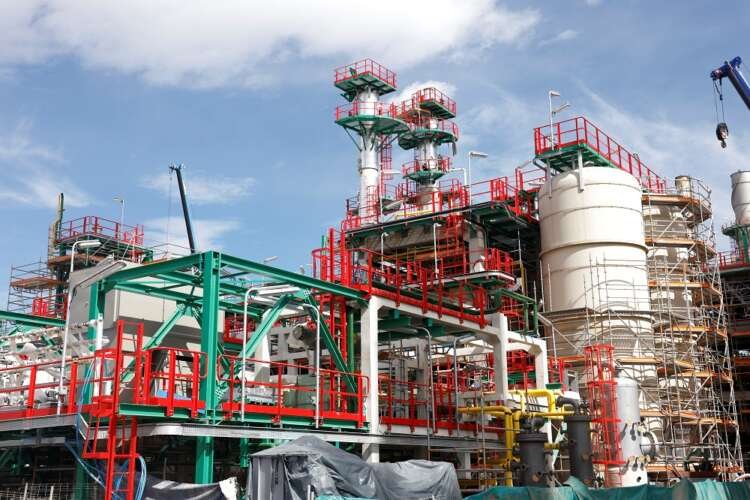
    The image showcases the sustainable aviation fuel plant in Cartagena, Spain. This facility plays a crucial role in Europe's push for green jet fuel, addressing the aviation industry's decarbonization challenges.
    Image depicting Spain's first sustainable aviation fuel plant in Cartagena - Global Banking & Finance Review
    Why waste money on news and opinion when you can access them for free?

    Take advantage of our newsletter subscription and stay informed on the go!

    Subscribe

    Tags:sustainabilityrenewable energy

    Quick Summary

    (This March 29 story has been refiled to attribute the quotes in paragraphs 14 and 16 to Neste’s vice-president of renewable aviation)

    (This March 29 story has been refiled to attribute the quotes in paragraphs 14 and 16 to Neste’s vice-president of renewable aviation)

    By Inti Landauro, Joanna Plucinska and Simon Jessop

    CARTAGENA, Spain/LEEDS, England (Reuters) – Energy giant Repsol has bought into Europe’s drive for green jet fuel, but believes the 200 million euro ($217 million) plant it is building in southeast Spain faces a bumpier ride than if it was on the other side of the Atlantic.

    Repsol says the plant, which transforms used cooking oil into so-called sustainable aviation fuel (SAF), has attracted plenty of customers. But it is concerned Europe’s investment environment will complicate the industry’s efforts to take off.

    “(In Europe) there is a legal instability and a regulatory machinery that is very complex and very discouraging towards seeking new solutions,” said Oliver Fernandez, Repsol’s director for air fuel in Madrid.

    “We see the U.S. is very in favour of helping companies with financing and focusing on helping them to develop new things.”

    Repsol’s worries echo those of Europe’s aviation sector, much of which is tasked with boosting SAF use to 10% of all jet fuel by 2030, despite it currently costing up to five times as much.

    As one of the only ways to decarbonise aviation, investors and regulators are pushing airlines to up SAF usage. Doing so could also determine whether airlines can ever be considered sustainable under the European Union’s green finance rules, impacting their cost of raising money.

    As it stands, SAF makes up less than 1% of jet fuel in use. Airlines, which operate on razor thin margins and are heavily indebted as they recover from the pandemic, say more needs to be done to boost production and lower the cost.

    While U.S. firms are benefiting from tax incentives to boost production, Europe has focused on mandating change rather than incentivising it, said Laurent Donceel, acting managing director of lobbying group Airlines for Europe.

    “It seems the EU is more focused on window dressing and letting the United States eat it for breakfast,” after the EU published its Net Zero Industry Act in mid March.

    “Europe needs to step up and throw its weight behind a domestic SAF industry to ensure it does not fall behind.”

    Supporters of Europe’s approach argue that the profitable energy industry should be able to ensure supply, adding that the harmonized U.S. tax system is better designed to benefit from incentives, such as those in the Inflation Reduction Act, than Europe’s patchwork of national systems.

    The EU requirements will mean the construction of seven new plants to make about 2.2 million tonnes of SAFs in Europe per year by 2030, said EU Transport Commissioner Adina-Ioana Valean.

    “So this shows that we created the demand, we recognized sustainable alternatives using just the Net Zero Industry Act, which was not obvious from the very beginning.”

    PRODUCTION CHALLENGES

    Producers say they are struggling to front the investment costs needed to scale up. Repsol has only created enough SAF so far to power test flights for IAG-owned carriers Iberia and Vueling, and Air Europa.

    “They (airlines) would need to bind themselves to certain prices for 10 to 15 years, because otherwise your producer doesn’t have the investment security … that’s the problem,” said Ralf Diemer, managing director of industry group, the eFuel Alliance.

    Finland-based Neste, the world’s largest SAF producer, says it is expanding its facilities in Europe and elsewhere, but points to challenges including sourcing raw materials.

    Even with investment, new plants take years to build, it adds, leaving little time to make the volumes needed to meet the European targets.

    “In 2026, we will have over six and a half million tonnes… of renewable [product] capacity, of which one third will be SAF capacity. That’s 2.2 million tonnes. That’s a bit under 1% of global aviation fuel demand,” said Jonathan Wood, Neste’s vice-president of renewable aviation.

    British Airways-owner IAG says it has committed to $865 million in investments to purchase SAF and support production, but has only guaranteed around 25% of its 2030 supply target. That means it will likely have to spend billions more to reach its goals.

    “America’s programme of both federal and state incentives for SAF production is the mark of global leadership on the net-zero transition,” IAG told Reuters.

    “This is a brilliant model, but if Europe cannot keep up it will have to import SAF. Let’s not import SAF – let’s create it everywhere we need it.”

    HOME GROWN

    Smaller producers, like Velocys and Fulcrum, are hoping to build facilities and scale-up SAF in the years to come.

    And even if their new projects do not do enough to get aviation to 10%, SAF production will still go up markedly, experts said.

    “Most companies we speak with have already secured sufficient SAF supply to meet at least half of their 2030 procurement targets, which is exactly the market signal needed to support further SAF scale up,” said Joe Horrocks-Taylor, climate analyst at Columbia Threadneedle Investments.

    Back at Repsol’s plant in Cartagena, the first batch of jet fuel made from used cooking oil will be shipped out of the refinery in the fourth quarter of this year. And the firm is confident much more will get made – and sold – soon.

    It’s already investing an additional 103 million euros in another plant to make synthetic jet fuel made out of CO2, which will open in 2025.

    “It will be impossible to distinguish chemically from the jet fuel made from oil,” said Emilio Mayoral, the lead engineer overseeing some 750 workers building distillery towers and giant reactors.

    “It will be in very high demand.”

    ($1 = 0.9231 euros)

    (Writing by Joanna Plucinska; Editing by Mark Potter)

    Frequently Asked Questions about With strict targets looming, European aviation races to make green fuel

    1What is sustainable aviation fuel (SAF)?

    Sustainable aviation fuel (SAF) is a type of fuel made from renewable resources, such as used cooking oil, that can significantly reduce carbon emissions compared to traditional jet fuel.

    2What are the benefits of using SAF?

    Using sustainable aviation fuel (SAF) helps reduce greenhouse gas emissions, supports energy diversification, and contributes to the aviation industry's goals for sustainability and compliance with environmental regulations.

    3What is the role of Repsol in SAF production?

    Repsol is investing in the production of sustainable aviation fuel (SAF) by building a plant in Spain that converts used cooking oil into SAF, aiming to meet increasing demand and regulatory targets.

    More from Top Stories

    Explore more articles in the Top Stories category

    Image for Lessons From the Ring and the Deal Table: How Boxing Shapes Steven Nigro’s Approach to Banking and Life
    Lessons From the Ring and the Deal Table: How Boxing Shapes Steven Nigro’s Approach to Banking and Life
    Image for Joe Kiani in 2025: Capital, Conviction, and a Focused Return to Innovation
    Joe Kiani in 2025: Capital, Conviction, and a Focused Return to Innovation
    Image for Marco Robinson – CLOSE THE DEAL AND SUDDENLY GROW RICH
    Marco Robinson – CLOSE THE DEAL AND SUDDENLY GROW RICH
    Image for Digital Tracing: Turning a regulatory obligation into a commercial advantage
    Digital Tracing: Turning a regulatory obligation into a commercial advantage
    Image for Exploring the Role of Blockchain and the Bitcoin Price Today in Education
    Exploring the Role of Blockchain and the Bitcoin Price Today in Education
    Image for Inside the World’s First Collection Industry Conglomerate: PCA Global’s Platform Strategy
    Inside the World’s First Collection Industry Conglomerate: PCA Global’s Platform Strategy
    Image for Chase Buchanan Private Wealth Management Highlights Key Autumn 2025 Budget Takeaways for Expats
    Chase Buchanan Private Wealth Management Highlights Key Autumn 2025 Budget Takeaways for Expats
    Image for PayLaju Strengthens Its Position as Malaysia’s Trusted Interest-Free Sharia-Compliant Loan Provider
    PayLaju Strengthens Its Position as Malaysia’s Trusted Interest-Free Sharia-Compliant Loan Provider
    Image for A Notable Update for Employee Health Benefits:
    A Notable Update for Employee Health Benefits:
    Image for Creating Equity Between Walls: How Mohak Chauhan is Using Engineering, Finance, and Community Vision to Reengineer Affordable Housing
    Creating Equity Between Walls: How Mohak Chauhan is Using Engineering, Finance, and Community Vision to Reengineer Affordable Housing
    Image for Upcoming Book on Real Estate Investing: Harvard Grace Capital Founder Stewart Heath’s Puts Lessons in Print
    Upcoming Book on Real Estate Investing: Harvard Grace Capital Founder Stewart Heath’s Puts Lessons in Print
    Image for ELECTIVA MARKS A LANDMARK FIRST YEAR WITH MAJOR SENIOR APPOINTMENTS AND EXPANSION MILESTONES
    ELECTIVA MARKS A LANDMARK FIRST YEAR WITH MAJOR SENIOR APPOINTMENTS AND EXPANSION MILESTONES
    View All Top Stories Posts
    Previous Top Stories PostFactbox-Steps in Finnish, Swedish path to NATO membership
    Next Top Stories PostTrump charges bring New York ‘zombie case’ back to life