Top Stories
White House says companies investing $700 million to boost EV charger production
By Timothy Gardner
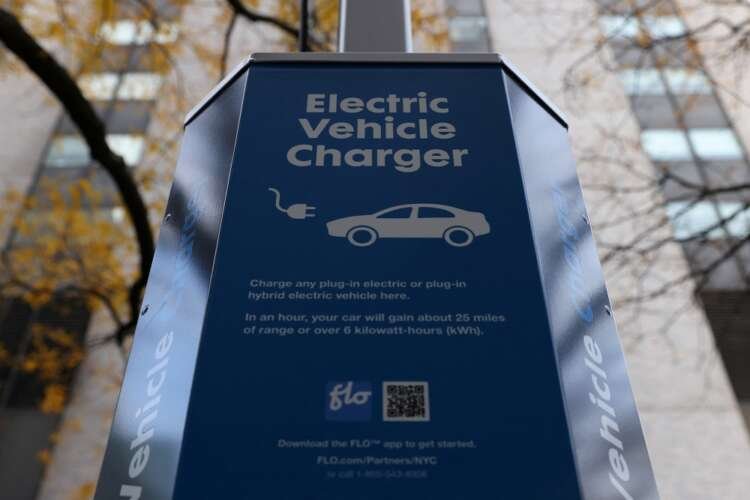
WASHINGTON (Reuters) – The White House said on Tuesday that companies are planning to invest more than $700 million to boost U.S. manufacturing capacity for electric vehicle (EV) chargers – actions set to add at least 2,000 jobs and make charging more accessible and affordable.
The investments include $450 million earmarked by Volkswagen unit Electrify America and more than $250 million by Siemens to expand its Grand Prairie, Texas and Ponoma, California EV charger plants.
FLO, an EV charging network operator, is also investing $3 million in its first U.S. assembly plant in Auburn Hills, Michigan.
The investments will help boost U.S. manufacturing capacity for EV chargers to more than 250,000 per year, the White House said, without giving a figure for current production capacity.
Last August, President Joe Biden set a non-binding goal to make half of all new vehicles sold in 2030 electric, fuel cell or plug-in hybrid. As part of that, he wants to see the U.S. network of EV chargers grow to 500,000 by 2030, up from about 100,000 today.
The investments by private companies follow more than $7.5 billion in subsidies that were in last year’s bipartisan infrastructure law.
Biden’s goals and the subsidies have helped spur private investments, White House deputy national climate advisor Ali Zaidi told reporters on Monday.
That has meant “chargers weren’t getting brought in from overseas (and) they were being a source of opportunity in communities all around the country,” he said in a call about a U.S. report showing jobs in the energy business rose 4% last year, led by jobs in carbon-cutting vehicles.
The U.S. public charging network for EVs is becoming more robust, but significant differences in reliability and performance remain between providers, an industry ranking by engineering consulting firm umlaut found this year.
(Reporting by Timothy Gardner; Editing by Edwina Gibbs)
An electric vehicle (EV) is a type of vehicle that is powered by electricity instead of traditional fuels like gasoline or diesel, using electric motors and batteries.
Manufacturing capacity refers to the maximum amount of products a manufacturing facility can produce in a given period, often measured in units per time frame.
Job creation is the process of providing new employment opportunities, often driven by economic growth, investments, and business expansions.
Sustainability in business refers to practices that meet present needs without compromising the ability of future generations to meet their own needs, often focusing on environmental and social impacts.
Explore more articles in the Top Stories category