Search
00
GBAF Logo
trophy
Top StoriesInterviewsBusinessFinanceBankingTechnologyInvestingTradingVideosAwardsMagazinesHeadlinesTrends

Subscribe to our newsletter

Get the latest news and updates from our team.

Global Banking & Finance Review®

Global Banking & Finance Review® - Subscribe to our newsletter

Company

    GBAF Logo
    • About Us
    • Profile
    • Privacy & Cookie Policy
    • Terms of Use
    • Contact Us
    • Advertising
    • Submit Post
    • Latest News
    • Research Reports
    • Press Release
    • Awards▾
      • About the Awards
      • Awards TimeTable
      • Submit Nominations
      • Testimonials
      • Media Room
      • Award Winners
      • FAQ
    • Magazines▾
      • Global Banking & Finance Review Magazine Issue 79
      • Global Banking & Finance Review Magazine Issue 78
      • Global Banking & Finance Review Magazine Issue 77
      • Global Banking & Finance Review Magazine Issue 76
      • Global Banking & Finance Review Magazine Issue 75
      • Global Banking & Finance Review Magazine Issue 73
      • Global Banking & Finance Review Magazine Issue 71
      • Global Banking & Finance Review Magazine Issue 70
      • Global Banking & Finance Review Magazine Issue 69
      • Global Banking & Finance Review Magazine Issue 66
    Top StoriesInterviewsBusinessFinanceBankingTechnologyInvestingTradingVideosAwardsMagazinesHeadlinesTrends

    Global Banking & Finance Review® is a leading financial portal and online magazine offering News, Analysis, Opinion, Reviews, Interviews & Videos from the world of Banking, Finance, Business, Trading, Technology, Investing, Brokerage, Foreign Exchange, Tax & Legal, Islamic Finance, Asset & Wealth Management.
    Copyright © 2010-2026 GBAF Publications Ltd - All Rights Reserved. | Sitemap | Tags | Developed By eCorpIT

    Editorial & Advertiser disclosure

    Global Banking & Finance Review® is an online platform offering news, analysis, and opinion on the latest trends, developments, and innovations in the banking and finance industry worldwide. The platform covers a diverse range of topics, including banking, insurance, investment, wealth management, fintech, and regulatory issues. The website publishes news, press releases, opinion and advertorials on various financial organizations, products and services which are commissioned from various Companies, Organizations, PR agencies, Bloggers etc. These commissioned articles are commercial in nature. This is not to be considered as financial advice and should be considered only for information purposes. It does not reflect the views or opinion of our website and is not to be considered an endorsement or a recommendation. We cannot guarantee the accuracy or applicability of any information provided with respect to your individual or personal circumstances. Please seek Professional advice from a qualified professional before making any financial decisions. We link to various third-party websites, affiliate sales networks, and to our advertising partners websites. When you view or click on certain links available on our articles, our partners may compensate us for displaying the content to you or make a purchase or fill a form. This will not incur any additional charges to you. To make things simpler for you to identity or distinguish advertised or sponsored articles or links, you may consider all articles or links hosted on our site as a commercial article placement. We will not be responsible for any loss you may suffer as a result of any omission or inaccuracy on the website.

    Home > Top Stories > What next for UK economy as Boris Johnson quits?
    Top Stories

    What next for UK economy as Boris Johnson quits?

    Published by Wanda Rich

    Posted on July 7, 2022

    4 min read

    Last updated: February 5, 2026

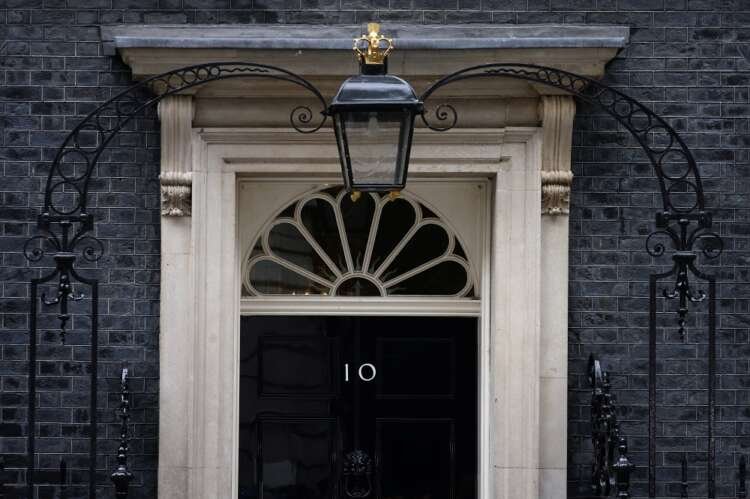
    This image captures the political turmoil as Boris Johnson resigns, highlighting the uncertainty facing the UK economy due to high inflation and Brexit challenges.
    Boris Johnson resigns amid UK economic uncertainty and inflation crisis - Global Banking & Finance Review
    Why waste money on news and opinion when you can access them for free?

    Take advantage of our newsletter subscription and stay informed on the go!

    Subscribe

    Tags:BrexitUK economy

    By William Schomberg

    LONDON (Reuters) – The resignation of Prime Minister Boris Johnson deepens the uncertainty hanging over Britain’s economy, already under strain from an inflation rate heading for double digits, the risk of a recession and Brexit.

    The race to replace Johnson, who announced on Thursday that he would quit office, could take weeks. That would leave the world’s fifth-biggest economy at risk of further drift at a time when sterling is near two-year lows against the dollar and the Bank of England is in a dilemma about raising interest rates without damaging economic activity.

    The duration of Conservative Party leadership contests varies. Theresa May needed less than three weeks to win after David Cameron quit in 2016 as other contenders dropped out.

    But it took Johnson two months to become the new leader after May announced her intention to resign in 2019.

    At least half a dozen candidates are expected this time.

    Following is a summary of the key questions hanging over the British economy as the political drama plays out.

    INFLATION

    Even more than many other countries, Britain is feeling the pressure of an inflation rate running at a 40-year high of 9.1%. The BoE thinks it will top 11% later this year.

    The International Monetary Fund said in April that Britain faced more persistent inflation, as well as slower growth, than any other major economy in 2023.

    Sterling’s recent fall has added to the inflation pressures since then, although the prospect of increased public spending or tax cuts to shore up the Conservative Party’s fortunes pushed up the pound a bit on Thursday.

    But whoever replaces Johnson can only do so much to offset the impact of the surge in global energy and food prices.

    FISCAL POLICY

    Whoever succeeds Johnson must take big decisions on tax and spending that could reduce the risk of a recession but might also add to the inflationary heat in the economy.

    When he quit as finance minister on Tuesday, Rishi Sunak said he had disagreed over policy with Johnson, who had long pushed for more tax cuts. Sunak’s short-term priority before he resigned was to ease the burden of Britain’s debt, which jumped above 2 trillion pounds during the coronavirus pandemic.

    Analysts at U.S. bank Citi said they expected Conservative Party leadership contenders Priti Patel and Liz Truss, who served as Johnson’s interior and foreign ministers, might call for quick tax cuts and higher spending, while Sunak and former health minister Sajid Javid were likely to be more fiscally cautious.

    The long-term implications of their decisions will be high.

    Britain’s budget watchdog said on Thursday that debt could more than triple to almost 320% of GDP in 50 years’ time if future governments do not tighten fiscal policy.

    BREXIT

    More than six years after Britain voted to leave the European Union, London and Brussels remain at loggerheads due to Johnson’s insistence on rewriting the rules – which he agreed to in 2019 – for trade involving Northern Ireland.

    The possibility of improved relations with the EU under a new prime minister has prompted some economists to pencil in stronger British exports and investment although any changes in the overall trading relationship are likely to be modest.

    Furthermore, some front-runners to replace Johnson, chiefly foreign minister Truss, publicly backed his combative stance towards the EU.

    BANK OF ENGLAND

    Britain’s central bank has raised interest rates five times since December, its steepest run of hikes in 25 years, and it has signalled it will keep on increasing them, possibly by as much as half a percentage point at its next meeting in August.

    But the risk of a global economic slowdown has recently reduced bets by investors on that kind of big move by the BoE. Uncertainty over Britain’s fiscal policy direction could provide another reason for caution.

    MORE POLITICAL CHAOS?

    While the exit of Johnson ends another chapter in one of the most tumultuous periods in modern British political history, it remains to be seen if his successor can calm things down.

    Kallum Pickering, an analyst at Berenberg, said Britain’s economy would benefit if Johnson was replaced by “a more diligent and serious individual”.

    But the Citi analysts said they were sceptical that the different factions within the Conservative Party would unify around a clear strategy.

    “In the months ahead, we see a UK heading into a once-in-a-generation squeeze in living standards, absent a defined strategy, and facing deep governmental division. The risk of profound policy error is therefore significant,” they said.

    “An early election should also not be discounted, though we still expect a contest only in 2024.”

    (Writing by William Schomberg; Editing by Mark Heinrich)

    Frequently Asked Questions about What next for UK economy as Boris Johnson quits?

    1What is inflation?

    Inflation is the rate at which the general level of prices for goods and services rises, eroding purchasing power. It is often measured by the Consumer Price Index (CPI).

    2What is the Bank of England?

    The Bank of England is the central bank of the UK, responsible for issuing currency, maintaining monetary stability, and overseeing the financial system.

    3What is Brexit?

    Brexit refers to the United Kingdom's decision to leave the European Union, which has significant implications for trade, immigration, and economic policy.

    4What is the role of the Prime Minister in the UK economy?

    The Prime Minister plays a crucial role in shaping economic policy, making decisions on fiscal measures, and responding to economic challenges facing the country.

    More from Top Stories

    Explore more articles in the Top Stories category

    Image for Lessons From the Ring and the Deal Table: How Boxing Shapes Steven Nigro’s Approach to Banking and Life
    Lessons From the Ring and the Deal Table: How Boxing Shapes Steven Nigro’s Approach to Banking and Life
    Image for Joe Kiani in 2025: Capital, Conviction, and a Focused Return to Innovation
    Joe Kiani in 2025: Capital, Conviction, and a Focused Return to Innovation
    Image for Marco Robinson – CLOSE THE DEAL AND SUDDENLY GROW RICH
    Marco Robinson – CLOSE THE DEAL AND SUDDENLY GROW RICH
    Image for Digital Tracing: Turning a regulatory obligation into a commercial advantage
    Digital Tracing: Turning a regulatory obligation into a commercial advantage
    Image for Exploring the Role of Blockchain and the Bitcoin Price Today in Education
    Exploring the Role of Blockchain and the Bitcoin Price Today in Education
    Image for Inside the World’s First Collection Industry Conglomerate: PCA Global’s Platform Strategy
    Inside the World’s First Collection Industry Conglomerate: PCA Global’s Platform Strategy
    Image for Chase Buchanan Private Wealth Management Highlights Key Autumn 2025 Budget Takeaways for Expats
    Chase Buchanan Private Wealth Management Highlights Key Autumn 2025 Budget Takeaways for Expats
    Image for PayLaju Strengthens Its Position as Malaysia’s Trusted Interest-Free Sharia-Compliant Loan Provider
    PayLaju Strengthens Its Position as Malaysia’s Trusted Interest-Free Sharia-Compliant Loan Provider
    Image for A Notable Update for Employee Health Benefits:
    A Notable Update for Employee Health Benefits:
    Image for Creating Equity Between Walls: How Mohak Chauhan is Using Engineering, Finance, and Community Vision to Reengineer Affordable Housing
    Creating Equity Between Walls: How Mohak Chauhan is Using Engineering, Finance, and Community Vision to Reengineer Affordable Housing
    Image for Upcoming Book on Real Estate Investing: Harvard Grace Capital Founder Stewart Heath’s Puts Lessons in Print
    Upcoming Book on Real Estate Investing: Harvard Grace Capital Founder Stewart Heath’s Puts Lessons in Print
    Image for ELECTIVA MARKS A LANDMARK FIRST YEAR WITH MAJOR SENIOR APPOINTMENTS AND EXPANSION MILESTONES
    ELECTIVA MARKS A LANDMARK FIRST YEAR WITH MAJOR SENIOR APPOINTMENTS AND EXPANSION MILESTONES
    View All Top Stories Posts
    Previous Top Stories PostUK PM Johnson expresses regret he cannot remain as prime minister
    Next Top Stories PostUK faces unsustainable debt burden unless taxes rise, watchdog warns