Search
00
GBAF Logo
trophy
Top StoriesInterviewsBusinessFinanceBankingTechnologyInvestingTradingVideosAwardsMagazinesHeadlinesTrends

Subscribe to our newsletter

Get the latest news and updates from our team.

Global Banking and Finance Review

Global Banking & Finance Review

Company

    GBAF Logo
    • About Us
    • Profile
    • Privacy & Cookie Policy
    • Terms of Use
    • Contact Us
    • Advertising
    • Submit Post
    • Latest News
    • Research Reports
    • Press Release
    • Awards▾
      • About the Awards
      • Awards TimeTable
      • Submit Nominations
      • Testimonials
      • Media Room
      • Award Winners
      • FAQ
    • Magazines▾
      • Global Banking & Finance Review Magazine Issue 79
      • Global Banking & Finance Review Magazine Issue 78
      • Global Banking & Finance Review Magazine Issue 77
      • Global Banking & Finance Review Magazine Issue 76
      • Global Banking & Finance Review Magazine Issue 75
      • Global Banking & Finance Review Magazine Issue 73
      • Global Banking & Finance Review Magazine Issue 71
      • Global Banking & Finance Review Magazine Issue 70
      • Global Banking & Finance Review Magazine Issue 69
      • Global Banking & Finance Review Magazine Issue 66
    Top StoriesInterviewsBusinessFinanceBankingTechnologyInvestingTradingVideosAwardsMagazinesHeadlinesTrends

    Global Banking & Finance Review® is a leading financial portal and online magazine offering News, Analysis, Opinion, Reviews, Interviews & Videos from the world of Banking, Finance, Business, Trading, Technology, Investing, Brokerage, Foreign Exchange, Tax & Legal, Islamic Finance, Asset & Wealth Management.
    Copyright © 2010-2025 GBAF Publications Ltd - All Rights Reserved.

    Editorial & Advertiser disclosure

    Global Banking and Finance Review is an online platform offering news, analysis, and opinion on the latest trends, developments, and innovations in the banking and finance industry worldwide. The platform covers a diverse range of topics, including banking, insurance, investment, wealth management, fintech, and regulatory issues. The website publishes news, press releases, opinion and advertorials on various financial organizations, products and services which are commissioned from various Companies, Organizations, PR agencies, Bloggers etc. These commissioned articles are commercial in nature. This is not to be considered as financial advice and should be considered only for information purposes. It does not reflect the views or opinion of our website and is not to be considered an endorsement or a recommendation. We cannot guarantee the accuracy or applicability of any information provided with respect to your individual or personal circumstances. Please seek Professional advice from a qualified professional before making any financial decisions. We link to various third-party websites, affiliate sales networks, and to our advertising partners websites. When you view or click on certain links available on our articles, our partners may compensate us for displaying the content to you or make a purchase or fill a form. This will not incur any additional charges to you. To make things simpler for you to identity or distinguish advertised or sponsored articles or links, you may consider all articles or links hosted on our site as a commercial article placement. We will not be responsible for any loss you may suffer as a result of any omission or inaccuracy on the website.

    Home > Banking > What do Banks Need to Know About Virtual Currencies Right Now?
    Banking

    What do Banks Need to Know About Virtual Currencies Right Now?

    What do Banks Need to Know About Virtual Currencies Right Now?

    Published by Gbaf News

    Posted on June 26, 2019

    Featured image for article about Banking

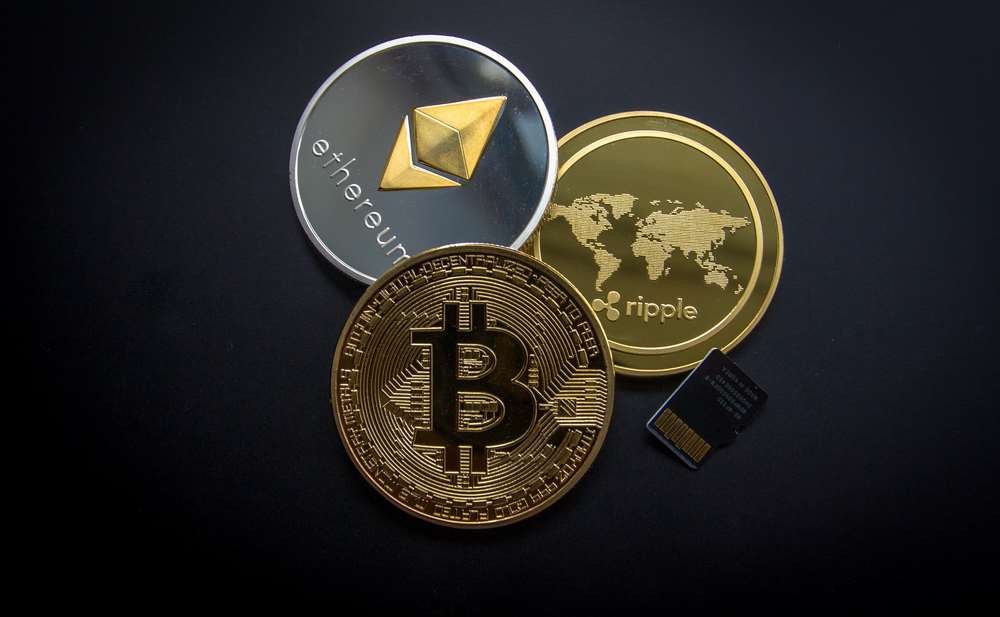
    The time has come for banks to decide if they will be leaders or followers in Virtual Currencies. To help them take the first steps in creating their own strategic approach, Mobey Forum’s Executive Director, Elina Mattila, explores some of the most important and influential developments that banks need to know about the industry today.

    Elina Mattila

    Elina Mattila

    Outside of the main financial services realm, a multi-billion-dollar global virtual currencies market has rapidly evolved and continues to gather pace. But, whilst virtual currencies have been ‘on the list’ of banks for some years, to date most have taken a hands-off approach.

    This is now changing. Some of the larger financial institutions are beginning to formalize their positions. And, thanks to a combination of factors, now is a good time for banks everywhere to follow suit and move the strategic evaluation of this market higher up the priority list.

    So, what are the factors at play and what do banks need to know about virtual currencies to enable them to form a clear, long-term strategy?

    The crypto-crossover with traditional banking 

    The world now has programmable money in the form of cryptocurrencies, which are being used globally to exchange value outside of the conventional banking system. Crypto makes up the vast majority of volume in the virtual currency market but only a small percentage of the global money supply. Nevertheless, the numbers are large enough for banks to take notice and investment continues at pace.

    Digital currencies may know no borders, but banks have always had perimeter control – whether they have chosen to actively engage or not – as they essentially own the transfer of ‘virtual value’ back into the conventional ecosystem, and vice versa. Now, facilities exist that support crypto trading without a wallet, for example, Bitcoin ETFs (Exchange Traded Funds), bank accounts and futures. In other words, anyone can now trade cryptocurrencies easily through banks or new entrants.

    Capitalizing on this, some larger traditional players are starting to establish exchange and custody infrastructure for their clients, a trend which could see major banks exerting far greater influence and control.

    Regulation is coming

    Of course, there is greater risk associated with trading virtual currencies compared to conventional currencies. New regulations like Anti-Money Laundering 5 (AML5), however, are increasing medium-term clarity. The fact that virtual currencies, including cryptocurrencies, have been brought within the scope of new regulation is creating a competitive advantage for banks. A closely regulated environment plays to their deep regulatory experience and will make it easier for them to forge partnerships with other cryptocurrency stakeholders.

    At the same time, new regulations are making it easier for virtual currency companies and exchanges to get access to bank services. This has been considered by crypto stakeholders to be one of the sector’s biggest hurdles to overcome, so banks may now begin to benefit from increased demand from these firms.

    Regulation is, therefore, effectively priming the virtual currencies ecosystem for banks to engage by increasing transparency, reducing some of the associated risk, and lowering the barriers to entry. All of this will make it easier for banks to establish a role and to design new payment products.

    ICOs and investments 

    An ICO is an Initial Coin Offering, also called a ‘token sale’. It is a public offering of a new token or cryptocurrency where investors typically, but not always, pay with another cryptocurrency, such as Bitcoin or Ether. ICOs are channeling venture capital investment and associated revenues away from traditional banking systems to crypto exchanges.Their growth demonstrates that virtual currencies, together with the technologies that underpin them, can provide more than just an alternative means of exchange. If jurisdictional challenges can be overcome, these have the potential to disrupt other traditional financial services.

    With regulation, however, banks may now begin to evaluate ICOs as a possible investment option for customers.

    Gaps are being bridged  

    The development of decentralized exchanges has triggered a recent surge of activity around creation of stablecoins. Put simply, stablecoins are cryptocurrencies that are either pegged directly, backed by another asset or programmed to ascertain stability against another asset. What’s exciting is that they have the potential to bridge between traditional and crypto assets, and promote stability in an otherwise volatile cryptocurrency market.

    Stablecoins represent a far more familiar and serviceable industry for traditional banks, offering them the ability to unlock revenue generation from the cryptocurrency ecosystem, as well as the potential to operate traditional services with new efficiencies.

    This is an emerging trend that may have implications for banks in the coming years, and so they may see their roles start to evolve quickly.

    What’s next?

    There are some credible, greenfield opportunities for banks to explore as they define their role within the virtual currencies market. Whilst the exact future remains difficult to foresee, a combination of these factors, and others, means that banks and financial institutions can now start to make decisions about how to move forward.

    To support banks in their strategy creation, Mobey Forum, has released a report entitled: ‘What Banks Need to Know About Virtual Currencies Right Now’. This report, created by the Virtual Currencies Expert Group, provides detailed considerations for banks and financial institutions who are looking to get involved in the virtual currencies market.

    Related Posts
    DeFi and banking are converging. Here’s what banks can do.
    DeFi and banking are converging. Here’s what banks can do.
    Are Neo Banks Offering Better Metal Debit Cards Than Traditional Banks?
    Are Neo Banks Offering Better Metal Debit Cards Than Traditional Banks?
    Banking at the Intersection: From Nashville to Cannes, A Strategic Call to Action
    Banking at the Intersection: From Nashville to Cannes, A Strategic Call to Action
    Driving Efficiency and Profit Through Customer-Centric Banking
    Driving Efficiency and Profit Through Customer-Centric Banking
    How Ecosystem Partnerships Are Redefining Deposit Products
    How Ecosystem Partnerships Are Redefining Deposit Products
    CIBC Private Banking wins four 2025 Global Banking & Finance Awards
    CIBC Private Banking wins four 2025 Global Banking & Finance Awards
    How Banks Can Put AI to Work Now and Prove ROI in 90 Days
    How Banks Can Put AI to Work Now and Prove ROI in 90 Days
    Top 5 AI quality assurance framework providers for Banks and Financial Services firms.
    Top 5 AI quality assurance framework providers for Banks and Financial Services firms.
    The Unbanked Paradox: How Banking Access Creates Economic Resilience
    The Unbanked Paradox: How Banking Access Creates Economic Resilience
    Hyper-Personalised Banking - Shaping the Future of Finance
    Hyper-Personalised Banking - Shaping the Future of Finance
    The End of Voice Trust: How AI Deepfakes Are Forcing Banks to Rethink Authentication
    The End of Voice Trust: How AI Deepfakes Are Forcing Banks to Rethink Authentication
    Predicting and Preventing Customer Churn in Retail Banking
    Predicting and Preventing Customer Churn in Retail Banking

    Why waste money on news and opinions when you can access them for free?

    Take advantage of our newsletter subscription and stay informed on the go!

    Subscribe

    Previous Banking PostThe surge to cashless and branchless banking is misplaced as younger, upcoming consumers demand bricks and mortar services.
    Next Banking PostAgile risk management in banking: A contradiction in terms?

    More from Banking

    Explore more articles in the Banking category

    Growth and Impact: Banreservas Leads Dominican Republic Economic Expansion

    Growth and Impact: Banreservas Leads Dominican Republic Economic Expansion

    Turning Insight into Impact: Making AI and Analytics Work in Retail Banking

    Turning Insight into Impact: Making AI and Analytics Work in Retail Banking

    KeyBank Embraces Next-Generation AI Platform to Transform Fraud and Financial Crime Prevention

    KeyBank Embraces Next-Generation AI Platform to Transform Fraud and Financial Crime Prevention

    Understanding Association Banking: Financial Solutions for Community Success

    Understanding Association Banking: Financial Solutions for Community Success

    Applying Symbiosis for advantage in APAC banking

    Applying Symbiosis for advantage in APAC banking

    AmBank Islamic Berhad Earns Triple Recognition for Excellence in Islamic Banking

    AmBank Islamic Berhad Earns Triple Recognition for Excellence in Islamic Banking

    FinTok Strategy: How Banks Are Reaching Gen Z Through Social Media

    FinTok Strategy: How Banks Are Reaching Gen Z Through Social Media

    Rethinking Retail Banking Sustainability: Why the ATM is an Asset in the Sustainable Transition

    Rethinking Retail Banking Sustainability: Why the ATM is an Asset in the Sustainable Transition

    How private banks can survive the neo-broker revolution

    How private banks can survive the neo-broker revolution

    Next-Gen Bank Branches: The Evolution from Transaction Hubs to Experience Centers

    Next-Gen Bank Branches: The Evolution from Transaction Hubs to Experience Centers

    The Banking Talent Crunch: How Financial Institutions Are Competing for Digital-Native Skills

    The Banking Talent Crunch: How Financial Institutions Are Competing for Digital-Native Skills

    Beyond Interest: How Banks Are Reimagining Revenue in the Digital Age

    Beyond Interest: How Banks Are Reimagining Revenue in the Digital Age

    View All Banking Posts