Search
00
GBAF Logo
trophy
Top StoriesInterviewsBusinessFinanceBankingTechnologyInvestingTradingVideosAwardsMagazinesHeadlinesTrends

Subscribe to our newsletter

Get the latest news and updates from our team.

Global Banking & Finance Review®

Global Banking & Finance Review® - Subscribe to our newsletter

Company

    GBAF Logo
    • About Us
    • Advertising and Sponsorship
    • Profile & Readership
    • Contact Us
    • Latest News
    • Privacy & Cookies Policies
    • Terms of Use
    • Advertising Terms
    • Issue 81
    • Issue 80
    • Issue 79
    • Issue 78
    • Issue 77
    • Issue 76
    • Issue 75
    • Issue 74
    • Issue 73
    • Issue 72
    • Issue 71
    • Issue 70
    • View All
    • About the Awards
    • Awards Timetable
    • Awards Winners
    • Submit Nominations
    • Testimonials
    • Media Room
    • FAQ
    • Asset Management Awards
    • Brand of the Year Awards
    • Business Awards
    • Cash Management Banking Awards
    • Banking Technology Awards
    • CEO Awards
    • Customer Service Awards
    • CSR Awards
    • Deal of the Year Awards
    • Corporate Governance Awards
    • Corporate Banking Awards
    • Digital Transformation Awards
    • Fintech Awards
    • Education & Training Awards
    • ESG & Sustainability Awards
    • ESG Awards
    • Forex Banking Awards
    • Innovation Awards
    • Insurance & Takaful Awards
    • Investment Banking Awards
    • Investor Relations Awards
    • Leadership Awards
    • Islamic Banking Awards
    • Real Estate Awards
    • Project Finance Awards
    • Process & Product Awards
    • Telecommunication Awards
    • HR & Recruitment Awards
    • Trade Finance Awards
    • The Next 100 Global Awards
    • Wealth Management Awards
    • Travel Awards
    • Years of Excellence Awards
    • Publishing Principles
    • Ownership & Funding
    • Corrections Policy
    • Editorial Code of Ethics
    • Diversity & Inclusion Policy
    • Fact Checking Policy
    Original content: Global Banking and Finance Review - https://www.globalbankingandfinance.com

    A global financial intelligence and recognition platform delivering authoritative insights, data-driven analysis, and institutional benchmarking across Banking, Capital Markets, Investment, Technology, and Financial Infrastructure.

    Copyright © 2010-2026 - All Rights Reserved. | Sitemap | Tags

    Editorial & Advertiser disclosure

    Global Banking & Finance Review® is an online platform offering news, analysis, and opinion on the latest trends, developments, and innovations in the banking and finance industry worldwide. The platform covers a diverse range of topics, including banking, insurance, investment, wealth management, fintech, and regulatory issues. The website publishes news, press releases, opinion and advertorials on various financial organizations, products and services which are commissioned from various Companies, Organizations, PR agencies, Bloggers etc. These commissioned articles are commercial in nature. This is not to be considered as financial advice and should be considered only for information purposes. It does not reflect the views or opinion of our website and is not to be considered an endorsement or a recommendation. We cannot guarantee the accuracy or applicability of any information provided with respect to your individual or personal circumstances. Please seek Professional advice from a qualified professional before making any financial decisions. We link to various third-party websites, affiliate sales networks, and to our advertising partners websites. When you view or click on certain links available on our articles, our partners may compensate us for displaying the content to you or make a purchase or fill a form. This will not incur any additional charges to you. To make things simpler for you to identity or distinguish advertised or sponsored articles or links, you may consider all articles or links hosted on our site as a commercial article placement. We will not be responsible for any loss you may suffer as a result of any omission or inaccuracy on the website.

    1. Home
    2. >Banking
    3. >Western Union, MoneyGram resume services to Afghanistan
    Banking

    Western Union, MoneyGram Resume Services to Afghanistan

    Published by maria gbaf

    Posted on September 3, 2021

    4 min read

    Last updated: February 13, 2026

    Add as preferred source on Google
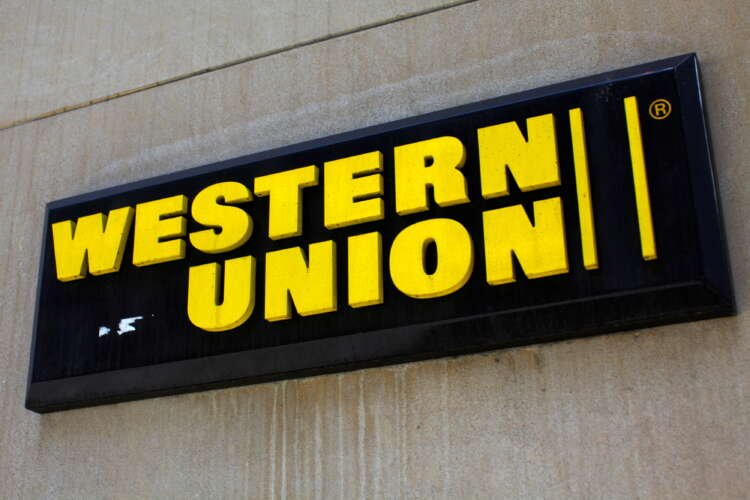
    The image illustrates the resumption of Western Union and MoneyGram services in Afghanistan, highlighting their role in facilitating humanitarian aid and remittances for the Afghan economy.
    Western Union and MoneyGram resume money transfer services to Afghanistan - Global Banking & Finance Review
    Why waste money on news and opinion when you can access them for free?

    Take advantage of our newsletter subscription and stay informed on the go!

    Subscribe

    Tags:financial stabilityInternational payments

    Western Union and MoneyGram Restart Money Transfers to Afghanistan

    By Tom Arnold

    LONDON (Reuters) -Western Union Co and MoneyGram International Inc resumed money-transfer services to Afghanistan on Thursday, moves in line with a U.S. push to allow humanitarian activity to continue after the Taliban’s takeover.

    The pair suspended services in Afghanistan https://www.reuters.com/business/western-union-suspends-services-afghanistan-2021-08-19 more than two weeks ago after the Islamist militia captured Kabul at lightning speed.

    But an easing of security concerns following the completion of the Taliban’s conquest of the country https://www.reuters.com/article/us-afghanistan-conflict-idUSKBN2FY0AR opened the way for the reopening this week of banks, which the money-transfer firms rely on to dispense and collect funds.

    Jean Claude Farah, Western Union’s president in Asia, Europe, the Middle East and Africa, told Reuters the reopening of banks, plus a push by the United States to facilitate humanitarian assistance to the Afghan people, had given the American company confidence to resume services on Thursday.

    “Much of our business involving Afghanistan is low-value family and support remittances that support basic needs of the people there, so that’s the grounding that we have and why we want to reopen our business,” Farah said.

    “We’ve engaged with the U.S. government, which has conveyed that allowing humanitarian activities, including remittances, to continue are consistent with U.S. policy.”

    The flow of funds from migrant workers overseas is a key lifeline for many Afghans and has helped the economy of one of the world’s poorest nations weather years of violence and instability. The United Nations says about half of the population requires aid amid the second drought in four years.

    In a statement, MoneyGram said following guidance from the U.S. government, it was resuming its services in coordination with its partners in the country and the Afghanistan Banks Association.

    “We recognize that remittances play a pivotal role in the livelihood and daily needs of the Afghan people,” MoneyGram said.

    SANCTIONS ON FINANCING

    One complication is that there are a broad range of sanctions on financing to the Taliban, while the Haqqani network, which has links to the Taliban, is classed as a terrorist organisation by the United States and Britain.

    Yet U.S. President Joe Biden’s administration has said it is committed to allowing humanitarian work to continue in Afghanistan.

    “We are continuing to engage with the U.S. government and others to understand their policies and what type of longer term regulatory framework will be put in place as it relates to the Taliban,” Western Union’s Farah said.

    Remittances to Afghanistan reached $789 million in 2020, around 4% of the country’s gross domestic product (GDP), the World Bank estimated, down from $829 million in 2019.

    Such flows have historically played an important role in supporting financial stability. Along with international grants and resilient exports, remittances helped Afghanistan’s current account surplus reach 14.2% of GDP in 2020, the International Monetary Fund said in June.

    DO BANKS HAVE THE CASH?

    In recent days, Afghanistan’s central bank has provided funds of hundreds of thousands of dollars to each bank that requested liquidity, a senior banker told Reuters. But the financial system and economy could be in peril unless the Taliban can access the central bank‘s roughly $10 billion https://www.reuters.com/business/afghanistan-central-bank-board-member-urges-biden-imf-release-funds-2021-09-01 in assets, which are mostly outside of the country.

    Farah said Western Union had been assured by the banks it partners with in Afghanistan that they had sufficient cash to pay receivers of remittances.

    “Some of them have indicated at some locations that they have good liquidity in afghani and at least some liquidity in U.S. dollars as well, we allow payouts in both, to resume remittances,” he added.

    Before it shut down services on Aug. 16, around 45% of each transaction sent via Western Union to Afghanistan was $200 or less, he said.

    Western Union said on Thursday that payouts of any funds sent to Afghanistan were available in select locations. Outbound services, money sent from there to other countries, remained suspended, it added.

    (Reporting by Tom Arnold in LondonEditing by Pravin Char and Matthew Lewis)

    Frequently Asked Questions about Western Union, MoneyGram resume services to Afghanistan

    1Why did Western Union and MoneyGram suspend services to Afghanistan?

    They suspended services after the Taliban captured Kabul, which raised security concerns.

    2What role do remittances play in Afghanistan's economy?

    Remittances are a key lifeline for many Afghans, contributing significantly to the economy and supporting basic needs.

    3How much did remittances to Afghanistan amount to in 2020?

    Remittances to Afghanistan reached $789 million in 2020, accounting for around 4% of the country's GDP.

    4What assurances did Western Union receive from Afghan banks?

    Western Union was assured by Afghan banks that they had sufficient cash to pay receivers of remittances.

    5What is the U.S. government's stance on humanitarian activities in Afghanistan?

    The U.S. government has conveyed that allowing humanitarian activities, including remittances, is consistent with its policy.

    Previous Banking PostGlobal Stock Benchmark at New High, Dollar Slips
    Next Banking PostSabadell Seeks to Cut 13% of Workforce in Spain -Union
    More from Banking

    Explore more articles in the Banking category

    Image for Nominate Today for the Leadership Awards 2026
    Nominate Today for the Leadership Awards 2026
    Image for Submit Your Entries for Insurance & Takaful Awards 2026
    Submit Your Entries for Insurance & Takaful Awards 2026
    Image for Calling for Entries: ESG & Sustainability Awards 2026
    Calling for Entries: ESG & Sustainability Awards 2026
    Image for Call for Entries: Deal of the Year Awards 2026
    Call for Entries: Deal of the Year Awards 2026
    Image for Submit Your Entry Today for Customer Service Awards 2026
    Submit Your Entry Today for Customer Service Awards 2026
    Image for Submit Your Entry Today for CSR Awards 2026
    Submit Your Entry Today for CSR Awards 2026
    Image for Submit Your Entry Today for Retail Banking Awards 2026
    Submit Your Entry Today for Retail Banking Awards 2026
    Image for Nominations Open for Islamic Banking Awards 2026
    Nominations Open for Islamic Banking Awards 2026
    Image for Submit Your Entry Today for Fund & Asset Management Awards 2026
    Submit Your Entry Today for Fund & Asset Management Awards 2026
    Image for Entries Open for Forex Banking Awards 2026
    Entries Open for Forex Banking Awards 2026
    Image for Call for Entries for Brand of the Year Awards 2026
    Call for Entries for Brand of the Year Awards 2026
    Image for Nominations Open for Corporate Banking Awards 2026
    Nominations Open for Corporate Banking Awards 2026
    View All Banking Posts