Search
00
GBAF Logo
trophy
Top StoriesInterviewsBusinessFinanceBankingTechnologyInvestingTradingVideosAwardsMagazinesHeadlinesTrends

Subscribe to our newsletter

Get the latest news and updates from our team.

Global Banking & Finance Review®

Global Banking & Finance Review® - Subscribe to our newsletter

Company

    GBAF Logo
    • About Us
    • Profile
    • Privacy & Cookie Policy
    • Terms of Use
    • Contact Us
    • Advertising
    • Submit Post
    • Latest News
    • Research Reports
    • Press Release
    • Awards▾
      • About the Awards
      • Awards TimeTable
      • Submit Nominations
      • Testimonials
      • Media Room
      • Award Winners
      • FAQ
    • Magazines▾
      • Global Banking & Finance Review Magazine Issue 79
      • Global Banking & Finance Review Magazine Issue 78
      • Global Banking & Finance Review Magazine Issue 77
      • Global Banking & Finance Review Magazine Issue 76
      • Global Banking & Finance Review Magazine Issue 75
      • Global Banking & Finance Review Magazine Issue 73
      • Global Banking & Finance Review Magazine Issue 71
      • Global Banking & Finance Review Magazine Issue 70
      • Global Banking & Finance Review Magazine Issue 69
      • Global Banking & Finance Review Magazine Issue 66
    Top StoriesInterviewsBusinessFinanceBankingTechnologyInvestingTradingVideosAwardsMagazinesHeadlinesTrends

    Global Banking & Finance Review® is a leading financial portal and online magazine offering News, Analysis, Opinion, Reviews, Interviews & Videos from the world of Banking, Finance, Business, Trading, Technology, Investing, Brokerage, Foreign Exchange, Tax & Legal, Islamic Finance, Asset & Wealth Management.
    Copyright © 2010-2026 GBAF Publications Ltd - All Rights Reserved. | Sitemap | Tags | Developed By eCorpIT

    Editorial & Advertiser disclosure

    Global Banking & Finance Review® is an online platform offering news, analysis, and opinion on the latest trends, developments, and innovations in the banking and finance industry worldwide. The platform covers a diverse range of topics, including banking, insurance, investment, wealth management, fintech, and regulatory issues. The website publishes news, press releases, opinion and advertorials on various financial organizations, products and services which are commissioned from various Companies, Organizations, PR agencies, Bloggers etc. These commissioned articles are commercial in nature. This is not to be considered as financial advice and should be considered only for information purposes. It does not reflect the views or opinion of our website and is not to be considered an endorsement or a recommendation. We cannot guarantee the accuracy or applicability of any information provided with respect to your individual or personal circumstances. Please seek Professional advice from a qualified professional before making any financial decisions. We link to various third-party websites, affiliate sales networks, and to our advertising partners websites. When you view or click on certain links available on our articles, our partners may compensate us for displaying the content to you or make a purchase or fill a form. This will not incur any additional charges to you. To make things simpler for you to identity or distinguish advertised or sponsored articles or links, you may consider all articles or links hosted on our site as a commercial article placement. We will not be responsible for any loss you may suffer as a result of any omission or inaccuracy on the website.

    Home > Top Stories > UBS CEO says more capital not the way to make it safer
    Top Stories

    UBS CEO says more capital not the way to make it safer

    Published by Jessica Weisman-Pitts

    Posted on February 6, 2024

    3 min read

    Last updated: January 31, 2026

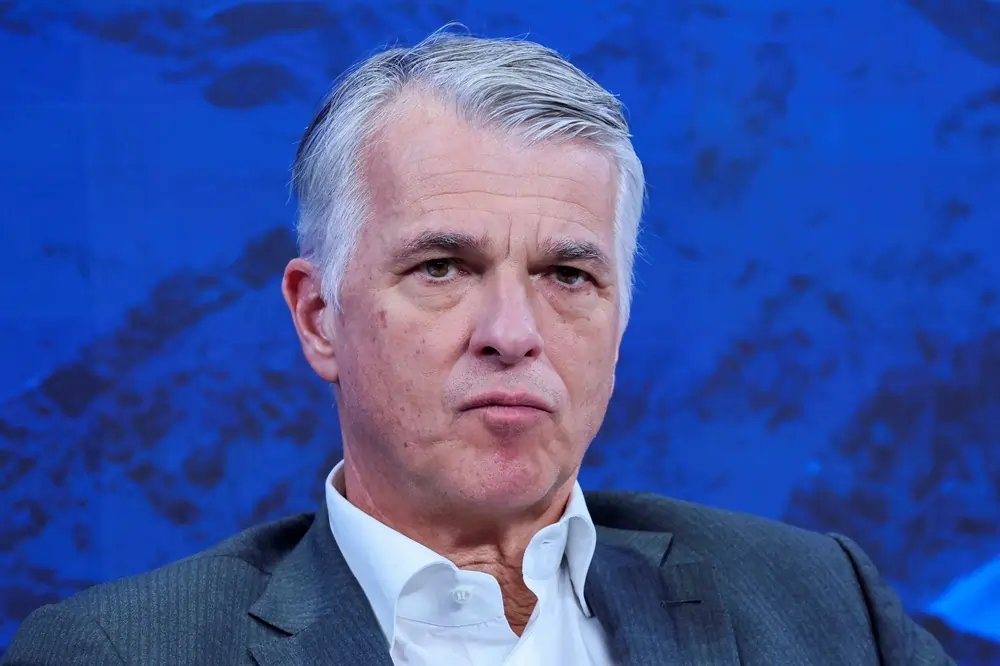
    UBS CEO Sergio Ermotti addresses analysts about the bank's capital requirements and the implications for financial stability in Switzerland, following the Credit Suisse collapse.
    UBS CEO Sergio Ermotti discusses banking regulations and capital requirements - Global Banking & Finance Review
    Why waste money on news and opinion when you can access them for free?

    Take advantage of our newsletter subscription and stay informed on the go!

    Subscribe

    Tags:Capital requirementsfinancial stabilitybanking regulation

    UBS CEO says more capital not the way to make it safer

    By Noele Illien and Stefania Spezzati

    ZURICH/LONDON (Reuters) – UBS CEO Sergio Ermotti said on Tuesday that authorities should not require it to hold more capital, ahead of an official review into the Swiss banking system over the failure of Credit Suisse.

    Ermotti, speaking after full-year results from UBS, said that a lack of capital was not why Credit Suisse had collapsed and that “no expert is saying that more capital is necessary”.

    “The loss of trust and confidence, the lack of underlying profitability created a self-fulfilling problem” for Credit Suisse, Ermotti said during a call with analysts.

    Last year’s emergency takeover of Credit Suisse by UBS has forced a rethink on whether Switzerland’s too-big-to-fail rules that emerged from the financial crisis are fit for purpose.

    “If you look at regulation you know it was well applied and fully functioning for UBS, so the same regulation should have worked for Credit Suisse,” the former investment banker added.

    Some banking analysts are asking if regulators will push for higher capital requirements – a buffer banks must keep aside – as a way to make UBS safer, especially now that the bank has a balance sheet almost twice the size of the Swiss economy.

    However, setting aside more capital could make UBS less competitive with large banking rivals in other jurisdictions and curb its ability to reward shareholders.

    Globally systemically important banks such as UBS are required to create resolution plans, called living wills, which would allow regulators to unwind them without creating broader systemic issues. Regulators had considered resolution for Credit Suisse but did not pursue this path.

    “Facts are telling us a crystal-clear story that capital is not the way to manage such a situation,” Ermotti said.

    Switzerland’s finance ministry will submit its review of banking regulation to parliament this spring. The parliament will also report findings later this year from its investigative commission looking into Credit Suisse’s downfall.

    REGULATORY RISK

    Ten months on from the Credit Suisse implosion, analysts and investors are focused on what changing regulations mean for UBS.

    Two key investors fear it could be on a collision course with regulators because of its size, Reuters reported last week.

    In a note to clients on Jan. 19 seen by Reuters, Autonomous analyst Stefan Stalmann downgraded his rating on UBS to neutral, highlighting the risk that too-big-to-fail rules could lead to further capital charges.

    Capital requirements “are not just an obscure regulatory burden,” said Stalmann, “but they do matter substantively for the creditors and counterparties”.

    Stalmann declined to comment when reached by Reuters.

    Swiss financial regulator FINMA said in December that the capitalization of Credit Suisse’s parent bank, which housed the Swiss operations, was its weak point.

    In its report, FINMA said greater capitalization of the parent bank “increases the resilience of the entire group” and offers more protection from incidents at subsidiaries.

    UBS on Tuesday reported a Common Equity Tier 1 ratio, a measure of its capital strength, of 14.5%, a level which is above current regulatory requirements.

    (Reporting by Stefania Spezzati in London and Noele Illien in Zurich; Editing by Tommy Wilkes Reggiori and Alexander Smith)

    Frequently Asked Questions about UBS CEO says more capital not the way to make it safer

    1What are capital requirements?

    Capital requirements are regulations that require banks to hold a certain amount of capital to cover potential losses, ensuring they remain solvent and can absorb shocks during financial downturns.

    2What is financial stability?

    Financial stability refers to a condition where the financial system operates effectively, with institutions able to withstand shocks, maintain confidence, and facilitate smooth financial transactions.

    3What is a resolution plan?

    A resolution plan, often called a living will, is a strategy that outlines how a financial institution can be unwound or restructured in a way that minimizes systemic risk during a crisis.

    4What is the Common Equity Tier 1 ratio?

    The Common Equity Tier 1 (CET1) ratio is a measure of a bank's core equity capital compared to its total risk-weighted assets, indicating its financial strength and ability to absorb losses.

    More from Top Stories

    Explore more articles in the Top Stories category

    Image for Lessons From the Ring and the Deal Table: How Boxing Shapes Steven Nigro’s Approach to Banking and Life
    Lessons From the Ring and the Deal Table: How Boxing Shapes Steven Nigro’s Approach to Banking and Life
    Image for Joe Kiani in 2025: Capital, Conviction, and a Focused Return to Innovation
    Joe Kiani in 2025: Capital, Conviction, and a Focused Return to Innovation
    Image for Marco Robinson – CLOSE THE DEAL AND SUDDENLY GROW RICH
    Marco Robinson – CLOSE THE DEAL AND SUDDENLY GROW RICH
    Image for Digital Tracing: Turning a regulatory obligation into a commercial advantage
    Digital Tracing: Turning a regulatory obligation into a commercial advantage
    Image for Exploring the Role of Blockchain and the Bitcoin Price Today in Education
    Exploring the Role of Blockchain and the Bitcoin Price Today in Education
    Image for Inside the World’s First Collection Industry Conglomerate: PCA Global’s Platform Strategy
    Inside the World’s First Collection Industry Conglomerate: PCA Global’s Platform Strategy
    Image for Chase Buchanan Private Wealth Management Highlights Key Autumn 2025 Budget Takeaways for Expats
    Chase Buchanan Private Wealth Management Highlights Key Autumn 2025 Budget Takeaways for Expats
    Image for PayLaju Strengthens Its Position as Malaysia’s Trusted Interest-Free Sharia-Compliant Loan Provider
    PayLaju Strengthens Its Position as Malaysia’s Trusted Interest-Free Sharia-Compliant Loan Provider
    Image for A Notable Update for Employee Health Benefits:
    A Notable Update for Employee Health Benefits:
    Image for Creating Equity Between Walls: How Mohak Chauhan is Using Engineering, Finance, and Community Vision to Reengineer Affordable Housing
    Creating Equity Between Walls: How Mohak Chauhan is Using Engineering, Finance, and Community Vision to Reengineer Affordable Housing
    Image for Upcoming Book on Real Estate Investing: Harvard Grace Capital Founder Stewart Heath’s Puts Lessons in Print
    Upcoming Book on Real Estate Investing: Harvard Grace Capital Founder Stewart Heath’s Puts Lessons in Print
    Image for ELECTIVA MARKS A LANDMARK FIRST YEAR WITH MAJOR SENIOR APPOINTMENTS AND EXPANSION MILESTONES
    ELECTIVA MARKS A LANDMARK FIRST YEAR WITH MAJOR SENIOR APPOINTMENTS AND EXPANSION MILESTONES
    View All Top Stories Posts
    Previous Top Stories PostGermany’s KfW bank sells 50 million Deutsche Post shares
    Next Top Stories PostEU agrees path to compete in clean tech production