
Banking
Trends in Carbon Tracking Banks Should Look Out for in 2022
Published by Jessica Weisman-Pitts
Posted on March 15, 2022
5 min readLast updated: February 8, 2026
Add as preferred source on Google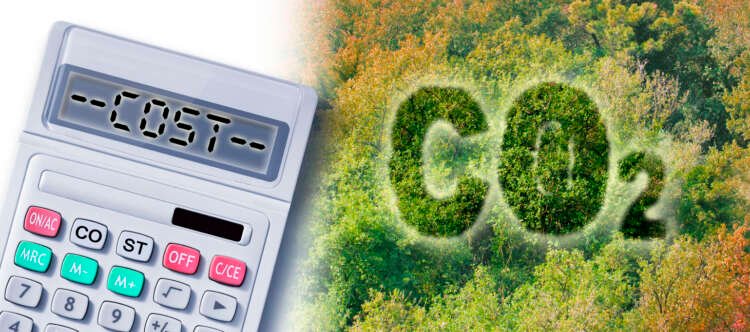
Published by Jessica Weisman-Pitts
Posted on March 15, 2022
5 min readLast updated: February 8, 2026
Add as preferred source on GoogleBy Emma Kisby UK and Europe CEO at Cogo
Growing rapidly in importance over recent years, carbon tracking is fast becoming a diverse – if somewhat disparate – landscape. From multinational corporations all the way down to individual consumers, there is an increasing desire to be able to quantify and understand climate impact. The 2020s is likely to be the decade where carbon tracking reaches its inflection point and goes from being a peripheral to a central part of our efforts to combat climate change. Through our partnerships with banks like NatWest and TSB, we have seen first-hand how individual choices can ladder up to a huge collective impact.
The unique relationships with customers and visibility of spending data that banks and other financial services players have access to puts them in the perfect position to help bridge the gap between potential and current scalability. As with any emerging technology however, there are at first several key obstacles which must be overcome. Here are a few that banks should be watching for in the coming years:
Carbon tracking is still evolving
Both the range of solutions coming to market and the number of users (consumers and businesses) that carbon tracking reaches will rise exponentially over the next few years. This will give users the chance to try different models and approaches – keeping things flexible and discarding those which are less fit for purpose. It should also support a rising tide of customer expectations, which will support ongoing innovation and continual improvement in the market as a whole.
With competition also comes the potential for collaboration between solutions that together are better than the sum of their parts. Even fairly niche technologies have the potential to make widespread change with the right partners. For example, widespread carbon labelling could be a gamechanger for carbon calculators, which would be able to apply their insights to not just a shop as a whole, but individual items bought. At Cogo, we have found that our carbon tracking algorithm works best when integrated and amplified by the strong infrastructure and user base of consumer banking apps. As these combinations of solutions are tested out, our capabilities to understand carbon emissions will become deeper and more contextualised.
Convenience will be key to uptake
There is also strong potential for technologies from other industries to be applied to the opportunities and challenges of tracking carbon emissions. One key area where emerging technologies like AI and blockchain could work well for example, is in making carbon labelling ‘smarter’. This would provide better traceability for products that make carbon impacts more accurate and convenient.
QR codes in particular could be revolutionary, if they allow a quick scan with your smartphone to add the carbon impact to your total lifestyle ‘spend’. Think of the likes of wellbeing apps, like MyFitnessPal. In addition to reducing the burden of tracking carbon manually, such applications would also allow data analysis of how choices are made in real life. By understanding the customer mindset behind a piece of data more deeply, customer prompts and offers could be used to help consumers make more sustainable spending choices.
Greater standardisation
A key factor for highly regulated industries like banking will be to see standardisation introduced into carbon tracking. Many carbon tracking softwares have already become approved for use in the banking space. But there will also need to be greater consistency and agreement on how carbon emissions are tracked and calculated. In the same way that a consumer is able to compare current account options across providers online, banks need to be able to compare carbon tracking options to understand which best fits into their ecosystem and wider product offering.
To prepare for larger-scale adoption, there will certainly be a period of carbon education. In the shorter term, the priority should be to remove some of the confusion created by having non-comparable carbon-tracking systems. This would simplify the education step for B2B buyers and speed up the adoption process.
Regulation on the horizon
Another way to bring greater clarity to carbon tracking would be via the creation of industry bodies or voluntary charters. The TCFD, or Task Force on Climate-Related Financial Disclosure, already addresses this need up to a certain point. There are also some voluntary schemes, such as the UK Carbon Trust’s voluntary carbon labelling options. The results of these initiatives so far indicates that they inspire greater confidence in carbon tracking, thus encouraging other industries such as financial services to trial partnerships and other collaborations. While voluntary measures may only be taken up by the best-performing carbon tracking systems, nevertheless they are a good way to build confidence and trust in those providers.
Official regulation is also no doubt on the horizon for the carbon-tracking industry. This may take years to come into law, but it is something that financial services organisations should start planning for now.
Impact leads the way
The uniting theme of all these trends is ‘impact’. While carbon-tracking solutions address the climate crisis in a variety of ways, they all share a core purpose to make it easier to track, measure, and understand carbon emissions. The current market is one with a wide variety of players, which we can expect to become more collaborative and integrated into banking systems in the coming years. The key will be to find and back the winning players early.
Carbon tracking refers to the process of measuring and monitoring carbon emissions produced by individuals, businesses, or products to understand their impact on climate change.
Carbon labelling involves marking products with information about their carbon footprint, helping consumers make informed choices regarding their environmental impact.
Standardisation in banking refers to the establishment of uniform practices and criteria for processes, such as carbon tracking, to ensure consistency and comparability across financial institutions.
Technology plays a crucial role in carbon tracking by providing tools and platforms that facilitate the measurement, analysis, and reporting of carbon emissions.
Customer expectations in banking refer to the anticipated service quality, convenience, and transparency that customers seek from financial institutions.
Explore more articles in the Banking category









