Search
00
GBAF Logo
trophy
Top StoriesInterviewsBusinessFinanceBankingTechnologyInvestingTradingVideosAwardsMagazinesHeadlinesTrends

Subscribe to our newsletter

Get the latest news and updates from our team.

Global Banking and Finance Review

Global Banking & Finance Review

Company

    GBAF Logo
    • About Us
    • Profile
    • Privacy & Cookie Policy
    • Terms of Use
    • Contact Us
    • Advertising
    • Submit Post
    • Latest News
    • Research Reports
    • Press Release
    • Awards▾
      • About the Awards
      • Awards TimeTable
      • Submit Nominations
      • Testimonials
      • Media Room
      • Award Winners
      • FAQ
    • Magazines▾
      • Global Banking & Finance Review Magazine Issue 79
      • Global Banking & Finance Review Magazine Issue 78
      • Global Banking & Finance Review Magazine Issue 77
      • Global Banking & Finance Review Magazine Issue 76
      • Global Banking & Finance Review Magazine Issue 75
      • Global Banking & Finance Review Magazine Issue 73
      • Global Banking & Finance Review Magazine Issue 71
      • Global Banking & Finance Review Magazine Issue 70
      • Global Banking & Finance Review Magazine Issue 69
      • Global Banking & Finance Review Magazine Issue 66
    Top StoriesInterviewsBusinessFinanceBankingTechnologyInvestingTradingVideosAwardsMagazinesHeadlinesTrends

    Global Banking & Finance Review® is a leading financial portal and online magazine offering News, Analysis, Opinion, Reviews, Interviews & Videos from the world of Banking, Finance, Business, Trading, Technology, Investing, Brokerage, Foreign Exchange, Tax & Legal, Islamic Finance, Asset & Wealth Management.
    Copyright © 2010-2025 GBAF Publications Ltd - All Rights Reserved.

    Editorial & Advertiser disclosure

    Global Banking and Finance Review is an online platform offering news, analysis, and opinion on the latest trends, developments, and innovations in the banking and finance industry worldwide. The platform covers a diverse range of topics, including banking, insurance, investment, wealth management, fintech, and regulatory issues. The website publishes news, press releases, opinion and advertorials on various financial organizations, products and services which are commissioned from various Companies, Organizations, PR agencies, Bloggers etc. These commissioned articles are commercial in nature. This is not to be considered as financial advice and should be considered only for information purposes. It does not reflect the views or opinion of our website and is not to be considered an endorsement or a recommendation. We cannot guarantee the accuracy or applicability of any information provided with respect to your individual or personal circumstances. Please seek Professional advice from a qualified professional before making any financial decisions. We link to various third-party websites, affiliate sales networks, and to our advertising partners websites. When you view or click on certain links available on our articles, our partners may compensate us for displaying the content to you or make a purchase or fill a form. This will not incur any additional charges to you. To make things simpler for you to identity or distinguish advertised or sponsored articles or links, you may consider all articles or links hosted on our site as a commercial article placement. We will not be responsible for any loss you may suffer as a result of any omission or inaccuracy on the website.

    Home > Top Stories > The plastic card payment pollution problem: What it is and how to solve it
    Top Stories

    The plastic card payment pollution problem: What it is and how to solve it

    The plastic card payment pollution problem: What it is and how to solve it

    Published by Jessica Weisman-Pitts

    Posted on June 28, 2022

    Featured image for article about Top Stories

    By Jørgen Christian Juul, CEO, Cardlay.

    It wasn’t that long ago that we carried around cash to pay for everything, whether it was for getting on the bus, paying for our weekly food shop or buying a company meal. Despite credit cards being around since the 1950s, neither they nor debit cards became popular until the ‘90s. At this point, plastic cards quickly became very much part and parcel of everyday life. By the 2000s, they were popular worldwide.

    Even in the era of mass digitalisation, there were over 25 billion payment cards in circulation in 2021, with this number expected to rise to over 30 billion by 2025. In the UK, just 7% of shop payments will be made in cash by 2024, following a cashless global trend — cash payments already account for less than 10% of shop purchases in countries including Sweden, Canada and Australia.

    However, despite their convenience, these payment cards come with a massive environmental cost. Here we delve into just how harmful plastic payment cards are for the planet, and the solutions we should be looking to use instead.

    How do payment cards harm the environment?

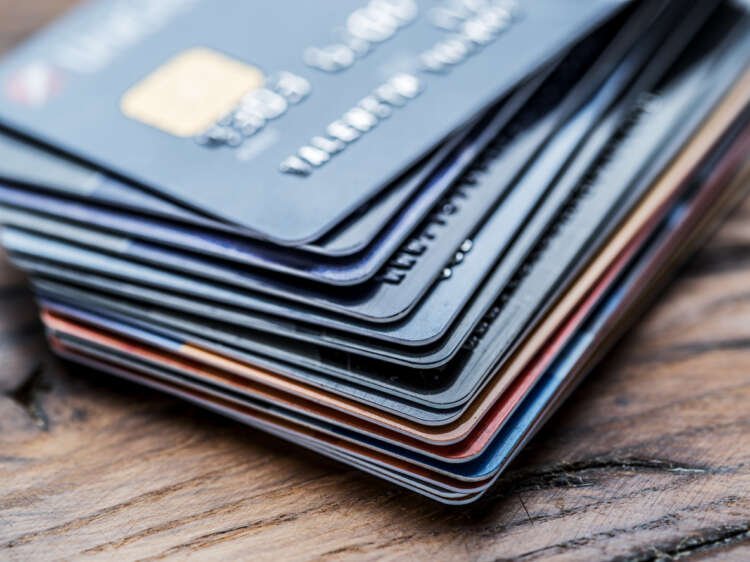
    According to Finder, each year around six billion new plastic cards are produced and issued, with most of them made from PVC. This type of plastic is harmful at every stage of its life cycle (during its production, use and disposal) as it’s made of chlorine and dioxin, both of which release huge amounts of toxic chemicals into the environment.

    What’s more, in an interview with Finextra, Michael Donald, Founder and CEO of ImageNPay, discussed that around 5.7 million tonnes of plastic cards end up in landfills each year, where it takes them decades to break down into microplastics. These can then end up being ingested by humans and wildlife, leading to a range of potential health issues as discussed by the Washington Post, from reproductive harm and organ problems, to obesity and developmental delays in children.

    Although some cards get recycled, the majority end up in landfill as plastic waste. Aside from the PVC, additives and pigments complicate the recycling process, but ultimately, the lack of financial incentive dictates the abysmal effort made to recycle this plastic. As such, the plastic is either incinerated, dumped in landfills, or finds its way into the oceans. This is unnecessarily harmful considering the number of alternatives now available. So which of these should we be looking towards?

    What alternatives should be used instead?

    Digital payment solutions

    There are so many ways to pay digitally now, removing the need for plastic cards entirely. Some common methods include:

    Digital wallets

    Instead of having a physical bank card, digital wallets let you use your smartphone to make contactless payments via a virtual card contained within. Virtual cards to be used for all kinds of online payments including in retail, restaurants, etc. around the world making this the largest and most adaptable solution. According to research, over 2.8 billion digital wallets were in use by the end of 2020, with more than one in two people predicted to use them by 2025.

    Peer-to-peer digital payments

    The likes of PayPal and Google Pay are examples of digital peer-to-peer payment solutions. These platforms enable users to search for other people and perform online transactions. Using them can be as simple as obtaining the other person’s email address and sending them money through the platform.

    Crypto payments

    We could see the end of centralised payments altogether if crypto payments ever become mainstream. Referring to payments relying on cryptocurrency (a decentralised currency not managed by any financial institution), this is run on blockchain technology, which is a completely secure digital infrastructure immune from fraud and theft. All senders need is the recipient’s public address — a string of text given to identify a particular user.

    Sustainable payment cards

    Alternatively, many payment providers have started releasing cards using more sustainable materials, with examples including:

    Wood

    Unlike plastic cards, wooden payment cards don’t release toxic chemicals into the environment and are also biodegradable. We’ve seen a number of these products launched in recent years, including from the likes of TreeCard and Tomorrow. The former company even puts 80% of its profits towards reforestation projects, with its cards made from sustainably-sourced and FSC-approved cherry wood.

    Metal

    Payment providers including N26, Monzo and Capital One have released metal cards in the last few years. Although these products do have a large carbon footprint, they are much longer-lasting than their plastic counterparts, reducing waste, while also being a lot easier to recycle.

    Non-PVC plastic

    Tridos’s polylactic acid (PLA) bank card is an example of one that’s technically still made from plastic, while being a lot more environmentally-friendly than the standard PVC payment card. Produced from renewable sources like plant leaves and corn instead of petroleum, PLA is biodegradable, recyclable, and non-toxic if incinerated.

    So there you have it: plastic card payment pollution explained, as well as a look at how we can move forward and eschew this outdated solution once and for all. We can only hope that these alternative payment methods continue to gain traction in the coming years and decades, helping us to move towards a more sustainable world.

    Related Posts
    Inside the World’s First Collection Industry Conglomerate: PCA Global’s Platform Strategy
    Inside the World’s First Collection Industry Conglomerate: PCA Global’s Platform Strategy
    Chase Buchanan Private Wealth Management Highlights Key Autumn 2025 Budget Takeaways for Expats
    Chase Buchanan Private Wealth Management Highlights Key Autumn 2025 Budget Takeaways for Expats
    PayLaju Strengthens Its Position as Malaysia’s Trusted Interest-Free Sharia-Compliant Loan Provider
    PayLaju Strengthens Its Position as Malaysia’s Trusted Interest-Free Sharia-Compliant Loan Provider
    A Notable Update for Employee Health Benefits:
    A Notable Update for Employee Health Benefits:
    Creating Equity Between Walls: How Mohak Chauhan is Using Engineering, Finance, and Community Vision to Reengineer Affordable Housing
    Creating Equity Between Walls: How Mohak Chauhan is Using Engineering, Finance, and Community Vision to Reengineer Affordable Housing
    Upcoming Book on Real Estate Investing: Harvard Grace Capital Founder Stewart Heath’s Puts Lessons in Print
    Upcoming Book on Real Estate Investing: Harvard Grace Capital Founder Stewart Heath’s Puts Lessons in Print
    ELECTIVA MARKS A LANDMARK FIRST YEAR WITH MAJOR SENIOR APPOINTMENTS AND EXPANSION MILESTONES
    ELECTIVA MARKS A LANDMARK FIRST YEAR WITH MAJOR SENIOR APPOINTMENTS AND EXPANSION MILESTONES
    Hebbia Processes One Billion Pages as Financial Institutions Deploy AI Infrastructure at Unprecedented Scale
    Hebbia Processes One Billion Pages as Financial Institutions Deploy AI Infrastructure at Unprecedented Scale
    Beyond Governance Fatigue: Making ESG Integration Work in Financial Markets
    Beyond Governance Fatigue: Making ESG Integration Work in Financial Markets
    Why I-9 Verification Matters for Financial Institutions: Building a Culture of Compliance and Trust
    Why I-9 Verification Matters for Financial Institutions: Building a Culture of Compliance and Trust
    Curvestone AI partners with The White Rose Finance Group to enhance compliance file reviews
    Curvestone AI partners with The White Rose Finance Group to enhance compliance file reviews
    LinkedIn Influence in 2025: Insights from Stevo Jokic on Building Authority and Trust
    LinkedIn Influence in 2025: Insights from Stevo Jokic on Building Authority and Trust

    Why waste money on news and opinions when you can access them for free?

    Take advantage of our newsletter subscription and stay informed on the go!

    Subscribe

    Previous Top Stories PostWhite House says companies investing $700 million to boost EV charger production
    Next Top Stories PostEU countries splinter in hunt for deal on new climate laws

    More from Top Stories

    Explore more articles in the Top Stories category

    Should You Take the Dealer’s Bike Insurance or Buy Online Yourself? Here’s the Real Difference

    Should You Take the Dealer’s Bike Insurance or Buy Online Yourself? Here’s the Real Difference

    ID-Pal Unveils ID-Detect Enhancements to Counter Surge in Digital Manipulation and Deepfakes

    ID-Pal Unveils ID-Detect Enhancements to Counter Surge in Digital Manipulation and Deepfakes

    TRUST TAKES THE LEAD: HALF OF UK SHOPPERS HAVE ABANDONED ONLINE PURCHASES OVER SECURITY CONCERNS

    TRUST TAKES THE LEAD: HALF OF UK SHOPPERS HAVE ABANDONED ONLINE PURCHASES OVER SECURITY CONCERNS

    Why Choose Premium Driver Service in Miami Over Rideshare Apps for Business Travel and Special Events?

    Why Choose Premium Driver Service in Miami Over Rideshare Apps for Business Travel and Special Events?

    Over 30 Million Users Benefit From Ant International’s Bettr Credit Tech Solutions

    Over 30 Million Users Benefit From Ant International’s Bettr Credit Tech Solutions

    Side-Hustle Economics: How Part-Time Service Work Can Strengthen Your Financial Plan

    Side-Hustle Economics: How Part-Time Service Work Can Strengthen Your Financial Plan

    London to Host Major Summit on “New Horizons” for Islamic Economy in the UK

    London to Host Major Summit on “New Horizons” for Islamic Economy in the UK

    BLOXX Launches World’s First Home Equity Subscription, Creating a New Residential Asset Class

    BLOXX Launches World’s First Home Equity Subscription, Creating a New Residential Asset Class

    LiaFi Addresses Gap Between Business Transaction and Savings Accounts

    LiaFi Addresses Gap Between Business Transaction and Savings Accounts

    Ant Group Chairman Eric Jing Outlines Strategy for Inclusive AI, Collaboration on Tokenised Settlement

    Ant Group Chairman Eric Jing Outlines Strategy for Inclusive AI, Collaboration on Tokenised Settlement

    Deeply Cultivating the Syndicated Loan and Cross-Border Financing Fields: Empowering Chinese Banks’ Global Expansion with Professional Excellence

    Deeply Cultivating the Syndicated Loan and Cross-Border Financing Fields: Empowering Chinese Banks’ Global Expansion with Professional Excellence

    Ant International’s Antom Launches AI‑Powered MSME App for Finance and Business Operations

    Ant International’s Antom Launches AI‑Powered MSME App for Finance and Business Operations

    View All Top Stories Posts