Search
00
GBAF Logo
trophy
Top StoriesInterviewsBusinessFinanceBankingTechnologyInvestingTradingVideosAwardsMagazinesHeadlinesTrends

Subscribe to our newsletter

Get the latest news and updates from our team.

Global Banking & Finance Review®

Global Banking & Finance Review® - Subscribe to our newsletter

Company

    GBAF Logo
    • About Us
    • Profile
    • Privacy & Cookie Policy
    • Terms of Use
    • Contact Us
    • Advertising
    • Submit Post
    • Latest News
    • Research Reports
    • Press Release
    • Awards▾
      • About the Awards
      • Awards TimeTable
      • Submit Nominations
      • Testimonials
      • Media Room
      • Award Winners
      • FAQ
    • Magazines▾
      • Global Banking & Finance Review Magazine Issue 79
      • Global Banking & Finance Review Magazine Issue 78
      • Global Banking & Finance Review Magazine Issue 77
      • Global Banking & Finance Review Magazine Issue 76
      • Global Banking & Finance Review Magazine Issue 75
      • Global Banking & Finance Review Magazine Issue 73
      • Global Banking & Finance Review Magazine Issue 71
      • Global Banking & Finance Review Magazine Issue 70
      • Global Banking & Finance Review Magazine Issue 69
      • Global Banking & Finance Review Magazine Issue 66
    Top StoriesInterviewsBusinessFinanceBankingTechnologyInvestingTradingVideosAwardsMagazinesHeadlinesTrends

    Global Banking & Finance Review® is a leading financial portal and online magazine offering News, Analysis, Opinion, Reviews, Interviews & Videos from the world of Banking, Finance, Business, Trading, Technology, Investing, Brokerage, Foreign Exchange, Tax & Legal, Islamic Finance, Asset & Wealth Management.
    Copyright © 2010-2026 GBAF Publications Ltd - All Rights Reserved. | Sitemap | Tags | Developed By eCorpIT

    Editorial & Advertiser disclosure

    Global Banking & Finance Review® is an online platform offering news, analysis, and opinion on the latest trends, developments, and innovations in the banking and finance industry worldwide. The platform covers a diverse range of topics, including banking, insurance, investment, wealth management, fintech, and regulatory issues. The website publishes news, press releases, opinion and advertorials on various financial organizations, products and services which are commissioned from various Companies, Organizations, PR agencies, Bloggers etc. These commissioned articles are commercial in nature. This is not to be considered as financial advice and should be considered only for information purposes. It does not reflect the views or opinion of our website and is not to be considered an endorsement or a recommendation. We cannot guarantee the accuracy or applicability of any information provided with respect to your individual or personal circumstances. Please seek Professional advice from a qualified professional before making any financial decisions. We link to various third-party websites, affiliate sales networks, and to our advertising partners websites. When you view or click on certain links available on our articles, our partners may compensate us for displaying the content to you or make a purchase or fill a form. This will not incur any additional charges to you. To make things simpler for you to identity or distinguish advertised or sponsored articles or links, you may consider all articles or links hosted on our site as a commercial article placement. We will not be responsible for any loss you may suffer as a result of any omission or inaccuracy on the website.

    Home > Top Stories > The mouse that roared: New Zealand and the world’s 2% inflation target
    Top Stories

    The mouse that roared: New Zealand and the world’s 2% inflation target

    Published by Wanda Rich

    Posted on January 30, 2023

    5 min read

    Last updated: February 2, 2026

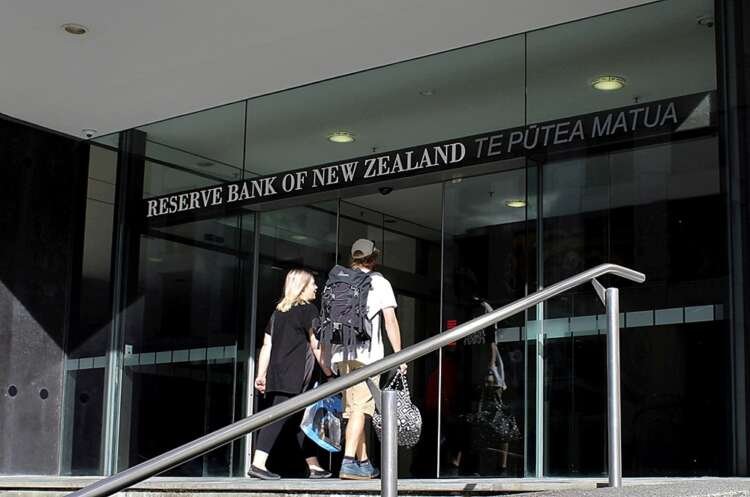
    The image shows the entrance of the Reserve Bank of New Zealand in Wellington, a pivotal institution in the development of the 2% inflation target policy discussed in the article. This policy has influenced global central banking practices.
    Entrance of the Reserve Bank of New Zealand in Wellington, symbolizing inflation targeting - Global Banking & Finance Review
    Why waste money on news and opinion when you can access them for free?

    Take advantage of our newsletter subscription and stay informed on the go!

    Subscribe

    Tags:monetary policyeconomic growthfinancial stability

    By Lucy Craymer

    WELLINGTON, New Zealand (Reuters) – More than 30 years ago, some relatively youthful central bank and Treasury economists in New Zealand were grappling with how to bring two decades of double-digit inflation under control in an economy less than 1% the size of its U.S. counterpart.

    What if, they asked, they just told everyone the rate should be much lower – say roughly 2% – and then aim for that?

    “It was a bit of a shock to everyone, I think,” said Roger Douglas, the Labour Party finance minister at the time who worked with the Treasury and Reserve Bank of New Zealand (RBNZ) to pioneer the policy. “I just announced it was gonna be 2%, and it sort of stuck.”

    Like that, inflation targeting was born.

    Since it’s arrival in 1990, the 2% inflation target phenomenon has sailed from Wellington around the globe to become the accepted norm among central banks, large and small, for grounding public expectations for what inflation ought to be. But the price spikes spawned by the COVID-19 pandemic are set to test their devotion to it in the months ahead as inflation looks set to remain stubbornly above 2% for some time.

    As some observers question whether that level remains valid today – in most cases debating if it should be raised to blunt the blows to growth and employment from the high interest rates being employed by central banks in order to achieve it – the inflation-targeting pioneers in New Zealand are standing by it.

    In fact, Arthur Grimes, a former chief economist and senior official at the RBNZ who was seen as one of the key architects of the policy, would like the target to include a lower range.

    “Zero’s the obvious sort of place to head for – it is basically saying, on average, prices in 10 years time should be roughly the same as prices now. Why would you want anything different?” he said.

    ‘MOST DESPISED MAN’

    When New Zealand became the first country to mandate inflation targeting, the upper limit was 2% and the lower one just 0%. At the time, inflation was running at 7.6% but had tracked above 10% on average between 1970 and 1990, and few people thought the target was realistic.

    There “were some pretty vicious internal debates, not everyone I think was particularly convinced that we should be aiming for something as low we were,” said Michael Reddell, a former RBNZ economist, who at the time headed the economics department’s monetary policy section.

    “It wasn’t the most scientific process in the entire world … we had limited resource. Nobody had done this before us,” he added.

    The adoption of the inflation target was followed by aggressive monetary tightening, with 90-day rates climbing to 15% in 1990. A year later, inflation had fallen to 2% and New Zealanders’ inflation expectations adjusted quickly to the new paradigm.

    But there were severe short-term costs for businesses and workers, with the economy stagnating between 1989 and 1994 and the unemployment rate rising into double-digit figures.

    Since that time, the target has been shifted twice, initially to a range of 0% to 3% and then in 2002 to the 1%-3% range.

    The decision – and the resulting policy – was driven largely by politics.

    Governments had engaged in spending sprees to win votes at the expense of inflation. Douglas, the former finance minister, asked the central bank and Treasury to pioneer the policy to prevent that from happening again.

    Initially there was debate about whether interest rates or money supply should be the target, but it was decided it was better to target the ultimate goal: inflation.

    “They did all the hard work and I just got all the glory and the title of being the most despised man in New Zealand,” Douglas said.

    IN THE SPOTLIGHT

    But to New Zealanders used to high inflation, a 2% rate seemed unbelievable. Don Brash, then the RBNZ governor and later the leader of the opposition National Party, said he held grueling meetings with everyone from news organizations to grassroots bodies to get them on board.

    New Zealand faced rising unemployment, with wages failing to keep up with the cost of living. Reuters reported in 1994 that 13 protesters were dragged from the foyer of the RBNZ in Wellington and arrested after demanding the central bank let inflation rise.

    “The conclusion from our history about that, is that if you don’t want to damage the real economy don’t let inflation get away in the first place. Because the path back to low inflation, from embedded inflation always involves output losses,” said Graham Scott, who was the secretary of the Treasury from 1986 to 1993.

    After the changes were introduced, New Zealand found itself under a spotlight. It attracted better economic event speakers, and the architects of the policy were invited to major gatherings including the U.S. Federal Reserve’s annual symposium in Jackson Hole, Wyoming. Other central bankers were keen to understand what had happened.

    “‘How did we do it?’ became the bigger question than ‘what we did,” Douglas said. “I mean, most people didn’t really argue with what we were doing but they wondered how the heck we managed to get away with it.”

    (Reporting by Lucy Craymer; Editing by Dan Burns and Paul Simao)

    Frequently Asked Questions about The mouse that roared: New Zealand and the world’s 2% inflation target

    1What is inflation?

    Inflation is the rate at which the general level of prices for goods and services rises, eroding purchasing power. It is typically measured as an annual percentage increase.

    2What is monetary policy?

    Monetary policy refers to the actions taken by a central bank to manage the money supply and interest rates to achieve macroeconomic objectives such as controlling inflation and stabilizing currency.

    3What is an inflation target?

    An inflation target is a central bank's goal for the rate of inflation, often set as a specific percentage, to guide monetary policy and manage public expectations.

    4What is the role of central banks?

    Central banks are national institutions that manage a country's currency, money supply, and interest rates. They aim to maintain economic stability and control inflation.

    5What is economic growth?

    Economic growth is an increase in the production of goods and services in an economy over time, typically measured by the rise in Gross Domestic Product (GDP).

    More from Top Stories

    Explore more articles in the Top Stories category

    Image for Lessons From the Ring and the Deal Table: How Boxing Shapes Steven Nigro’s Approach to Banking and Life
    Lessons From the Ring and the Deal Table: How Boxing Shapes Steven Nigro’s Approach to Banking and Life
    Image for Joe Kiani in 2025: Capital, Conviction, and a Focused Return to Innovation
    Joe Kiani in 2025: Capital, Conviction, and a Focused Return to Innovation
    Image for Marco Robinson – CLOSE THE DEAL AND SUDDENLY GROW RICH
    Marco Robinson – CLOSE THE DEAL AND SUDDENLY GROW RICH
    Image for Digital Tracing: Turning a regulatory obligation into a commercial advantage
    Digital Tracing: Turning a regulatory obligation into a commercial advantage
    Image for Exploring the Role of Blockchain and the Bitcoin Price Today in Education
    Exploring the Role of Blockchain and the Bitcoin Price Today in Education
    Image for Inside the World’s First Collection Industry Conglomerate: PCA Global’s Platform Strategy
    Inside the World’s First Collection Industry Conglomerate: PCA Global’s Platform Strategy
    Image for Chase Buchanan Private Wealth Management Highlights Key Autumn 2025 Budget Takeaways for Expats
    Chase Buchanan Private Wealth Management Highlights Key Autumn 2025 Budget Takeaways for Expats
    Image for PayLaju Strengthens Its Position as Malaysia’s Trusted Interest-Free Sharia-Compliant Loan Provider
    PayLaju Strengthens Its Position as Malaysia’s Trusted Interest-Free Sharia-Compliant Loan Provider
    Image for A Notable Update for Employee Health Benefits:
    A Notable Update for Employee Health Benefits:
    Image for Creating Equity Between Walls: How Mohak Chauhan is Using Engineering, Finance, and Community Vision to Reengineer Affordable Housing
    Creating Equity Between Walls: How Mohak Chauhan is Using Engineering, Finance, and Community Vision to Reengineer Affordable Housing
    Image for Upcoming Book on Real Estate Investing: Harvard Grace Capital Founder Stewart Heath’s Puts Lessons in Print
    Upcoming Book on Real Estate Investing: Harvard Grace Capital Founder Stewart Heath’s Puts Lessons in Print
    Image for ELECTIVA MARKS A LANDMARK FIRST YEAR WITH MAJOR SENIOR APPOINTMENTS AND EXPANSION MILESTONES
    ELECTIVA MARKS A LANDMARK FIRST YEAR WITH MAJOR SENIOR APPOINTMENTS AND EXPANSION MILESTONES
    View All Top Stories Posts
    Previous Top Stories PostSterling steadies vs dollar ahead of BoE, ECB meetings
    Next Top Stories PostVirtual reality brings Holocaust history to future generations