Search
00
GBAF Logo
trophy
Top StoriesInterviewsBusinessFinanceBankingTechnologyInvestingTradingVideosAwardsMagazinesHeadlinesTrends

Subscribe to our newsletter

Get the latest news and updates from our team.

Global Banking & Finance Review®

Global Banking & Finance Review® - Subscribe to our newsletter

Company

    GBAF Logo
    • About Us
    • Profile
    • Privacy & Cookie Policy
    • Terms of Use
    • Contact Us
    • Advertising
    • Submit Post
    • Latest News
    • Research Reports
    • Press Release
    • Awards▾
      • About the Awards
      • Awards TimeTable
      • Submit Nominations
      • Testimonials
      • Media Room
      • Award Winners
      • FAQ
    • Magazines▾
      • Global Banking & Finance Review Magazine Issue 79
      • Global Banking & Finance Review Magazine Issue 78
      • Global Banking & Finance Review Magazine Issue 77
      • Global Banking & Finance Review Magazine Issue 76
      • Global Banking & Finance Review Magazine Issue 75
      • Global Banking & Finance Review Magazine Issue 73
      • Global Banking & Finance Review Magazine Issue 71
      • Global Banking & Finance Review Magazine Issue 70
      • Global Banking & Finance Review Magazine Issue 69
      • Global Banking & Finance Review Magazine Issue 66
    Top StoriesInterviewsBusinessFinanceBankingTechnologyInvestingTradingVideosAwardsMagazinesHeadlinesTrends

    Global Banking & Finance Review® is a leading financial portal and online magazine offering News, Analysis, Opinion, Reviews, Interviews & Videos from the world of Banking, Finance, Business, Trading, Technology, Investing, Brokerage, Foreign Exchange, Tax & Legal, Islamic Finance, Asset & Wealth Management.
    Copyright © 2010-2026 GBAF Publications Ltd - All Rights Reserved. | Sitemap | Tags | Developed By eCorpIT

    Editorial & Advertiser disclosure

    Global Banking & Finance Review® is an online platform offering news, analysis, and opinion on the latest trends, developments, and innovations in the banking and finance industry worldwide. The platform covers a diverse range of topics, including banking, insurance, investment, wealth management, fintech, and regulatory issues. The website publishes news, press releases, opinion and advertorials on various financial organizations, products and services which are commissioned from various Companies, Organizations, PR agencies, Bloggers etc. These commissioned articles are commercial in nature. This is not to be considered as financial advice and should be considered only for information purposes. It does not reflect the views or opinion of our website and is not to be considered an endorsement or a recommendation. We cannot guarantee the accuracy or applicability of any information provided with respect to your individual or personal circumstances. Please seek Professional advice from a qualified professional before making any financial decisions. We link to various third-party websites, affiliate sales networks, and to our advertising partners websites. When you view or click on certain links available on our articles, our partners may compensate us for displaying the content to you or make a purchase or fill a form. This will not incur any additional charges to you. To make things simpler for you to identity or distinguish advertised or sponsored articles or links, you may consider all articles or links hosted on our site as a commercial article placement. We will not be responsible for any loss you may suffer as a result of any omission or inaccuracy on the website.

    Home > Top Stories > THE LINK BETWEEN POVERTY AND MIGRATION TOP DISCUSSION BETWEEN UN AGENCY PRESIDENT AND POPE FRANCIS
    Top Stories

    THE LINK BETWEEN POVERTY AND MIGRATION TOP DISCUSSION BETWEEN UN AGENCY PRESIDENT AND POPE FRANCIS

    Published by Gbaf News

    Posted on January 13, 2018

    5 min read

    Last updated: January 21, 2026

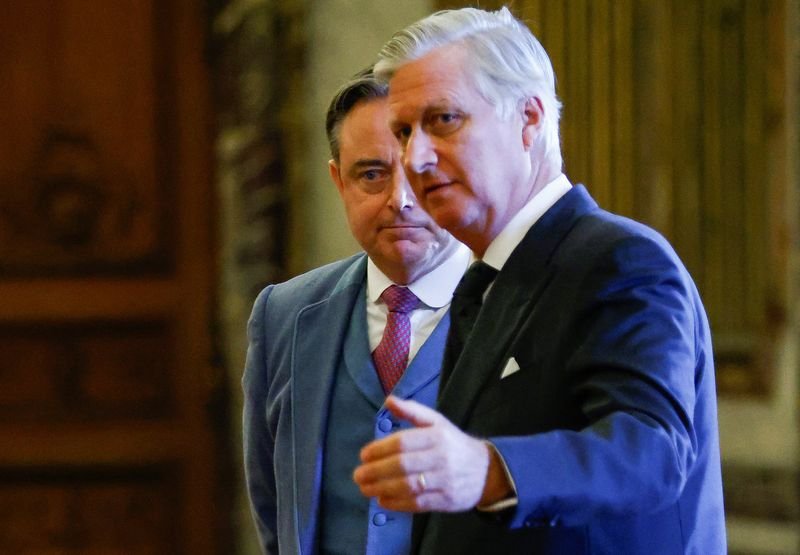
    Belgium's Prime Minister Bart De Wever speaks on reducing EU regulatory fervor and strengthening NATO ties. His leadership marks a shift in Belgium's political landscape, focusing on corporate competitiveness.
    Belgium's new PM Bart De Wever addressing EU regulatory policies - Global Banking & Finance Review
    Why waste money on news and opinion when you can access them for free?

    Take advantage of our newsletter subscription and stay informed on the go!

    Subscribe

    Just days after renewing his plea to respect the rights of migrants, Pope Francis will have a private meeting with Gilbert F. Houngbo, President of the International Fund for Agricultural Development (IFAD) during which it is expected they will discuss the importance of investing in rural development to create opportunities for some of the poorest people in the world.

    Since Houngbo took office as President of the UN specialized agency in April 2017, IFAD has embarked on an ambitious plan to increase its impact and sharpen its work on youth employment, gender empowerment, nutrition and climate change – going beyond agriculture development in order to transform rural areas economically so that people are motivated to stay rather than move to cities and beyond.

    “The majority of people in low-income countries live in rural areas and at least half of them, if not more, are young people,” Houngbo said prior to the meeting with Pope Francis. “This has implications for economic migration. I don’t believe that migration can or should be stopped, but if we want to make it a choice and prevent people from being forced to migrate we have to create hope and potential for young people.”

    In news reports on Monday the pope was quoted as saying that “most migrants would prefer to stay in their own countries, while instead they are forced to leave due to discrimination, persecution, poverty and environmental degradation.”

    According to Houngbo, the migration cycle can be reversed. He cited recent media reports of migrants returning to rural areas in Africa to take up farming after seeing the success of their neighbours and family. In many cases, these success stories are a consequence of IFAD investments.

    While this is their first private meeting, the President of IFAD and the pontiff met a few months earlier at a World Food Day event in October in Rome, which highlighted how global hunger and migration are both on the rise and largely caused by poverty, inequality, conflict and climate change.

    During that event Houngbo said, “Inequalities and lack of opportunities in rural areas are a leading cause for the loss by communities of one of their most precious assets – their young people.” He went on to make a plea for continued investment in rural transformation so that millions of young people can build a better life for themselves.

    An estimated 3.1 billion people live in the rural areas of developing countries. They account for about 40 per cent of the world’s population but they represent more than 75 per cent of the world’s poorest and hungriest. Most depend on smallholder agriculture for their lives and livelihoods.

    IFAD invests in and works with governments to develop programmes that entice people, particularly youth, into agriculture by offering training, access to finance and markets.

    “One day I would like to see young people, either alone or in small groups, become as excited about starting up an agriculture-related company as they are by the lure of the city,” Houngbo said.

    Just days after renewing his plea to respect the rights of migrants, Pope Francis will have a private meeting with Gilbert F. Houngbo, President of the International Fund for Agricultural Development (IFAD) during which it is expected they will discuss the importance of investing in rural development to create opportunities for some of the poorest people in the world.

    Since Houngbo took office as President of the UN specialized agency in April 2017, IFAD has embarked on an ambitious plan to increase its impact and sharpen its work on youth employment, gender empowerment, nutrition and climate change – going beyond agriculture development in order to transform rural areas economically so that people are motivated to stay rather than move to cities and beyond.

    “The majority of people in low-income countries live in rural areas and at least half of them, if not more, are young people,” Houngbo said prior to the meeting with Pope Francis. “This has implications for economic migration. I don’t believe that migration can or should be stopped, but if we want to make it a choice and prevent people from being forced to migrate we have to create hope and potential for young people.”

    In news reports on Monday the pope was quoted as saying that “most migrants would prefer to stay in their own countries, while instead they are forced to leave due to discrimination, persecution, poverty and environmental degradation.”

    According to Houngbo, the migration cycle can be reversed. He cited recent media reports of migrants returning to rural areas in Africa to take up farming after seeing the success of their neighbours and family. In many cases, these success stories are a consequence of IFAD investments.

    While this is their first private meeting, the President of IFAD and the pontiff met a few months earlier at a World Food Day event in October in Rome, which highlighted how global hunger and migration are both on the rise and largely caused by poverty, inequality, conflict and climate change.

    During that event Houngbo said, “Inequalities and lack of opportunities in rural areas are a leading cause for the loss by communities of one of their most precious assets – their young people.” He went on to make a plea for continued investment in rural transformation so that millions of young people can build a better life for themselves.

    An estimated 3.1 billion people live in the rural areas of developing countries. They account for about 40 per cent of the world’s population but they represent more than 75 per cent of the world’s poorest and hungriest. Most depend on smallholder agriculture for their lives and livelihoods.

    IFAD invests in and works with governments to develop programmes that entice people, particularly youth, into agriculture by offering training, access to finance and markets.

    “One day I would like to see young people, either alone or in small groups, become as excited about starting up an agriculture-related company as they are by the lure of the city,” Houngbo said.

    More from Top Stories

    Explore more articles in the Top Stories category

    Image for Lessons From the Ring and the Deal Table: How Boxing Shapes Steven Nigro’s Approach to Banking and Life
    Lessons From the Ring and the Deal Table: How Boxing Shapes Steven Nigro’s Approach to Banking and Life
    Image for Joe Kiani in 2025: Capital, Conviction, and a Focused Return to Innovation
    Joe Kiani in 2025: Capital, Conviction, and a Focused Return to Innovation
    Image for Marco Robinson – CLOSE THE DEAL AND SUDDENLY GROW RICH
    Marco Robinson – CLOSE THE DEAL AND SUDDENLY GROW RICH
    Image for Digital Tracing: Turning a regulatory obligation into a commercial advantage
    Digital Tracing: Turning a regulatory obligation into a commercial advantage
    Image for Exploring the Role of Blockchain and the Bitcoin Price Today in Education
    Exploring the Role of Blockchain and the Bitcoin Price Today in Education
    Image for Inside the World’s First Collection Industry Conglomerate: PCA Global’s Platform Strategy
    Inside the World’s First Collection Industry Conglomerate: PCA Global’s Platform Strategy
    Image for Chase Buchanan Private Wealth Management Highlights Key Autumn 2025 Budget Takeaways for Expats
    Chase Buchanan Private Wealth Management Highlights Key Autumn 2025 Budget Takeaways for Expats
    Image for PayLaju Strengthens Its Position as Malaysia’s Trusted Interest-Free Sharia-Compliant Loan Provider
    PayLaju Strengthens Its Position as Malaysia’s Trusted Interest-Free Sharia-Compliant Loan Provider
    Image for A Notable Update for Employee Health Benefits:
    A Notable Update for Employee Health Benefits:
    Image for Creating Equity Between Walls: How Mohak Chauhan is Using Engineering, Finance, and Community Vision to Reengineer Affordable Housing
    Creating Equity Between Walls: How Mohak Chauhan is Using Engineering, Finance, and Community Vision to Reengineer Affordable Housing
    Image for Upcoming Book on Real Estate Investing: Harvard Grace Capital Founder Stewart Heath’s Puts Lessons in Print
    Upcoming Book on Real Estate Investing: Harvard Grace Capital Founder Stewart Heath’s Puts Lessons in Print
    Image for ELECTIVA MARKS A LANDMARK FIRST YEAR WITH MAJOR SENIOR APPOINTMENTS AND EXPANSION MILESTONES
    ELECTIVA MARKS A LANDMARK FIRST YEAR WITH MAJOR SENIOR APPOINTMENTS AND EXPANSION MILESTONES
    View All Top Stories Posts
    Previous Top Stories PostWHAT CAR? UNVEILS THE SHORTLIST OF VEHICLES VYING FOR THE COVETED CAR OF THE YEAR 2018 TITLE
    Next Top Stories PostMETRO BANK SUPPORTS DOWNING PUB EIS ONE LIMITED WITH £7.7M FUNDING