
Top Stories
Sweden’s Riksbank Says Policy Must Remain Tight, Can’t Rule Out Hike – Minutes
Published by Wanda Rich
Posted on December 4, 2023
2 min readLast updated: January 31, 2026
Add as preferred source on Google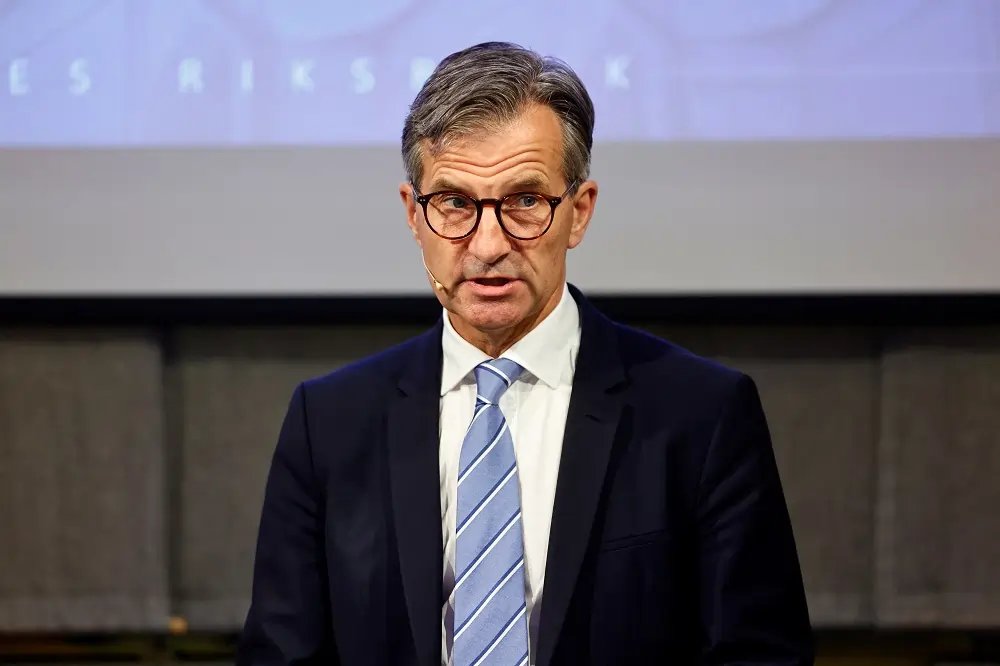
Published by Wanda Rich
Posted on December 4, 2023
2 min readLast updated: January 31, 2026
Add as preferred source on GoogleSTOCKHOLM (Reuters) – Swedish monetary policy needs to remain tight for some time and the policy rate may need to be raised further if the inflation outlook deteriorates, the minutes of the central bank’s most recent meeting, published on Monday, showed.
STOCKHOLM (Reuters) – Swedish monetary policy needs to remain tight for some time and the policy rate may need to be raised further if the inflation outlook deteriorates, the minutes of the central bank’s most recent meeting, published on Monday, showed.
Late last month, the central bank kept its key policy rate unchanged at 4.00%, saying that policy was now having a real impact after eight rate hikes in a row and that inflation was heading in the right direction.
“It is now a question of ensuring that inflation will come all the way down to the target of two per cent and that it will stabilise there,” Governor Erik Thedeen said in the minutes.
“If new data is received that indicates inflation is not continuing its downward trend towards the target, we have plenty of opportunity to take action at coming meetings.”
Several policy makers said that policy needed to remain restrictive for some time in order to ensure that inflation comes back to the 2% target.
Markets believe the Riksbank has probably done hiking and see the next rate move being a cut after the middle of next year.
The Federal Reserve, the European Central Bank and the Bank of England are also expected to cut next year.
The Riksbank will publish its next rate decision on Feb 1.
(Reporting by Simon Johnson, Terje Solsvik, Anna Ringstrom, Niklas Pollard and Johan Ahlander; editing by Niklas Pollard)
Monetary policy refers to the actions taken by a central bank to manage the money supply and interest rates to achieve macroeconomic objectives such as controlling inflation and stabilizing the currency.
Inflation is the rate at which the general level of prices for goods and services rises, eroding purchasing power. It is typically measured by the Consumer Price Index (CPI).
Interest rates are the cost of borrowing money or the return on savings, expressed as a percentage of the principal amount. They are influenced by central bank policies and economic conditions.
A central bank is a national financial institution that oversees the monetary system for a country or group of countries, managing currency issuance, interest rates, and financial stability.
The policy rate is the interest rate set by a central bank that influences other interest rates in the economy, affecting borrowing, spending, and inflation.
Explore more articles in the Top Stories category











