Search
00
GBAF Logo
trophy
Top StoriesInterviewsBusinessFinanceBankingTechnologyInvestingTradingVideosAwardsMagazinesHeadlinesTrends

Subscribe to our newsletter

Get the latest news and updates from our team.

Global Banking & Finance Review®

Global Banking & Finance Review® - Subscribe to our newsletter

Company

    GBAF Logo
    • About Us
    • Profile
    • Privacy & Cookie Policy
    • Terms of Use
    • Contact Us
    • Advertising
    • Submit Post
    • Latest News
    • Research Reports
    • Press Release
    • Awards▾
      • About the Awards
      • Awards TimeTable
      • Submit Nominations
      • Testimonials
      • Media Room
      • Award Winners
      • FAQ
    • Magazines▾
      • Global Banking & Finance Review Magazine Issue 79
      • Global Banking & Finance Review Magazine Issue 78
      • Global Banking & Finance Review Magazine Issue 77
      • Global Banking & Finance Review Magazine Issue 76
      • Global Banking & Finance Review Magazine Issue 75
      • Global Banking & Finance Review Magazine Issue 73
      • Global Banking & Finance Review Magazine Issue 71
      • Global Banking & Finance Review Magazine Issue 70
      • Global Banking & Finance Review Magazine Issue 69
      • Global Banking & Finance Review Magazine Issue 66
    Top StoriesInterviewsBusinessFinanceBankingTechnologyInvestingTradingVideosAwardsMagazinesHeadlinesTrends

    Global Banking & Finance Review® is a leading financial portal and online magazine offering News, Analysis, Opinion, Reviews, Interviews & Videos from the world of Banking, Finance, Business, Trading, Technology, Investing, Brokerage, Foreign Exchange, Tax & Legal, Islamic Finance, Asset & Wealth Management.
    Copyright © 2010-2026 GBAF Publications Ltd - All Rights Reserved. | Sitemap | Tags | Developed By eCorpIT

    Editorial & Advertiser disclosure

    Global Banking & Finance Review® is an online platform offering news, analysis, and opinion on the latest trends, developments, and innovations in the banking and finance industry worldwide. The platform covers a diverse range of topics, including banking, insurance, investment, wealth management, fintech, and regulatory issues. The website publishes news, press releases, opinion and advertorials on various financial organizations, products and services which are commissioned from various Companies, Organizations, PR agencies, Bloggers etc. These commissioned articles are commercial in nature. This is not to be considered as financial advice and should be considered only for information purposes. It does not reflect the views or opinion of our website and is not to be considered an endorsement or a recommendation. We cannot guarantee the accuracy or applicability of any information provided with respect to your individual or personal circumstances. Please seek Professional advice from a qualified professional before making any financial decisions. We link to various third-party websites, affiliate sales networks, and to our advertising partners websites. When you view or click on certain links available on our articles, our partners may compensate us for displaying the content to you or make a purchase or fill a form. This will not incur any additional charges to you. To make things simpler for you to identity or distinguish advertised or sponsored articles or links, you may consider all articles or links hosted on our site as a commercial article placement. We will not be responsible for any loss you may suffer as a result of any omission or inaccuracy on the website.

    Home > Top Stories > Sudanese farmers warn of failing harvests as hunger rises
    Top Stories

    Sudanese farmers warn of failing harvests as hunger rises

    Published by Wanda Rich

    Posted on June 8, 2022

    5 min read

    Last updated: February 6, 2026

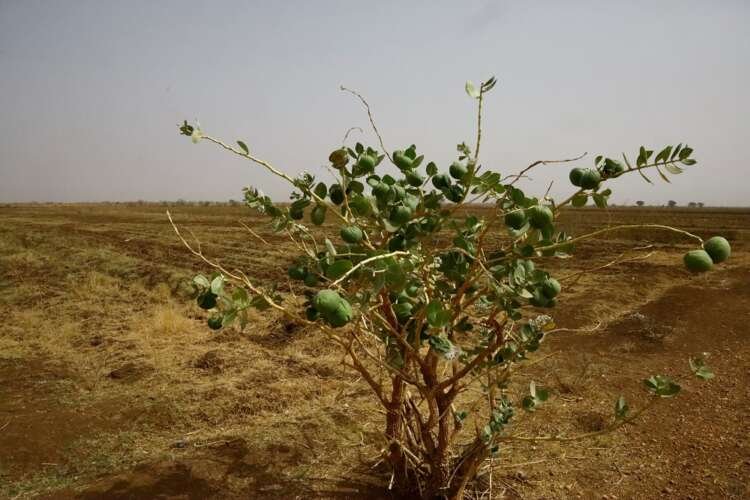
    This image depicts the barren fields of the Gezira Scheme in Sudan, highlighting the agricultural crisis as farmers face failing harvests and rising hunger due to economic instability.
    A view of barren farmland in Sudan's Gezira Scheme amid rising hunger - Global Banking & Finance Review
    Why waste money on news and opinion when you can access them for free?

    Take advantage of our newsletter subscription and stay informed on the go!

    Subscribe

    Tags:agricultural sectorsfinancial crisiseconomic growthhumanitarian aid

    By Nafisa Eltahir

    GEZIRA SCHEME, Sudan (Reuters) – On the fertile clay plains of Sudan’s Gezira Scheme, farmers would have normally started tilling the soil weeks ago before planting out rows of sorghum, or peanuts, sesame and other cash crops.

    Instead, in a country stalked by sharply rising hunger, swathes of the 8,800 square km (3,400 square mile) agricultural project lie untouched.

    Farmers who spoke to Reuters say the government, which has been cut off from billions of dollars in international financing following a coup in October, failed to buy their wheat under promised terms earlier this year.

    That, they say, means they did not have the money to fund the new crop now.

    Russia’s invasion of Ukraine has further complicated the outlook, driving prices for inputs such as fertilizer and fuel to new highs.

    That puts current and future seasons in jeopardy, the farmers say, in an unstable country where the humanitarian situation has deteriorated and it is unclear how authorities will afford to finance imports of increasingly pricy food.

    The finance ministry did not comment directly on the farmers’ statements about wheat purchases, but told Reuters it was making efforts to provide the necessary funding.

    The ministry said in a statement on Tuesday it had committed to buying up to 300,000 tonnes of wheat and 200,000 tonnes of sorghum, together costing more than $300 million, and was seeking funds from the central bank.

    Reuters spoke to more than 20 farmers at the Gezira Scheme, a vast irrigation project just south of the capital Khartoum. All described the situation as desperate, and most said they feared bankruptcy and even prison for not paying back debts.

    One, Nazar Abdallah, said he took out loans assuming that the government would buy his wheat at 43,000 Sudanese pounds (about $75.40) per sack, as was agreed last year.

    Dozens of those 100 kg sacks of grain, now stored under a leaky roof, should have been sold in March.

    If his crop spoils, he fears he will have no way to repay his debt. “If it rains, I’ll be sent straight to jail, no question,” he said, pointing at the holes in the ceiling.

    Similar problems plague Gadaref, the eastern state where much of the country’s traditional grain, sorghum, is grown.

    “We buy the fertilizer and fuel at high prices and then when we come to sell our harvest we don’t find a market. The government is impoverishing us,” said a sorghum farmer there, who asked to remain anonymous to avoid involvement in politics.

    “The summer season is threatened with collapse. Fifty percent, seventy percent of us might not plant. And that puts the food supply in question,” Ahmed Abdelmagid, another Gezira farmer, said.

    ROADSHOWS

    Farmers’ woes predate the coup. They are tied to an economic crisis that began under former leader Omar al-Bashir, subsidy reforms pursued by the transitional government and global cost pressures that started before the war in Ukraine.

    Last year, the state-owned Agricultural Bank, which has long supported farmers and bought up their wheat for strategic reserves, failed to provide fertilizer and seeds as prices rose, farmers said.

    The Agricultural Bank, as well as Sudan’s central bank and agriculture ministry, did not respond to requests for comment.

    The cost of fuel for farmers rose more than 6,500% in 2021 from a year earlier, according to a U.N. Food and Agriculture Organization (FAO) report published in March. The price for fertilizer, normally provided under the wheat purchase agreement, rose 800%, causing farmers to cut back on its use.

    The report also blamed erratic rains, pest infestations, conflict and irrigation issues for a drop of more than 35% in production this year of Sudan’s three key staples – wheat, sorghum, and millet.

    This year, the FAO says Sudan faces a rare sorghum deficit.

    Just a year ago, the transitional government was out doing roadshows to market Sudan’s huge untapped agricultural potential to investors as the economy began to open up following Bashir’s overthrow during mass protests in 2019.

    Its work was abruptly halted by the coup, which ended a fractious power-sharing arrangement between civilians and the military. Amid political deadlock and anti-military demonstrations, economic activity has stagnated.

    HUNGER

    The U.N. World Food Programme estimates that the number of people facing crisis or emergency levels of hunger, the stages preceding famine, will double this year in Sudan to 18 million, out of a population of 46 million.

    And Sudan’s food security worries could get worse.

    Even with global wheat prices at record levels, Sudan imported 818,000 tonnes in Jan-March, three times more than the same period in 2021, central bank figures show.

    Though the local wheat harvest makes up a fraction of consumption, the government subsidy for wheat farmers forms a necessary, if unsustainable, backbone for agricultural activity, FAO representative Babagana Ahmadu said.

    “Without it, the situation will get out of hand,” he added.

    Abdallah and other farmers in Gezira would typically grow sorghum and key export crops during the upcoming summer season, using the profits they made from the government’s wheat purchases.

    But Gezira Scheme governor Omar Marzoug said no financing was available, government or private.

    Sudan’s military leadership has said it is addressing the issue. Farmers criticised a recent purchasing announcement as having prohibitive conditions.

    Deprived of cashflow, they are waiting, selling small amounts at the market rate of around 28,000 pounds ($49.12) per sack to make ends meet. Farm machinery lies idle.

    The farmer in Gadaref said he and his peers would likely reduce their planting of key exports like sesame by up to 80% if financing wasn’t received this month.

    “I expect there will be worse problems in the upcoming harvests without a radical change,” University of Gadaref agriculture professor Hussein Sulieman said. “And I don’t expect a radical change.”

    (Reporting by Nafisa Eltahir, Khalid Abdelaziz, and Eltayeb Siddig; Editing by Aidan Lewis and Andrew Heavens)

    Frequently Asked Questions about Sudanese farmers warn of failing harvests as hunger rises

    1What is an economic crisis?

    An economic crisis is a situation in which the economy of a country experiences a sudden downturn, often characterized by high unemployment, decreased consumer confidence, and a decline in economic activity.

    2What is agricultural production?

    Agricultural production is the process of cultivating plants and livestock for food, fiber, and other products used to sustain and enhance human life.

    3What is humanitarian aid?

    Humanitarian aid is material or logistical assistance provided for humanitarian purposes, typically in response to crises including natural disasters and human-made disasters.

    More from Top Stories

    Explore more articles in the Top Stories category

    Image for Lessons From the Ring and the Deal Table: How Boxing Shapes Steven Nigro’s Approach to Banking and Life
    Lessons From the Ring and the Deal Table: How Boxing Shapes Steven Nigro’s Approach to Banking and Life
    Image for Joe Kiani in 2025: Capital, Conviction, and a Focused Return to Innovation
    Joe Kiani in 2025: Capital, Conviction, and a Focused Return to Innovation
    Image for Marco Robinson – CLOSE THE DEAL AND SUDDENLY GROW RICH
    Marco Robinson – CLOSE THE DEAL AND SUDDENLY GROW RICH
    Image for Digital Tracing: Turning a regulatory obligation into a commercial advantage
    Digital Tracing: Turning a regulatory obligation into a commercial advantage
    Image for Exploring the Role of Blockchain and the Bitcoin Price Today in Education
    Exploring the Role of Blockchain and the Bitcoin Price Today in Education
    Image for Inside the World’s First Collection Industry Conglomerate: PCA Global’s Platform Strategy
    Inside the World’s First Collection Industry Conglomerate: PCA Global’s Platform Strategy
    Image for Chase Buchanan Private Wealth Management Highlights Key Autumn 2025 Budget Takeaways for Expats
    Chase Buchanan Private Wealth Management Highlights Key Autumn 2025 Budget Takeaways for Expats
    Image for PayLaju Strengthens Its Position as Malaysia’s Trusted Interest-Free Sharia-Compliant Loan Provider
    PayLaju Strengthens Its Position as Malaysia’s Trusted Interest-Free Sharia-Compliant Loan Provider
    Image for A Notable Update for Employee Health Benefits:
    A Notable Update for Employee Health Benefits:
    Image for Creating Equity Between Walls: How Mohak Chauhan is Using Engineering, Finance, and Community Vision to Reengineer Affordable Housing
    Creating Equity Between Walls: How Mohak Chauhan is Using Engineering, Finance, and Community Vision to Reengineer Affordable Housing
    Image for Upcoming Book on Real Estate Investing: Harvard Grace Capital Founder Stewart Heath’s Puts Lessons in Print
    Upcoming Book on Real Estate Investing: Harvard Grace Capital Founder Stewart Heath’s Puts Lessons in Print
    Image for ELECTIVA MARKS A LANDMARK FIRST YEAR WITH MAJOR SENIOR APPOINTMENTS AND EXPANSION MILESTONES
    ELECTIVA MARKS A LANDMARK FIRST YEAR WITH MAJOR SENIOR APPOINTMENTS AND EXPANSION MILESTONES
    View All Top Stories Posts
    Previous Top Stories PostRussian proxies plan vote in Ukraine’s Zaporizhzhia region on joining Russia
    Next Top Stories PostSurge in euro zone wages may be less than meets the eye