
Top Stories
Sterling Hovers Just Below 10-month High, With Focus on U.S. Job Numbers
Published by Uma Rajagopal
Posted on April 6, 2023
2 min readLast updated: February 1, 2026
Add as preferred source on Google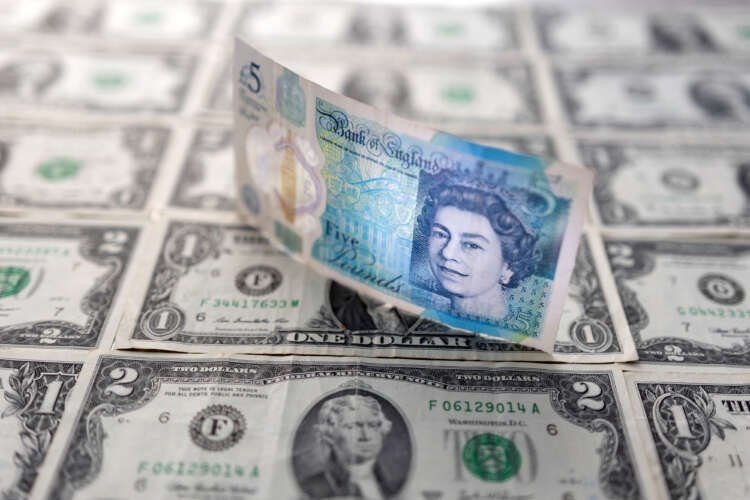
Published by Uma Rajagopal
Posted on April 6, 2023
2 min readLast updated: February 1, 2026
Add as preferred source on GoogleBy Harry Robertson
LONDON (Reuters) – The pound hovered just below its highest level in 10 months on Thursday as investor focus turned to Friday’s U.S. jobs numbers.
Sterling was last flat at $1.246, having touched its highest level since June – $1.253 – on Tuesday.
Markets were subdued across the board on Thursday ahead of the release of the U.S. non-farm payrolls employment data on Friday.
It will be a key factor in the Federal Reserve’s next interest rate decision and could cause volatility in markets.
“There is a semblance of calm about today’s trading session in the absence of any major data,” said Simon Harvey, head of FX analysis at Monex Europe.
“Price action instead is likely to be determined by expectations for tomorrow’s payrolls print.”
The U.S. jobs market has remained resolutely strong, keeping the pressure on the Fed to raise interest rates to tackle inflation. Yet analysts expect the U.S. to have added 239,000 jobs in March, a slowdown from February’s 311,00 figure.
The pound was also little changed against the euro, with a euro changing hands for 87.51 pence.
Sterling has risen dramatically after plunging to a record low of $1.033 in September in the wake of then-Prime Minister Liz Truss’s disastrous budget.
GRAPHIC – Pound vs. USD
A stronger-than-expected economy, aided by falling energy prices, has helped the pound. As has a recent drop in the dollar as investors worry about the collapse of Silicon Valley Bank and Signature Bank and the implications for the U.S. economy.
With British inflation unexpectedly jumping to 10.4% in February, investors broadly think the Bank of England will raise interest rates further. They’re less sure about the Fed.
Expectations of higher interest rates have helped the pound, by making sterling-denominated fixed income investments in Britain look relatively more attractive.
In a thin calendar, data from Halifax showed that British house prices rose for a third month in a row in March. However, separate figures showed that house-building in Britain fell at the sharpest pace since May 2020 last month.
The dollar index, which tracks the currency against six peers, was last up 0.07% at 101.94. It stood at a three-month high of 105.88 in early March.
(This story has been corrected to give the non-farm payroll numbers, not private payroll numbers, in paragraph)
(Reporting by Harry Robertson; Editing by Robert Birsel)
The pound, also known as the British pound sterling, is the official currency of the United Kingdom, represented by the symbol £. It is one of the oldest currencies still in use today.
Inflation is the rate at which the general level of prices for goods and services rises, eroding purchasing power. Central banks attempt to limit inflation to keep the economy running smoothly.
The Federal Reserve, often referred to as the Fed, is the central bank of the United States, responsible for implementing monetary policy and regulating financial institutions.
Interest rates are the amount charged by lenders to borrowers for the use of money, typically expressed as a percentage of the principal. They influence economic activity and inflation.
Explore more articles in the Top Stories category











