Search
00
GBAF Logo
trophy
Top StoriesInterviewsBusinessFinanceBankingTechnologyInvestingTradingVideosAwardsMagazinesHeadlinesTrends

Subscribe to our newsletter

Get the latest news and updates from our team.

Global Banking and Finance Review

Global Banking & Finance Review

Company

    GBAF Logo
    • About Us
    • Profile
    • Privacy & Cookie Policy
    • Terms of Use
    • Contact Us
    • Advertising
    • Submit Post
    • Latest News
    • Research Reports
    • Press Release
    • Awards▾
      • About the Awards
      • Awards TimeTable
      • Submit Nominations
      • Testimonials
      • Media Room
      • Award Winners
      • FAQ
    • Magazines▾
      • Global Banking & Finance Review Magazine Issue 79
      • Global Banking & Finance Review Magazine Issue 78
      • Global Banking & Finance Review Magazine Issue 77
      • Global Banking & Finance Review Magazine Issue 76
      • Global Banking & Finance Review Magazine Issue 75
      • Global Banking & Finance Review Magazine Issue 73
      • Global Banking & Finance Review Magazine Issue 71
      • Global Banking & Finance Review Magazine Issue 70
      • Global Banking & Finance Review Magazine Issue 69
      • Global Banking & Finance Review Magazine Issue 66
    Top StoriesInterviewsBusinessFinanceBankingTechnologyInvestingTradingVideosAwardsMagazinesHeadlinesTrends

    Global Banking & Finance Review® is a leading financial portal and online magazine offering News, Analysis, Opinion, Reviews, Interviews & Videos from the world of Banking, Finance, Business, Trading, Technology, Investing, Brokerage, Foreign Exchange, Tax & Legal, Islamic Finance, Asset & Wealth Management.
    Copyright © 2010-2025 GBAF Publications Ltd - All Rights Reserved.

    Editorial & Advertiser disclosure

    Global Banking and Finance Review is an online platform offering news, analysis, and opinion on the latest trends, developments, and innovations in the banking and finance industry worldwide. The platform covers a diverse range of topics, including banking, insurance, investment, wealth management, fintech, and regulatory issues. The website publishes news, press releases, opinion and advertorials on various financial organizations, products and services which are commissioned from various Companies, Organizations, PR agencies, Bloggers etc. These commissioned articles are commercial in nature. This is not to be considered as financial advice and should be considered only for information purposes. It does not reflect the views or opinion of our website and is not to be considered an endorsement or a recommendation. We cannot guarantee the accuracy or applicability of any information provided with respect to your individual or personal circumstances. Please seek Professional advice from a qualified professional before making any financial decisions. We link to various third-party websites, affiliate sales networks, and to our advertising partners websites. When you view or click on certain links available on our articles, our partners may compensate us for displaying the content to you or make a purchase or fill a form. This will not incur any additional charges to you. To make things simpler for you to identity or distinguish advertised or sponsored articles or links, you may consider all articles or links hosted on our site as a commercial article placement. We will not be responsible for any loss you may suffer as a result of any omission or inaccuracy on the website.

    Home > Top Stories > SSH KEYS: THE HIDDEN COMPLIANCE THREAT
    Top Stories

    SSH KEYS: THE HIDDEN COMPLIANCE THREAT

    SSH KEYS: THE HIDDEN COMPLIANCE THREAT

    Published by Gbaf News

    Posted on July 21, 2017

    Featured image for article about Top Stories

    By Fouad Khalil, VP of Compliance, SSH Communications Security

    Fouad Khalil

    Fouad Khalil

    Because the financial industry is one of the most heavily regulated, possible compliance issues lurk around almost every corner. SSH user key-based access is not typically included as one of those issues. But it should be. In many financial institutions, accountability for these keys is unclear, opening the door to compliance violations.

    At the heart of the issue is access control. It’s all about protecting the data (PII, credit card data, etc.)and making sure it has authorized access. It doesn’t matter whether access is being requested by a machine, admin or business user. The fact is that:

    • Many financial institutions do not have visibility into SSH user key-based trusts or monitoring capabilities
    • There are no processes for provisioning ownership, revocation and rotation of keys
    • There are no clear policies for key-based access and no ownership of the access being provided
    • Oversight and control are non-existent

    For example, in some 10,000 Unix/Linux hosts, lack of strong SSH key management equates to 1.5 million application keys granting access and 70,000 keys each for database administrators and system admins. There can be up to one billion authentications per year granting access. The majority of the access available via these keys is obsolete, having been assigned to employees or third parties who no longer work with or for the financial institution.

    A Ticking Compliance Bomb

    In other words, it’s only a matter of time before this compliance bomb explodes. SSH keys are a critical component of logical, privileged and third-party access; their misuse can have repercussions across all critical frameworks.Regulatory bodies won’t be easing up any time soon – instead, they are issuing seven-figure fines, jail time and reputation-damaging publicity.

    For instance, potential fines and jail time await SOX violators, and PCI violations pack their own punch. In addition to stiff fines, PCI can take away your payment processing privileges. This happened to a national chain, rendering the chain incapable of processing card transactions for several weeks. That’s a financially devastating outcome, one that has the potential to destroy a business.

    Getting to the Heart ofAccess

    Let’s examine the access issue by supposing that you are an auditor in the financial industry. You conduct annual IT General Controls audits for all your in-scope IT systems.You continuously assess the effectiveness of your logical access, privileged access and segregation of duties controls. Now, have you considered SSH keys? Once you learn what those keys are and what they entail, consider that the assumption that someone’s managing them is often wrong.This is the “dark side of compliance.”CEOs and CFOs of publically traded financial institutions are required by law to attest the state of their internal controls annually. Access control is a key component of these attestations, so how accurate are they if SSH key-based access (elevated in nature) is not part of the assessment?

    When put into these terms, those responsible for compliance realize that they must take action on SSH-related, key-based access. Then the logical three questions follow:

    1. Do you manage SSH keys as part of your provisioning or governance processes? If so, who managed them?
    2. Do you know where your keys are?How many do you have?
    3. Do you know who and what connects to your production environment?  Is the access authorized?

    A vague answer, or no answer at all, to any one or more of these questions means you need to take action immediately.

    Proactive Control

    Clearly, it can be difficult to take control of SSH user key-based access, but it is possible – and critical. The more security controls you implement as a standard business practice, the more likely you are to be compliant out of the box. Adopt the mindset of continuous compliance. It’s not a matter of checking a box that you set up a server; you need to harden everything that goes on that server. It may seem impossible to do this company-wide, but start with critical assets and then implement in phases.

    This work must be started immediately to ensure compliance and satisfy the auditors. It must not be done manually, though, in light of the fact that hundreds of thousands of key pairs may be lurking in your infrastructure. Get the assistance of experts who can help walk you through the process in a systematic way, and implement automation. Start today, before a breach or audit occurs. And don’t forget this crucial equation:
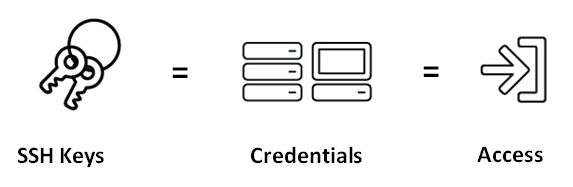
    image1

    By Fouad Khalil, VP of Compliance, SSH Communications Security

    Fouad Khalil

    Fouad Khalil

    Because the financial industry is one of the most heavily regulated, possible compliance issues lurk around almost every corner. SSH user key-based access is not typically included as one of those issues. But it should be. In many financial institutions, accountability for these keys is unclear, opening the door to compliance violations.

    At the heart of the issue is access control. It’s all about protecting the data (PII, credit card data, etc.)and making sure it has authorized access. It doesn’t matter whether access is being requested by a machine, admin or business user. The fact is that:

    • Many financial institutions do not have visibility into SSH user key-based trusts or monitoring capabilities
    • There are no processes for provisioning ownership, revocation and rotation of keys
    • There are no clear policies for key-based access and no ownership of the access being provided
    • Oversight and control are non-existent

    For example, in some 10,000 Unix/Linux hosts, lack of strong SSH key management equates to 1.5 million application keys granting access and 70,000 keys each for database administrators and system admins. There can be up to one billion authentications per year granting access. The majority of the access available via these keys is obsolete, having been assigned to employees or third parties who no longer work with or for the financial institution.

    A Ticking Compliance Bomb

    In other words, it’s only a matter of time before this compliance bomb explodes. SSH keys are a critical component of logical, privileged and third-party access; their misuse can have repercussions across all critical frameworks.Regulatory bodies won’t be easing up any time soon – instead, they are issuing seven-figure fines, jail time and reputation-damaging publicity.

    For instance, potential fines and jail time await SOX violators, and PCI violations pack their own punch. In addition to stiff fines, PCI can take away your payment processing privileges. This happened to a national chain, rendering the chain incapable of processing card transactions for several weeks. That’s a financially devastating outcome, one that has the potential to destroy a business.

    Getting to the Heart ofAccess

    Let’s examine the access issue by supposing that you are an auditor in the financial industry. You conduct annual IT General Controls audits for all your in-scope IT systems.You continuously assess the effectiveness of your logical access, privileged access and segregation of duties controls. Now, have you considered SSH keys? Once you learn what those keys are and what they entail, consider that the assumption that someone’s managing them is often wrong.This is the “dark side of compliance.”CEOs and CFOs of publically traded financial institutions are required by law to attest the state of their internal controls annually. Access control is a key component of these attestations, so how accurate are they if SSH key-based access (elevated in nature) is not part of the assessment?

    When put into these terms, those responsible for compliance realize that they must take action on SSH-related, key-based access. Then the logical three questions follow:

    1. Do you manage SSH keys as part of your provisioning or governance processes? If so, who managed them?
    2. Do you know where your keys are?How many do you have?
    3. Do you know who and what connects to your production environment?  Is the access authorized?

    A vague answer, or no answer at all, to any one or more of these questions means you need to take action immediately.

    Proactive Control

    Clearly, it can be difficult to take control of SSH user key-based access, but it is possible – and critical. The more security controls you implement as a standard business practice, the more likely you are to be compliant out of the box. Adopt the mindset of continuous compliance. It’s not a matter of checking a box that you set up a server; you need to harden everything that goes on that server. It may seem impossible to do this company-wide, but start with critical assets and then implement in phases.

    This work must be started immediately to ensure compliance and satisfy the auditors. It must not be done manually, though, in light of the fact that hundreds of thousands of key pairs may be lurking in your infrastructure. Get the assistance of experts who can help walk you through the process in a systematic way, and implement automation. Start today, before a breach or audit occurs. And don’t forget this crucial equation:

    image1

    Related Posts
    Chase Buchanan Private Wealth Management Highlights Key Autumn 2025 Budget Takeaways for Expats
    Chase Buchanan Private Wealth Management Highlights Key Autumn 2025 Budget Takeaways for Expats
    PayLaju Strengthens Its Position as Malaysia’s Trusted Interest-Free Sharia-Compliant Loan Provider
    PayLaju Strengthens Its Position as Malaysia’s Trusted Interest-Free Sharia-Compliant Loan Provider
    A Notable Update for Employee Health Benefits:
    A Notable Update for Employee Health Benefits:
    Creating Equity Between Walls: How Mohak Chauhan is Using Engineering, Finance, and Community Vision to Reengineer Affordable Housing
    Creating Equity Between Walls: How Mohak Chauhan is Using Engineering, Finance, and Community Vision to Reengineer Affordable Housing
    Upcoming Book on Real Estate Investing: Harvard Grace Capital Founder Stewart Heath’s Puts Lessons in Print
    Upcoming Book on Real Estate Investing: Harvard Grace Capital Founder Stewart Heath’s Puts Lessons in Print
    ELECTIVA MARKS A LANDMARK FIRST YEAR WITH MAJOR SENIOR APPOINTMENTS AND EXPANSION MILESTONES
    ELECTIVA MARKS A LANDMARK FIRST YEAR WITH MAJOR SENIOR APPOINTMENTS AND EXPANSION MILESTONES
    Hebbia Processes One Billion Pages as Financial Institutions Deploy AI Infrastructure at Unprecedented Scale
    Hebbia Processes One Billion Pages as Financial Institutions Deploy AI Infrastructure at Unprecedented Scale
    Beyond Governance Fatigue: Making ESG Integration Work in Financial Markets
    Beyond Governance Fatigue: Making ESG Integration Work in Financial Markets
    Why I-9 Verification Matters for Financial Institutions: Building a Culture of Compliance and Trust
    Why I-9 Verification Matters for Financial Institutions: Building a Culture of Compliance and Trust
    Curvestone AI partners with The White Rose Finance Group to enhance compliance file reviews
    Curvestone AI partners with The White Rose Finance Group to enhance compliance file reviews
    LinkedIn Influence in 2025: Insights from Stevo Jokic on Building Authority and Trust
    LinkedIn Influence in 2025: Insights from Stevo Jokic on Building Authority and Trust
    Should You Take the Dealer’s Bike Insurance or Buy Online Yourself? Here’s the Real Difference
    Should You Take the Dealer’s Bike Insurance or Buy Online Yourself? Here’s the Real Difference

    Why waste money on news and opinions when you can access them for free?

    Take advantage of our newsletter subscription and stay informed on the go!

    Subscribe

    More from Top Stories

    Explore more articles in the Top Stories category

    ID-Pal Unveils ID-Detect Enhancements to Counter Surge in Digital Manipulation and Deepfakes

    ID-Pal Unveils ID-Detect Enhancements to Counter Surge in Digital Manipulation and Deepfakes

    TRUST TAKES THE LEAD: HALF OF UK SHOPPERS HAVE ABANDONED ONLINE PURCHASES OVER SECURITY CONCERNS

    TRUST TAKES THE LEAD: HALF OF UK SHOPPERS HAVE ABANDONED ONLINE PURCHASES OVER SECURITY CONCERNS

    Why Choose Premium Driver Service in Miami Over Rideshare Apps for Business Travel and Special Events?

    Why Choose Premium Driver Service in Miami Over Rideshare Apps for Business Travel and Special Events?

    Over 30 Million Users Benefit From Ant International’s Bettr Credit Tech Solutions

    Over 30 Million Users Benefit From Ant International’s Bettr Credit Tech Solutions

    Side-Hustle Economics: How Part-Time Service Work Can Strengthen Your Financial Plan

    Side-Hustle Economics: How Part-Time Service Work Can Strengthen Your Financial Plan

    London to Host Major Summit on “New Horizons” for Islamic Economy in the UK

    London to Host Major Summit on “New Horizons” for Islamic Economy in the UK

    BLOXX Launches World’s First Home Equity Subscription, Creating a New Residential Asset Class

    BLOXX Launches World’s First Home Equity Subscription, Creating a New Residential Asset Class

    LiaFi Addresses Gap Between Business Transaction and Savings Accounts

    LiaFi Addresses Gap Between Business Transaction and Savings Accounts

    Ant Group Chairman Eric Jing Outlines Strategy for Inclusive AI, Collaboration on Tokenised Settlement

    Ant Group Chairman Eric Jing Outlines Strategy for Inclusive AI, Collaboration on Tokenised Settlement

    Deeply Cultivating the Syndicated Loan and Cross-Border Financing Fields: Empowering Chinese Banks’ Global Expansion with Professional Excellence

    Deeply Cultivating the Syndicated Loan and Cross-Border Financing Fields: Empowering Chinese Banks’ Global Expansion with Professional Excellence

    Ant International’s Antom Launches AI‑Powered MSME App for Finance and Business Operations

    Ant International’s Antom Launches AI‑Powered MSME App for Finance and Business Operations

    A Gateway for U.S. Capital: Inside Kazakhstan’s Expanding Financial Hub

    A Gateway for U.S. Capital: Inside Kazakhstan’s Expanding Financial Hub

    View All Top Stories Posts
    Previous Top Stories PostDIGITAL TRANSFORMATION REQUIRES NEW TECHNOLOGY, NEW PROCESSES, A CULTURE CHANGE – AND A LITTLE SPRINKLING OF MAGIC!
    Next Top Stories PostCYBER-ATTACKS ARE ON THE RISE FOR FINANCIAL SERVICES: WHY A CULTURE OF SHARING HAS NEVER BEEN MORE IMPORTANT