Search
00
GBAF Logo
trophy
Top StoriesInterviewsBusinessFinanceBankingTechnologyInvestingTradingVideosAwardsMagazinesHeadlinesTrends

Subscribe to our newsletter

Get the latest news and updates from our team.

Global Banking and Finance Review

Global Banking & Finance Review

Company

    GBAF Logo
    • About Us
    • Profile
    • Privacy & Cookie Policy
    • Terms of Use
    • Contact Us
    • Advertising
    • Submit Post
    • Latest News
    • Research Reports
    • Press Release
    • Awards▾
      • About the Awards
      • Awards TimeTable
      • Submit Nominations
      • Testimonials
      • Media Room
      • Award Winners
      • FAQ
    • Magazines▾
      • Global Banking & Finance Review Magazine Issue 79
      • Global Banking & Finance Review Magazine Issue 78
      • Global Banking & Finance Review Magazine Issue 77
      • Global Banking & Finance Review Magazine Issue 76
      • Global Banking & Finance Review Magazine Issue 75
      • Global Banking & Finance Review Magazine Issue 73
      • Global Banking & Finance Review Magazine Issue 71
      • Global Banking & Finance Review Magazine Issue 70
      • Global Banking & Finance Review Magazine Issue 69
      • Global Banking & Finance Review Magazine Issue 66
    Top StoriesInterviewsBusinessFinanceBankingTechnologyInvestingTradingVideosAwardsMagazinesHeadlinesTrends

    Global Banking & Finance Review® is a leading financial portal and online magazine offering News, Analysis, Opinion, Reviews, Interviews & Videos from the world of Banking, Finance, Business, Trading, Technology, Investing, Brokerage, Foreign Exchange, Tax & Legal, Islamic Finance, Asset & Wealth Management.
    Copyright © 2010-2025 GBAF Publications Ltd - All Rights Reserved.

    Editorial & Advertiser disclosure

    Global Banking and Finance Review is an online platform offering news, analysis, and opinion on the latest trends, developments, and innovations in the banking and finance industry worldwide. The platform covers a diverse range of topics, including banking, insurance, investment, wealth management, fintech, and regulatory issues. The website publishes news, press releases, opinion and advertorials on various financial organizations, products and services which are commissioned from various Companies, Organizations, PR agencies, Bloggers etc. These commissioned articles are commercial in nature. This is not to be considered as financial advice and should be considered only for information purposes. It does not reflect the views or opinion of our website and is not to be considered an endorsement or a recommendation. We cannot guarantee the accuracy or applicability of any information provided with respect to your individual or personal circumstances. Please seek Professional advice from a qualified professional before making any financial decisions. We link to various third-party websites, affiliate sales networks, and to our advertising partners websites. When you view or click on certain links available on our articles, our partners may compensate us for displaying the content to you or make a purchase or fill a form. This will not incur any additional charges to you. To make things simpler for you to identity or distinguish advertised or sponsored articles or links, you may consider all articles or links hosted on our site as a commercial article placement. We will not be responsible for any loss you may suffer as a result of any omission or inaccuracy on the website.

    Home > Banking > Skipping the Traditional Bank: The UPI Transformation Underway in India
    Banking

    Skipping the Traditional Bank: The UPI Transformation Underway in India

    Skipping the Traditional Bank: The UPI Transformation Underway in India

    Published by Jessica Weisman-Pitts

    Posted on October 13, 2023

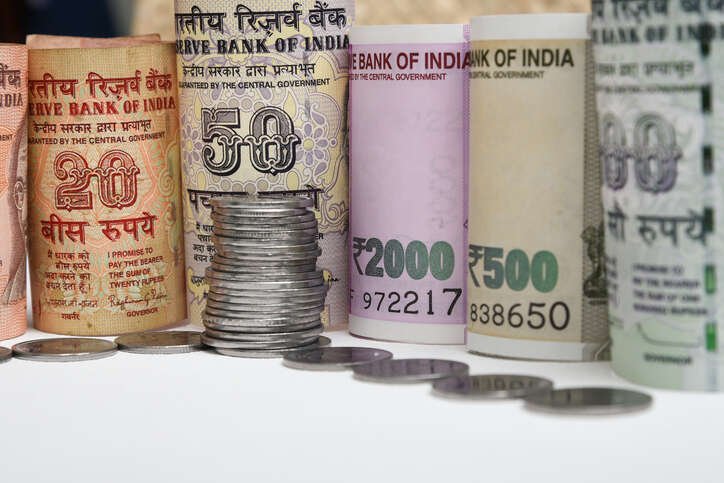
    Featured image for article about Banking

    Skipping the Traditional Bank: The UPI Transformation Underway in India

    By Sanjay Daswani, International Business Development, Wildfire Systems

    India’s Unified Payment Interface (UPI) has been a game changer for financial inclusion in the country. By providing easy, instant digital payments using only a mobile phone, UPI has brought hundreds of millions of previously unbanked Indians into the formal financial system. This peer-to-peer platform allows users to make payments directly from their bank accounts 24/7 using a simple Virtual Payment Address (VPA), removing the need to share sensitive banking details. In just a few years, UPI has exploded in popularity with over 10 billion transactions in August 2023 alone, thanks to the platform’s convenience and security. The Times of India reports there are now 300 million UPI users and 500 million merchants who use UPI to accept payments.

    The impacts of UPI’s success have been wide-ranging. For individual consumers, it has enabled access to financial services and e-commerce that were previously out of reach for many. Digital payments allow more Indians to participate in the formal economy, build financial histories, and access additional services like microloans and insurance. For small businesses, UPI provides a free, instant way to accept digital payments from customers without expensive point-of-sale infrastructure. This has spurred entrepreneurship and financial inclusion especially in rural areas.

    UPI has helped banks acquire new customers that were previously unwilling or unable to open traditional accounts. Part of the implementation of UPI was the creation of a nationwide digital ID system. This digital ID system makes it much easier to create bank accounts as it includes biometric verification processes. Now, many Indians have opened bank accounts, and government benefits can be paid into these accounts. In just one year, 166 million bank accounts were opened, and that figure doubled to 385 million in 2019.

    Global Implications for UPI

    The impacts extend beyond India as well. Seeing its success, many other countries are studying UPI as a model for improving financial access through instant, inexpensive peer-to-peer payments. Singapore recently launched a similar system called PayNow, which is linked to India’s UPI to enable cross-border transfers. Thailand, the Philippines, and other Asian nations are in various stages of implementing fast payment platforms inspired by India’s example.

    UPI does present some risks and challenges, however. Cybersecurity and fraud monitoring are essential for building trust. And interoperability between bank accounts and digital wallets can still be improved. There are also concerns about tech giants dominating the payments space. Finally, financial literacy efforts must accompany any new digital system to ensure responsible usage.

    But overall, UPI offers a blueprint for financial inclusion that could benefit billions of people globally. By meeting consumers where they are with easy mobile payments, UPI brings those at the margins into the formal financial fold and empowers individuals, small businesses, and the broader economy. It also opens the world of e-commerce up to the formerly unbanked, granting them access not just to online shopping but also to loyalty programs, shopping rewards, and the other perks of digital retail, including access to niche products, and easier product research and price comparisons.

    As more countries continue to study India’s model, instant real-time payments could soon become the norm worldwide. In fact, UAE, Sri Lanka, and France recently began accepting UPI as a payment tender – significant especially for France, as the move allows UPI to establish a foothold in Europe for the first time.

    As demonstrated in India, the technology could enable economic participation for huge, underserved populations, boosting prosperity and financial security. Beyond these benefits, UPI provides a glimpse into how digital finance could transform lives globally.

    About the author

    Sanjay Daswani heads up international business development for Wildfire. In this role, he oversees partnerships and market expansion across Europe, the Middle East, Asia Pacific, and Latin America. With over 20 years of experience in the technology and telecommunications industries, Sanjay specializes in identifying key strategic partners while also onboarding new relationships to drive business growth. An entrepreneur at heart, he has a passion for bringing innovative technologies to market across hardware, software, and services. Having lived and worked across multiple continents and cultures, Sanjay thrives on connecting people and ideas across borders.

    Related Posts
    DeFi and banking are converging. Here’s what banks can do.
    DeFi and banking are converging. Here’s what banks can do.
    Are Neo Banks Offering Better Metal Debit Cards Than Traditional Banks?
    Are Neo Banks Offering Better Metal Debit Cards Than Traditional Banks?
    Banking at the Intersection: From Nashville to Cannes, A Strategic Call to Action
    Banking at the Intersection: From Nashville to Cannes, A Strategic Call to Action
    Driving Efficiency and Profit Through Customer-Centric Banking
    Driving Efficiency and Profit Through Customer-Centric Banking
    How Ecosystem Partnerships Are Redefining Deposit Products
    How Ecosystem Partnerships Are Redefining Deposit Products
    CIBC Private Banking wins four 2025 Global Banking & Finance Awards
    CIBC Private Banking wins four 2025 Global Banking & Finance Awards
    How Banks Can Put AI to Work Now and Prove ROI in 90 Days
    How Banks Can Put AI to Work Now and Prove ROI in 90 Days
    Top 5 AI quality assurance framework providers for Banks and Financial Services firms.
    Top 5 AI quality assurance framework providers for Banks and Financial Services firms.
    The Unbanked Paradox: How Banking Access Creates Economic Resilience
    The Unbanked Paradox: How Banking Access Creates Economic Resilience
    Hyper-Personalised Banking - Shaping the Future of Finance
    Hyper-Personalised Banking - Shaping the Future of Finance
    The End of Voice Trust: How AI Deepfakes Are Forcing Banks to Rethink Authentication
    The End of Voice Trust: How AI Deepfakes Are Forcing Banks to Rethink Authentication
    Predicting and Preventing Customer Churn in Retail Banking
    Predicting and Preventing Customer Churn in Retail Banking

    Why waste money on news and opinions when you can access them for free?

    Take advantage of our newsletter subscription and stay informed on the go!

    Subscribe

    Previous Banking PostSeizing the Future: The Role of Embedded Finance in Modern Banking
    Next Banking PostDon’t let economic uncertainty cloud your digital roadmap: How banks can chart a clear path for innovation

    More from Banking

    Explore more articles in the Banking category

    Growth and Impact: Banreservas Leads Dominican Republic Economic Expansion

    Growth and Impact: Banreservas Leads Dominican Republic Economic Expansion

    Turning Insight into Impact: Making AI and Analytics Work in Retail Banking

    Turning Insight into Impact: Making AI and Analytics Work in Retail Banking

    KeyBank Embraces Next-Generation AI Platform to Transform Fraud and Financial Crime Prevention

    KeyBank Embraces Next-Generation AI Platform to Transform Fraud and Financial Crime Prevention

    Understanding Association Banking: Financial Solutions for Community Success

    Understanding Association Banking: Financial Solutions for Community Success

    Applying Symbiosis for advantage in APAC banking

    Applying Symbiosis for advantage in APAC banking

    AmBank Islamic Berhad Earns Triple Recognition for Excellence in Islamic Banking

    AmBank Islamic Berhad Earns Triple Recognition for Excellence in Islamic Banking

    FinTok Strategy: How Banks Are Reaching Gen Z Through Social Media

    FinTok Strategy: How Banks Are Reaching Gen Z Through Social Media

    Rethinking Retail Banking Sustainability: Why the ATM is an Asset in the Sustainable Transition

    Rethinking Retail Banking Sustainability: Why the ATM is an Asset in the Sustainable Transition

    How private banks can survive the neo-broker revolution

    How private banks can survive the neo-broker revolution

    Next-Gen Bank Branches: The Evolution from Transaction Hubs to Experience Centers

    Next-Gen Bank Branches: The Evolution from Transaction Hubs to Experience Centers

    The Banking Talent Crunch: How Financial Institutions Are Competing for Digital-Native Skills

    The Banking Talent Crunch: How Financial Institutions Are Competing for Digital-Native Skills

    Beyond Interest: How Banks Are Reimagining Revenue in the Digital Age

    Beyond Interest: How Banks Are Reimagining Revenue in the Digital Age

    View All Banking Posts