Search
00
GBAF Logo
trophy
Top StoriesInterviewsBusinessFinanceBankingTechnologyInvestingTradingVideosAwardsMagazinesHeadlinesTrends

Subscribe to our newsletter

Get the latest news and updates from our team.

Global Banking & Finance Review®

Global Banking & Finance Review® - Subscribe to our newsletter

Company

    GBAF Logo
    • About Us
    • Profile
    • Privacy & Cookie Policy
    • Terms of Use
    • Contact Us
    • Advertising
    • Submit Post
    • Latest News
    • Research Reports
    • Press Release
    • Awards▾
      • About the Awards
      • Awards TimeTable
      • Submit Nominations
      • Testimonials
      • Media Room
      • Award Winners
      • FAQ
    • Magazines▾
      • Global Banking & Finance Review Magazine Issue 79
      • Global Banking & Finance Review Magazine Issue 78
      • Global Banking & Finance Review Magazine Issue 77
      • Global Banking & Finance Review Magazine Issue 76
      • Global Banking & Finance Review Magazine Issue 75
      • Global Banking & Finance Review Magazine Issue 73
      • Global Banking & Finance Review Magazine Issue 71
      • Global Banking & Finance Review Magazine Issue 70
      • Global Banking & Finance Review Magazine Issue 69
      • Global Banking & Finance Review Magazine Issue 66
    Top StoriesInterviewsBusinessFinanceBankingTechnologyInvestingTradingVideosAwardsMagazinesHeadlinesTrends

    Global Banking & Finance Review® is a leading financial portal and online magazine offering News, Analysis, Opinion, Reviews, Interviews & Videos from the world of Banking, Finance, Business, Trading, Technology, Investing, Brokerage, Foreign Exchange, Tax & Legal, Islamic Finance, Asset & Wealth Management.
    Copyright © 2010-2026 GBAF Publications Ltd - All Rights Reserved. | Sitemap | Tags | Developed By eCorpIT

    Editorial & Advertiser disclosure

    Global Banking & Finance Review® is an online platform offering news, analysis, and opinion on the latest trends, developments, and innovations in the banking and finance industry worldwide. The platform covers a diverse range of topics, including banking, insurance, investment, wealth management, fintech, and regulatory issues. The website publishes news, press releases, opinion and advertorials on various financial organizations, products and services which are commissioned from various Companies, Organizations, PR agencies, Bloggers etc. These commissioned articles are commercial in nature. This is not to be considered as financial advice and should be considered only for information purposes. It does not reflect the views or opinion of our website and is not to be considered an endorsement or a recommendation. We cannot guarantee the accuracy or applicability of any information provided with respect to your individual or personal circumstances. Please seek Professional advice from a qualified professional before making any financial decisions. We link to various third-party websites, affiliate sales networks, and to our advertising partners websites. When you view or click on certain links available on our articles, our partners may compensate us for displaying the content to you or make a purchase or fill a form. This will not incur any additional charges to you. To make things simpler for you to identity or distinguish advertised or sponsored articles or links, you may consider all articles or links hosted on our site as a commercial article placement. We will not be responsible for any loss you may suffer as a result of any omission or inaccuracy on the website.

    Home > Banking > Skill Development as a real catalyst driving Business Model Innovation in Banking
    Banking

    Skill Development as a real catalyst driving Business Model Innovation in Banking

    Published by Wanda Rich

    Posted on July 19, 2022

    5 min read

    Last updated: February 5, 2026

    A group of banking professionals engaged in a discussion about skill development as a catalyst for business model innovation in the banking sector. This image highlights the importance of talent and capabilities in adapting to industry changes.
    Business professionals discussing skill development for banking innovation - Global Banking & Finance Review
    Why waste money on news and opinion when you can access them for free?

    Take advantage of our newsletter subscription and stay informed on the go!

    Subscribe

    Tags:innovationmanagementBusiness model innovationfinancial services

    Quick Summary

    By Narasimha Nagaraja Prasad, Senior Director, Product Management and Strategy Group,

    By Narasimha Nagaraja Prasad, Senior Director, Product Management and Strategy Group, Infosys Finacle

    When we look at the quantum of change sweeping the banking industry, we often focus on how the landscape is evolving and the type of infrastructure needed to step up and deliver in this dynamic environment. However, one key aspect of driving this change is access to the right skills. Bank must have the willingness and as well as ability to drive the kind of talent, capabilities and teams that are needed to meet new challenges.

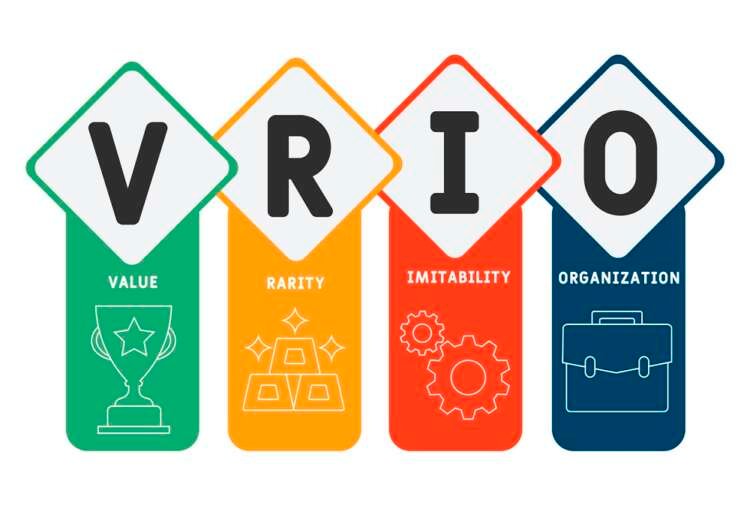
    Jay B Barney, in his book ‘Gaining and sustaining competitive advantage’, provides an interesting framework called “VRIO” to look at resources and capabilities. It recommends looking at resources through the lenses of Value (V), Rarity (R), Imitability (I), and Organization (O). If we apply this to a people perspective, it means asking questions such as ‘How valuable are the skills available within the organisation? How many competing firms already possess these particular valuable resources and capabilities? Do firms without a resource or capability face a cost disadvantage in obtaining these skills compared to firms that already possess them? Is the company organised to exploit the full competitive potential of its resources and capabilities?

    Of course, this is not a static exercise. Rather, the answers will change with time. Resources and capabilities that have been valuable in the past may no longer be required. Changes in customer expectations, industry structure, new age competition and technology can render an organisation’s resources and capabilities less valuable.

    When it comes to ensuring a workforce that is equipped to effectively support a bank’s strategy and aspirations, the following process can be helpful.

    Step 1: Review and assess

    The first step is to understand the skill sets that are needed for the job at hand and compare them with what is available within the organisation. This can help assess the gap between the skill sets that the particular job demands vis-à-vis the skill set existing within the organisation. Once this is clear, the organisation can consider various options available to bridge this gap and take action accordingly. Organisations must take a holistic picture considering skills offered by employees, skills offered by machines, such as through automation and AI, and skills offered by the gig economy.

    Step 2: Renew the learning infrastructure

    In the book, ‘The Live Enterprise’ by Jeff Kavanaugh and Rafee Tarafdar, the authors make a mention of a quote by Nandan Nilekani which says, “The only friction between an employee and their learning should be their motivation. And the organization should take care of the rest.” The lack of learning opportunities should not be a deterrent. That’s why organisations must invest in various modes of learning that provide opportunities for any time anywhere learning, byte-sized learning, and on-demand learning.

    Step 3: Bring in the reinforcements

    Banks can look at skills from two perspectives. One is to develop new and valuable resources and capabilities. Banks can look at a buy/build/partner kind of model in order to add new capabilities/skills. In the ‘buy’ approach, both organic and inorganic way of acquiring skills can be considered. The acquisition could be explored to acquire the teams and skills rather than just the IP of the organization. In a ‘build’ approach, it is about upskilling and reskilling the existing capabilities of the organization. In the ‘partner’ approach, it is about working with partners which can augment the skills and capabilities. 

    The other perspective is to apply traditional strengths in new ways. For instance, the banking industry construct can be broadly classified into product management and customer experience management. Banks can decide to leverage the product management capabilities with existing available skill set and provide banking as a service kind of offerings. It can work with specialized organization for customer experience management. 

    Banks can take hybrid approach of combining these options as well.

    Step 4: Retire non-relevant skills

    It is important to step back and assess operations and processes holistically rather than blindly performing a lift and shift with new technologies. For instance, does the process need to be performed completely by humans or can it be done by a machine or through a human plus machine combination? From a resource point of view, it is then critical to hire people who have the necessary critical skills and ability to think differently and explore these options. The World Health Organization (WHO) defines life skills as behaviours that enable individuals to adapt and deal effectively with the demands and challenges of life. This means that while learning new software tools is necessary, it is not sufficient. Instead, learning how to learn is the most important skill in a constantly evolving world. If we apply this in an organisational context, this boils down to the ability of the organisation to learn new skills on a continuous basis and adapt as needed.

    —

    For banking organisations, building an organisation that has the relevant skills to take on changing realities means building a culture of continuous learning, providing the required support system for learning, and focusing on overall profile development within the organisation.

    Frequently Asked Questions about Skill Development as a real catalyst driving Business Model Innovation in Banking

    1What is skill development?

    Skill development refers to the process of identifying and improving the skills necessary for effective performance in a job or profession, particularly in response to changing industry demands.

    2What is business model innovation?

    Business model innovation involves creating, refining, or transforming a company's business model to improve value creation, enhance customer experience, and gain a competitive advantage.

    3What is continuous learning?

    Continuous learning is an ongoing process of acquiring new skills or knowledge throughout an individual's career, essential for adapting to changes in the workplace and industry.

    4What is workforce assessment?

    Workforce assessment is the evaluation of the skills, competencies, and performance of employees to identify gaps and areas for improvement to align with organizational goals.

    5What is organizational culture?

    Organizational culture refers to the shared values, beliefs, and practices that shape the behavior and attitudes of employees within a company, influencing its overall effectiveness.

    More from Banking

    Explore more articles in the Banking category

    Image for Latin Securities Named Winner of Two Prestigious 2026 Global Banking & Finance Awards
    Latin Securities Named Winner of Two Prestigious 2026 Global Banking & Finance Awards
    Image for Pix at five years: how Brazil built one of the world’s most advanced public payments infrastructures - and why other countries are paying attention
    Pix at five years: how Brazil built one of the world’s most advanced public payments infrastructures - and why other countries are paying attention
    Image for Idle Stablecoins Are Becoming a Systemic Efficiency Problem — and Banks Should Pay Attention
    Idle Stablecoins Are Becoming a Systemic Efficiency Problem — and Banks Should Pay Attention
    Image for Banking Without Boundaries: A More Practical Approach to Global Banking
    Banking Without Boundaries: A More Practical Approach to Global Banking
    Image for Lessons From the Ring and the Deal Table: How Boxing Shapes Steven Nigro’s Approach to Banking and Life
    Lessons From the Ring and the Deal Table: How Boxing Shapes Steven Nigro’s Approach to Banking and Life
    Image for The Key to Unlocking ROI from GenAI
    The Key to Unlocking ROI from GenAI
    Image for The Changing Landscape of Small Business Lending: What Traditional Finance Models Miss
    The Changing Landscape of Small Business Lending: What Traditional Finance Models Miss
    Image for VestoFX.net Expands Education-Oriented Content as Focus on Risk Awareness Grows in CFD Trading
    VestoFX.net Expands Education-Oriented Content as Focus on Risk Awareness Grows in CFD Trading
    Image for The Hybrid Banking Model That Digital-Only Providers Cannot Match
    The Hybrid Banking Model That Digital-Only Providers Cannot Match
    Image for INTERPOLITAN MONEY ANNOUNCES RECORD GROWTH ACROSS 2025
    INTERPOLITAN MONEY ANNOUNCES RECORD GROWTH ACROSS 2025
    Image for Alter Bank Wins Two Prestigious Awards in the 2025 Global Banking & Finance Awards®
    Alter Bank Wins Two Prestigious Awards in the 2025 Global Banking & Finance Awards®
    Image for CIBC wins two Global Banking and Finance Awards for student banking
    CIBC wins two Global Banking and Finance Awards for student banking
    View All Banking Posts
    Previous Banking PostIt’s time for traditional banks to face up to new challenges
    Next Banking PostHow looking to partnerships can help neobanks reclaim the edge