Search
00
GBAF Logo
trophy
Top StoriesInterviewsBusinessFinanceBankingTechnologyInvestingTradingVideosAwardsMagazinesHeadlinesTrends

Subscribe to our newsletter

Get the latest news and updates from our team.

Global Banking and Finance Review

Global Banking & Finance Review

Company

    GBAF Logo
    • About Us
    • Profile
    • Privacy & Cookie Policy
    • Terms of Use
    • Contact Us
    • Advertising
    • Submit Post
    • Latest News
    • Research Reports
    • Press Release
    • Awards▾
      • About the Awards
      • Awards TimeTable
      • Submit Nominations
      • Testimonials
      • Media Room
      • Award Winners
      • FAQ
    • Magazines▾
      • Global Banking & Finance Review Magazine Issue 79
      • Global Banking & Finance Review Magazine Issue 78
      • Global Banking & Finance Review Magazine Issue 77
      • Global Banking & Finance Review Magazine Issue 76
      • Global Banking & Finance Review Magazine Issue 75
      • Global Banking & Finance Review Magazine Issue 73
      • Global Banking & Finance Review Magazine Issue 71
      • Global Banking & Finance Review Magazine Issue 70
      • Global Banking & Finance Review Magazine Issue 69
      • Global Banking & Finance Review Magazine Issue 66
    Top StoriesInterviewsBusinessFinanceBankingTechnologyInvestingTradingVideosAwardsMagazinesHeadlinesTrends

    Global Banking & Finance Review® is a leading financial portal and online magazine offering News, Analysis, Opinion, Reviews, Interviews & Videos from the world of Banking, Finance, Business, Trading, Technology, Investing, Brokerage, Foreign Exchange, Tax & Legal, Islamic Finance, Asset & Wealth Management.
    Copyright © 2010-2025 GBAF Publications Ltd - All Rights Reserved.

    ;
    Editorial & Advertiser disclosure

    Global Banking and Finance Review is an online platform offering news, analysis, and opinion on the latest trends, developments, and innovations in the banking and finance industry worldwide. The platform covers a diverse range of topics, including banking, insurance, investment, wealth management, fintech, and regulatory issues. The website publishes news, press releases, opinion and advertorials on various financial organizations, products and services which are commissioned from various Companies, Organizations, PR agencies, Bloggers etc. These commissioned articles are commercial in nature. This is not to be considered as financial advice and should be considered only for information purposes. It does not reflect the views or opinion of our website and is not to be considered an endorsement or a recommendation. We cannot guarantee the accuracy or applicability of any information provided with respect to your individual or personal circumstances. Please seek Professional advice from a qualified professional before making any financial decisions. We link to various third-party websites, affiliate sales networks, and to our advertising partners websites. When you view or click on certain links available on our articles, our partners may compensate us for displaying the content to you or make a purchase or fill a form. This will not incur any additional charges to you. To make things simpler for you to identity or distinguish advertised or sponsored articles or links, you may consider all articles or links hosted on our site as a commercial article placement. We will not be responsible for any loss you may suffer as a result of any omission or inaccuracy on the website.

    Home > Banking > Saudi Aramco aims to raise at least $17 billion from gas pipeline -sources
    Banking

    Saudi Aramco aims to raise at least $17 billion from gas pipeline -sources

    Saudi Aramco aims to raise at least $17 billion from gas pipeline -sources

    Published by maria gbaf

    Posted on August 18, 2021

    Featured image for article about Banking

    By Saeed Azhar and Davide Barbuscia

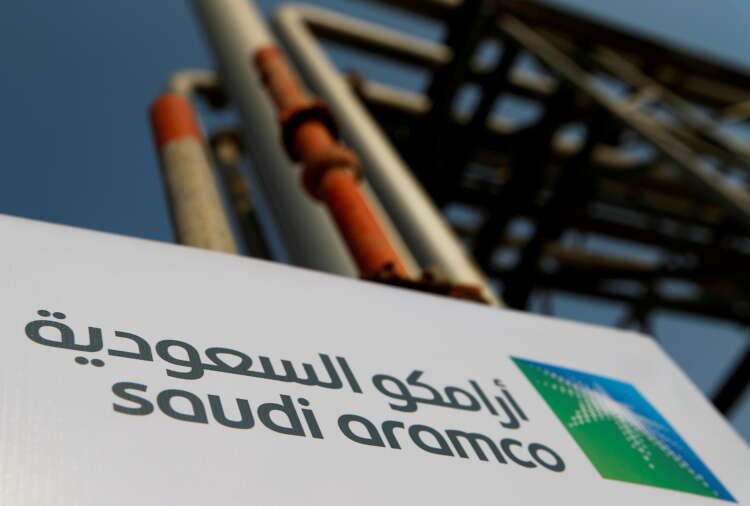
    DUBAI (Reuters) -Saudi Aramco is looking to raise at least $17 billion from the sale of a significant minority stake in its gas pipelines, higher than the $12.4 billion raised from its oil pipeline deal, sources familiar with the matter said on Monday.

    Potential bidders including North American private equity and infrastructure funds, as well as state-backed funds in China and South Korea have been approached by Aramco through its advisors before a formal sale process kicks off in the next few weeks, they said.

    The deal size may include $3.5 billion of equity and the remainder will be funded by bank debt, one source said, while another source said the transaction size could top $20 billion.

    Saudi Arabia is the world’s sixth largest gas market,according to Aramco, whose Master Gas System (MGS) derives valuefrom a range of gas deposits and helps deliver it to consumers.

    “The gas deal is about the long-term view of gas utilisation and consumption in Saudi Arabia,” said one source familiar with deal, explaining why the gas deal may generate higher proceeds.

    The source said many industries will shift to gas under the economic Vision 2030, meaning domestic gas demand will rise.

    Aramco is working with JPMorgan and Goldman Sachs on the deal to tap potential buyers, sources have said.

    The companies tapped include the ones who took part in the stake sale process for Abu Dhabi National Oil Co’s gas pipelines, which was bought by a consortium of investors including Global Infrastructure Partners (GIP), Brookfield, Singapore sovereign wealth fund GIC and European gas infrastructure owner and operator SNAM .

    Aramco, JPMorgan and Goldman declined to comment.

    Brookfield and SNAM declined to comment. GIP did not immediately respond to a request for comment.

    Other potential bidders showing interest in the Aramco sales process include China’s Silk Road, Chinese state-backed investment fund CNIC Corp, South Korea’s sovereign wealth fund Korean Investment Corp (KIC) and NH Investment & Securities, sources said.

    KIC declined to comment, while the other companies did not respond to a Reuters request for comment.

    Aramco, similar to Abu Dhabi National Oil Co (ADNOC), used a lease and lease-back agreement to sell a 49% stake of newly formed Aramco Oil Pipelines Co to the buyer and rights to 25 years of tariff payments for oil carried on its pipelines.

    (Additional reporting by Stephen Jewkes in Milan, Cynthia Kim in Seoul, Kane Wu in Hong Kong and Anshuman Daga in Singapore; editing by David Evans)

    By Saeed Azhar and Davide Barbuscia

    DUBAI (Reuters) -Saudi Aramco is looking to raise at least $17 billion from the sale of a significant minority stake in its gas pipelines, higher than the $12.4 billion raised from its oil pipeline deal, sources familiar with the matter said on Monday.

    Potential bidders including North American private equity and infrastructure funds, as well as state-backed funds in China and South Korea have been approached by Aramco through its advisors before a formal sale process kicks off in the next few weeks, they said.

    The deal size may include $3.5 billion of equity and the remainder will be funded by bank debt, one source said, while another source said the transaction size could top $20 billion.

    Saudi Arabia is the world’s sixth largest gas market,according to Aramco, whose Master Gas System (MGS) derives valuefrom a range of gas deposits and helps deliver it to consumers.

    “The gas deal is about the long-term view of gas utilisation and consumption in Saudi Arabia,” said one source familiar with deal, explaining why the gas deal may generate higher proceeds.

    The source said many industries will shift to gas under the economic Vision 2030, meaning domestic gas demand will rise.

    Aramco is working with JPMorgan and Goldman Sachs on the deal to tap potential buyers, sources have said.

    The companies tapped include the ones who took part in the stake sale process for Abu Dhabi National Oil Co’s gas pipelines, which was bought by a consortium of investors including Global Infrastructure Partners (GIP), Brookfield, Singapore sovereign wealth fund GIC and European gas infrastructure owner and operator SNAM .

    Aramco, JPMorgan and Goldman declined to comment.

    Brookfield and SNAM declined to comment. GIP did not immediately respond to a request for comment.

    Other potential bidders showing interest in the Aramco sales process include China’s Silk Road, Chinese state-backed investment fund CNIC Corp, South Korea’s sovereign wealth fund Korean Investment Corp (KIC) and NH Investment & Securities, sources said.

    KIC declined to comment, while the other companies did not respond to a Reuters request for comment.

    Aramco, similar to Abu Dhabi National Oil Co (ADNOC), used a lease and lease-back agreement to sell a 49% stake of newly formed Aramco Oil Pipelines Co to the buyer and rights to 25 years of tariff payments for oil carried on its pipelines.

    (Additional reporting by Stephen Jewkes in Milan, Cynthia Kim in Seoul, Kane Wu in Hong Kong and Anshuman Daga in Singapore; editing by David Evans)

    Related Posts
    DeFi and banking are converging. Here’s what banks can do.
    DeFi and banking are converging. Here’s what banks can do.
    Are Neo Banks Offering Better Metal Debit Cards Than Traditional Banks?
    Are Neo Banks Offering Better Metal Debit Cards Than Traditional Banks?
    Banking at the Intersection: From Nashville to Cannes, A Strategic Call to Action
    Banking at the Intersection: From Nashville to Cannes, A Strategic Call to Action
    Driving Efficiency and Profit Through Customer-Centric Banking
    Driving Efficiency and Profit Through Customer-Centric Banking
    How Ecosystem Partnerships Are Redefining Deposit Products
    How Ecosystem Partnerships Are Redefining Deposit Products
    CIBC Private Banking wins four 2025 Global Banking & Finance Awards
    CIBC Private Banking wins four 2025 Global Banking & Finance Awards
    How Banks Can Put AI to Work Now and Prove ROI in 90 Days
    How Banks Can Put AI to Work Now and Prove ROI in 90 Days
    Top 5 AI quality assurance framework providers for Banks and Financial Services firms.
    Top 5 AI quality assurance framework providers for Banks and Financial Services firms.
    The Unbanked Paradox: How Banking Access Creates Economic Resilience
    The Unbanked Paradox: How Banking Access Creates Economic Resilience
    Hyper-Personalised Banking - Shaping the Future of Finance
    Hyper-Personalised Banking - Shaping the Future of Finance
    The End of Voice Trust: How AI Deepfakes Are Forcing Banks to Rethink Authentication
    The End of Voice Trust: How AI Deepfakes Are Forcing Banks to Rethink Authentication
    Predicting and Preventing Customer Churn in Retail Banking
    Predicting and Preventing Customer Churn in Retail Banking

    Why waste money on news and opinions when you can access them for free?

    Take advantage of our newsletter subscription and stay informed on the go!

    Subscribe

    Previous Banking PostItaly’s problem bank casts shadow over Draghi’s summer break
    Next Banking PostAfghan central bank chief flees Kabul, blaming Ghani for chaos

    More from Banking

    Explore more articles in the Banking category

    Growth and Impact: Banreservas Leads Dominican Republic Economic Expansion

    Growth and Impact: Banreservas Leads Dominican Republic Economic Expansion

    Turning Insight into Impact: Making AI and Analytics Work in Retail Banking

    Turning Insight into Impact: Making AI and Analytics Work in Retail Banking

    KeyBank Embraces Next-Generation AI Platform to Transform Fraud and Financial Crime Prevention

    KeyBank Embraces Next-Generation AI Platform to Transform Fraud and Financial Crime Prevention

    Understanding Association Banking: Financial Solutions for Community Success

    Understanding Association Banking: Financial Solutions for Community Success

    Applying Symbiosis for advantage in APAC banking

    Applying Symbiosis for advantage in APAC banking

    AmBank Islamic Berhad Earns Triple Recognition for Excellence in Islamic Banking

    AmBank Islamic Berhad Earns Triple Recognition for Excellence in Islamic Banking

    FinTok Strategy: How Banks Are Reaching Gen Z Through Social Media

    FinTok Strategy: How Banks Are Reaching Gen Z Through Social Media

    Rethinking Retail Banking Sustainability: Why the ATM is an Asset in the Sustainable Transition

    Rethinking Retail Banking Sustainability: Why the ATM is an Asset in the Sustainable Transition

    How private banks can survive the neo-broker revolution

    How private banks can survive the neo-broker revolution

    Next-Gen Bank Branches: The Evolution from Transaction Hubs to Experience Centers

    Next-Gen Bank Branches: The Evolution from Transaction Hubs to Experience Centers

    The Banking Talent Crunch: How Financial Institutions Are Competing for Digital-Native Skills

    The Banking Talent Crunch: How Financial Institutions Are Competing for Digital-Native Skills

    Beyond Interest: How Banks Are Reimagining Revenue in the Digital Age

    Beyond Interest: How Banks Are Reimagining Revenue in the Digital Age

    View All Banking Posts