Search
00
GBAF Logo
trophy
Top StoriesInterviewsBusinessFinanceBankingTechnologyInvestingTradingVideosAwardsMagazinesHeadlinesTrends

Subscribe to our newsletter

Get the latest news and updates from our team.

Global Banking & Finance Review®

Global Banking & Finance Review® - Subscribe to our newsletter

Company

    GBAF Logo
    • About Us
    • Profile
    • Privacy & Cookie Policy
    • Terms of Use
    • Contact Us
    • Advertising
    • Submit Post
    • Latest News
    • Research Reports
    • Press Release
    • Awards▾
      • About the Awards
      • Awards TimeTable
      • Submit Nominations
      • Testimonials
      • Media Room
      • Award Winners
      • FAQ
    • Magazines▾
      • Global Banking & Finance Review Magazine Issue 79
      • Global Banking & Finance Review Magazine Issue 78
      • Global Banking & Finance Review Magazine Issue 77
      • Global Banking & Finance Review Magazine Issue 76
      • Global Banking & Finance Review Magazine Issue 75
      • Global Banking & Finance Review Magazine Issue 73
      • Global Banking & Finance Review Magazine Issue 71
      • Global Banking & Finance Review Magazine Issue 70
      • Global Banking & Finance Review Magazine Issue 69
      • Global Banking & Finance Review Magazine Issue 66
    Top StoriesInterviewsBusinessFinanceBankingTechnologyInvestingTradingVideosAwardsMagazinesHeadlinesTrends

    Global Banking & Finance Review® is a leading financial portal and online magazine offering News, Analysis, Opinion, Reviews, Interviews & Videos from the world of Banking, Finance, Business, Trading, Technology, Investing, Brokerage, Foreign Exchange, Tax & Legal, Islamic Finance, Asset & Wealth Management.
    Copyright © 2010-2026 GBAF Publications Ltd - All Rights Reserved. | Sitemap | Tags | Developed By eCorpIT

    Editorial & Advertiser disclosure

    Global Banking & Finance Review® is an online platform offering news, analysis, and opinion on the latest trends, developments, and innovations in the banking and finance industry worldwide. The platform covers a diverse range of topics, including banking, insurance, investment, wealth management, fintech, and regulatory issues. The website publishes news, press releases, opinion and advertorials on various financial organizations, products and services which are commissioned from various Companies, Organizations, PR agencies, Bloggers etc. These commissioned articles are commercial in nature. This is not to be considered as financial advice and should be considered only for information purposes. It does not reflect the views or opinion of our website and is not to be considered an endorsement or a recommendation. We cannot guarantee the accuracy or applicability of any information provided with respect to your individual or personal circumstances. Please seek Professional advice from a qualified professional before making any financial decisions. We link to various third-party websites, affiliate sales networks, and to our advertising partners websites. When you view or click on certain links available on our articles, our partners may compensate us for displaying the content to you or make a purchase or fill a form. This will not incur any additional charges to you. To make things simpler for you to identity or distinguish advertised or sponsored articles or links, you may consider all articles or links hosted on our site as a commercial article placement. We will not be responsible for any loss you may suffer as a result of any omission or inaccuracy on the website.

    Home > Top Stories > Sanctioned Russia teeters on brink of historic default
    Top Stories

    Sanctioned Russia teeters on brink of historic default

    Published by Wanda Rich

    Posted on March 16, 2022

    4 min read

    Last updated: January 20, 2026

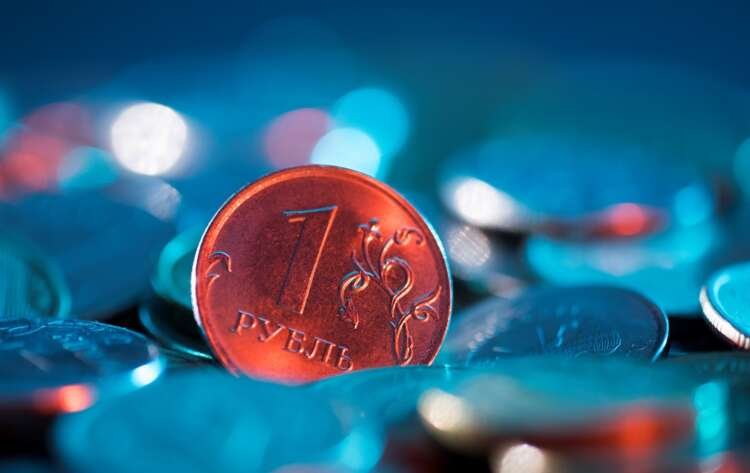
    A view shows Russian rouble coins in this picture illustration
    Why waste money on news and opinion when you can access them for free?

    Take advantage of our newsletter subscription and stay informed on the go!

    Subscribe

    By Marc Jones

    LONDON (Reuters) – The economic cost of Russia’s assault on Ukraine was further exposed on Wednesday as the sanctions-hit country teetered on the brink of its first default on international debt since the Bolshevik revolution.

    Moscow is due to pay $117 million in interest on two dollar-denominated sovereign bonds it sold in 2013. But the limits it now faces in making payments, and talk from the Kremlin that it might pay in roubles – triggering a default anyway – has left even veteran investors guessing at what might happen.

    One described it as the most closely watched government debt payment since Greece’s default at the height of the euro zone crisis. Others said a grace period that allows Russia another 30 days to make the payment could drag the saga out.

    “The thing about defaults is that they are never clear-cut and this is no exception,” said Pictet emerging market portfolio manager Guido Chamorro.

    “There is a grace period, so we are not really going to know whether this is a default or not until April 15,” he said referring to the situation if no coupon payment is made. “Anything could happen in the grace period.”

    By midday in London, creditors were still waiting to see if the funds would arrive. One bondholder, on condition of anonymity, said there had been no confirmation of a payment as yet and it was still not clear whether it would come.

    Russian Finance Minister Anton Siluanov meanwhile said Moscow had made the payment which had reached the correspondent American bank, and it was now down to Washington to clarify whether settlement is possible.

    A default by the Russian government was unthinkable until what Russian President Vladimir Putin calls a “special military operation” in Ukraine began in late February.

    It had nearly $650 billion of gold and foreign currency reserves, investment-grade credit ratings with S&P Global, Moody’s and Fitch, and was raking in hundreds of millions of dollars a day selling its oil and gas at soaring prices.

    Then the tanks rolled and the United States, Europe and their Western allies fired back with unprecedented sanctions that froze two-thirds of Russia’s reserves which it turned out were held overseas.

    “I think the market now expects Russia not to make the (bond) payments,” said the head of emerging market debt at Aegon Asset Management, Jeff Grills, adding that the conflict was one of the few emerging market events capable of really unsettling global markets.

    That is because Russia’s role as one of the world’s top commodity producers has sent prices and global inflation skywards.

    At the same time it has left Russia a virtual pariah state, crippled by sanctions and watching hundreds of the world’s largest firms quit the country after deciding their presence there is no longer feasible.

    DEFAULT SCENARIOS

    As for Russia’s battered government bonds, most are now changing hands at just 10%-20% of their face value.

    The two payments on Wednesday are the first of several, with another $615 million due over the rest of March, and the first “principal” – final full payment of a bond – on April 4 worth $2 billion alone.

    Experienced investors see three potential scenarios for how Wednesday’s crucial deadline plays out.

    The first is that Moscow pays in full and in dollars, meaning default worries go away for the time being.

    Big Russian energy providers Gazprom and Rosneft have both made payments on international bonds over the last 10 days so there is still a sliver of hope it could be done if Moscow feels it is in its interests.

    The second possibility is that Moscow doesn’t pay, starting the 30-day grace period countdown clock until default.

    A third option where Russia pays but in roubles is also possible, although the legal terms of the bonds would mean that is still tantamount to a default. The 30-day grace rule would still apply.

    “Maybe we will know today (if they pay) but maybe we won’t,” said Pictet’s Chamorro. His firm doesn’t hold the bonds, but does hold other Russian debt – and when a country defaults on one of its bonds it tends to mean all its bonds “cross default”.

    “In situations like these it’s safest to expect the unexpected. You can’t really rule anything out”.

    (Reporting by Marc Jones; Editing by Lincoln Feast and Catherine Evans)

    More from Top Stories

    Explore more articles in the Top Stories category

    Image for Lessons From the Ring and the Deal Table: How Boxing Shapes Steven Nigro’s Approach to Banking and Life
    Lessons From the Ring and the Deal Table: How Boxing Shapes Steven Nigro’s Approach to Banking and Life
    Image for Joe Kiani in 2025: Capital, Conviction, and a Focused Return to Innovation
    Joe Kiani in 2025: Capital, Conviction, and a Focused Return to Innovation
    Image for Marco Robinson – CLOSE THE DEAL AND SUDDENLY GROW RICH
    Marco Robinson – CLOSE THE DEAL AND SUDDENLY GROW RICH
    Image for Digital Tracing: Turning a regulatory obligation into a commercial advantage
    Digital Tracing: Turning a regulatory obligation into a commercial advantage
    Image for Exploring the Role of Blockchain and the Bitcoin Price Today in Education
    Exploring the Role of Blockchain and the Bitcoin Price Today in Education
    Image for Inside the World’s First Collection Industry Conglomerate: PCA Global’s Platform Strategy
    Inside the World’s First Collection Industry Conglomerate: PCA Global’s Platform Strategy
    Image for Chase Buchanan Private Wealth Management Highlights Key Autumn 2025 Budget Takeaways for Expats
    Chase Buchanan Private Wealth Management Highlights Key Autumn 2025 Budget Takeaways for Expats
    Image for PayLaju Strengthens Its Position as Malaysia’s Trusted Interest-Free Sharia-Compliant Loan Provider
    PayLaju Strengthens Its Position as Malaysia’s Trusted Interest-Free Sharia-Compliant Loan Provider
    Image for A Notable Update for Employee Health Benefits:
    A Notable Update for Employee Health Benefits:
    Image for Creating Equity Between Walls: How Mohak Chauhan is Using Engineering, Finance, and Community Vision to Reengineer Affordable Housing
    Creating Equity Between Walls: How Mohak Chauhan is Using Engineering, Finance, and Community Vision to Reengineer Affordable Housing
    Image for Upcoming Book on Real Estate Investing: Harvard Grace Capital Founder Stewart Heath’s Puts Lessons in Print
    Upcoming Book on Real Estate Investing: Harvard Grace Capital Founder Stewart Heath’s Puts Lessons in Print
    Image for ELECTIVA MARKS A LANDMARK FIRST YEAR WITH MAJOR SENIOR APPOINTMENTS AND EXPANSION MILESTONES
    ELECTIVA MARKS A LANDMARK FIRST YEAR WITH MAJOR SENIOR APPOINTMENTS AND EXPANSION MILESTONES
    View All Top Stories Posts
    Previous Top Stories PostRussia clouds prospects for Inditex after sales surge
    Next Top Stories PostMoscow and Kyiv see signs of compromise on Ukraine’s security status