
Top Stories
Ryanair Boss Blames Brexit for UK Economic ‘car Crash’
Published by Jessica Weisman-Pitts
Posted on October 18, 2022
2 min readLast updated: February 3, 2026
Add as preferred source on Google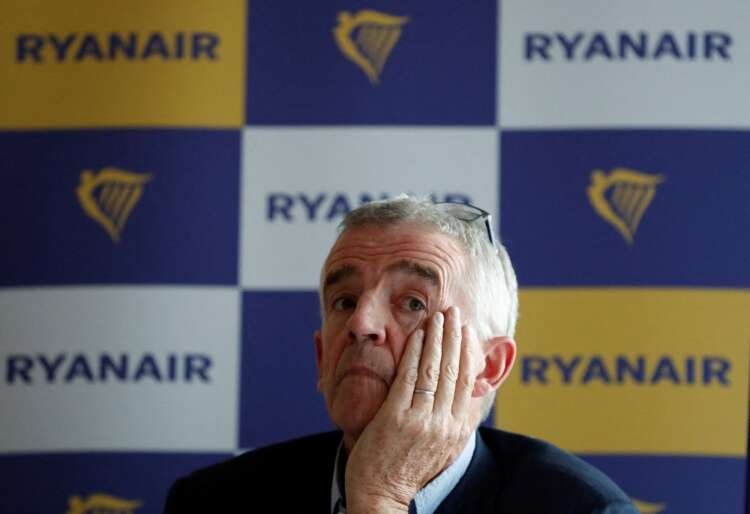
Published by Jessica Weisman-Pitts
Posted on October 18, 2022
2 min readLast updated: February 3, 2026
Add as preferred source on GoogleBy Alvise Armellini
ROME (Reuters) -Ryanair boss Michael O’Leary on Tuesday described the economic situation in Britain as a “car crash” caused by the country’s vote to leave the European Union in 2016.
“The mini budget was a kind of spectacular failure of the whole concept of Brexit,” he said at a news conference in Rome, adding that the first thing Britain needs is what he called a sensible trading agreement with the EU.
Britain’s new finance minister, Jeremy Hunt, on Monday scrapped Prime Minister Liz Truss’s economic plan and scaled back her vast energy support scheme in a historic policy U-turn to try to stem a dramatic loss of investor confidence.
Irishman O’Leary said he expects Truss, who became prime minister last month, to be out of a job within a week or two.
“The mini budget has been reversed. So she’s in office but not in power,” he said.
O’Leary said that Truss, who had wanted Britain to remain in the EU at the time of the 2016 referendum, is paying a price for promises she made to Conservative party members who selected her to lead the country after Boris Johnson resigned.
“She got elected by appealing to all the Brexiteers for the last three months and it is the ultimate, I think, failure of Brexit and the Brexiteers,” he said.
Truss struck a eurosceptic tone during her leadership campaign over the summer, tapping in to the concerns of Conservative Party members and promising to scrap all remaining EU laws that still apply in Britain by 2023.
O’Leary welcomed the appointment of Hunt, who took over as finance minister last Friday and has since rewritten government plans presented only last month.
“The Remainers are coming back, the adults are taking charge again … we will return to some sensible economic policies,” O’Leary added.
(Reporting by Alvise ArmelliniWriting by Keith WeirEditing by Cristina Carlevaro, Edwina Gibbs and David Goodman)
Brexit refers to the United Kingdom's decision to leave the European Union, which was decided by a referendum held in June 2016. It has significant implications for trade, economics, and immigration.
A financial crisis is a situation in which the value of financial institutions or assets drops significantly. It can lead to widespread economic downturns and loss of confidence in the financial system.
Economic growth is an increase in the production of goods and services in an economy over a period of time, typically measured by the rise in Gross Domestic Product (GDP).
Investment refers to the allocation of resources, usually money, in order to generate income or profit. It can take various forms, including stocks, bonds, real estate, and business ventures.
Explore more articles in the Top Stories category











