
Top Stories
Russian Central Bank Governor Speaks After Hiking Rate to 8.5%
Published by Uma Rajagopal
Posted on July 21, 2023
3 min readLast updated: February 1, 2026
Add as preferred source on Google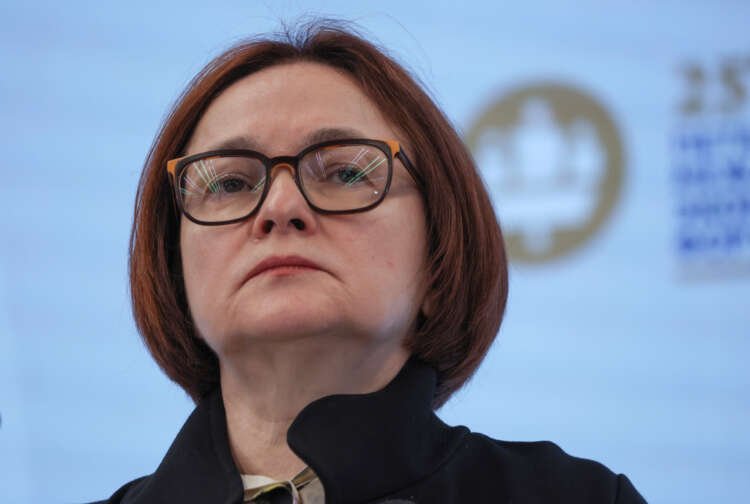
Published by Uma Rajagopal
Posted on July 21, 2023
3 min readLast updated: February 1, 2026
Add as preferred source on Google(Reuters) -Russian Central Bank Governor Elvira Nabiullina and her deputy Alexei Zabotkin gave a news conference on Friday after the bank hiked its key interest rate to a higher-than-expected 8.5%.
(Reuters) -Russian Central Bank Governor Elvira Nabiullina and her deputy Alexei Zabotkin gave a news conference on Friday after the bank hiked its key interest rate to a higher-than-expected 8.5%.
The Bank of Russia officials spoke in Russian. The quotes below were translated into English by Reuters.
The current restrictions are in effect until Sept. 9. We have not made a decision yet, but at the moment we can say that there are no grounds for the removal of these restrictions.
These restrictions, I remind you, were related to the fact that there are sanctions on the import of foreign currency cash by Russian banks on the territory of the Russian Federation.
There are a large number of various restrictions now, with exceptions, and of course it is quite difficult for businesses to navigate through it.
We are now making an inventory of the measures that have been taken, and our position is that we should keep only those currency restrictions that are significant in terms of retaliatory measures.
In our opinion, the rest should be removed and businesses should be given more opportunity and freedom to build new logistics routes and relationships with new counterparties.
In terms of the foreign currency part of the export proceeds that come into our country, the share has not decreased in any way, our export volumes have decreased.
The global economic growth rate is slowing down, and this is reflected in the prices of Russian export goods. Gas, coal and fertilisers are becoming cheaper on the global market. Russian exports are thus under double pressure – both from sanctions and the economic cycle.
Pro-inflationary risks have significantly intensified over the forecast horizon. These include a possible increase in the gap between growth in demand and supply capacity, the continued higher growth rates of consumer lending and a further aggravation of staff shortages.
Other pro-inflationary risks include a sharper transfer of rouble depreciation into prices, and persistently high inflation expectations. A deterioration in external conditions, including a possible tightening of sanctions, remains a significant risk.
Given the changes in our assessment of the economic situation, a higher key rate trajectory will be required if we are to end next year with inflation on target near 4%.
We allow for the possibility of a further increase in the key rate at the next meetings.
(Reporting by Reuters; Editing by Kevin Liffey)
A central bank is a financial institution responsible for managing a country's currency, money supply, and interest rates. It oversees monetary policy and regulates the banking system.
Inflation is the rate at which the general level of prices for goods and services rises, eroding purchasing power. Central banks attempt to limit inflation to maintain economic stability.
Monetary policy refers to the actions taken by a central bank to manage the money supply and interest rates to achieve macroeconomic objectives such as controlling inflation and stabilizing currency.
Inflation risks refer to the potential for rising prices to negatively impact the economy, affecting purchasing power and savings. These risks can arise from various factors, including demand and supply imbalances.
Explore more articles in the Top Stories category











