Search
00
GBAF Logo
trophy
Top StoriesInterviewsBusinessFinanceBankingTechnologyInvestingTradingVideosAwardsMagazinesHeadlinesTrends

Subscribe to our newsletter

Get the latest news and updates from our team.

Global Banking & Finance Review®

Global Banking & Finance Review® - Subscribe to our newsletter

Company

    GBAF Logo
    • About Us
    • Profile
    • Privacy & Cookie Policy
    • Terms of Use
    • Contact Us
    • Advertising
    • Submit Post
    • Latest News
    • Research Reports
    • Press Release
    • Awards▾
      • About the Awards
      • Awards TimeTable
      • Submit Nominations
      • Testimonials
      • Media Room
      • Award Winners
      • FAQ
    • Magazines▾
      • Global Banking & Finance Review Magazine Issue 79
      • Global Banking & Finance Review Magazine Issue 78
      • Global Banking & Finance Review Magazine Issue 77
      • Global Banking & Finance Review Magazine Issue 76
      • Global Banking & Finance Review Magazine Issue 75
      • Global Banking & Finance Review Magazine Issue 73
      • Global Banking & Finance Review Magazine Issue 71
      • Global Banking & Finance Review Magazine Issue 70
      • Global Banking & Finance Review Magazine Issue 69
      • Global Banking & Finance Review Magazine Issue 66
    Top StoriesInterviewsBusinessFinanceBankingTechnologyInvestingTradingVideosAwardsMagazinesHeadlinesTrends

    Global Banking & Finance Review® is a leading financial portal and online magazine offering News, Analysis, Opinion, Reviews, Interviews & Videos from the world of Banking, Finance, Business, Trading, Technology, Investing, Brokerage, Foreign Exchange, Tax & Legal, Islamic Finance, Asset & Wealth Management.
    Copyright © 2010-2026 GBAF Publications Ltd - All Rights Reserved. | Sitemap | Tags | Developed By eCorpIT

    Editorial & Advertiser disclosure

    Global Banking & Finance Review® is an online platform offering news, analysis, and opinion on the latest trends, developments, and innovations in the banking and finance industry worldwide. The platform covers a diverse range of topics, including banking, insurance, investment, wealth management, fintech, and regulatory issues. The website publishes news, press releases, opinion and advertorials on various financial organizations, products and services which are commissioned from various Companies, Organizations, PR agencies, Bloggers etc. These commissioned articles are commercial in nature. This is not to be considered as financial advice and should be considered only for information purposes. It does not reflect the views or opinion of our website and is not to be considered an endorsement or a recommendation. We cannot guarantee the accuracy or applicability of any information provided with respect to your individual or personal circumstances. Please seek Professional advice from a qualified professional before making any financial decisions. We link to various third-party websites, affiliate sales networks, and to our advertising partners websites. When you view or click on certain links available on our articles, our partners may compensate us for displaying the content to you or make a purchase or fill a form. This will not incur any additional charges to you. To make things simpler for you to identity or distinguish advertised or sponsored articles or links, you may consider all articles or links hosted on our site as a commercial article placement. We will not be responsible for any loss you may suffer as a result of any omission or inaccuracy on the website.

    Home > Top Stories > Russia pushed closer to brink of default after U.S. payment license expires
    Top Stories

    Russia pushed closer to brink of default after U.S. payment license expires

    Published by Wanda Rich

    Posted on May 25, 2022

    4 min read

    Last updated: February 6, 2026

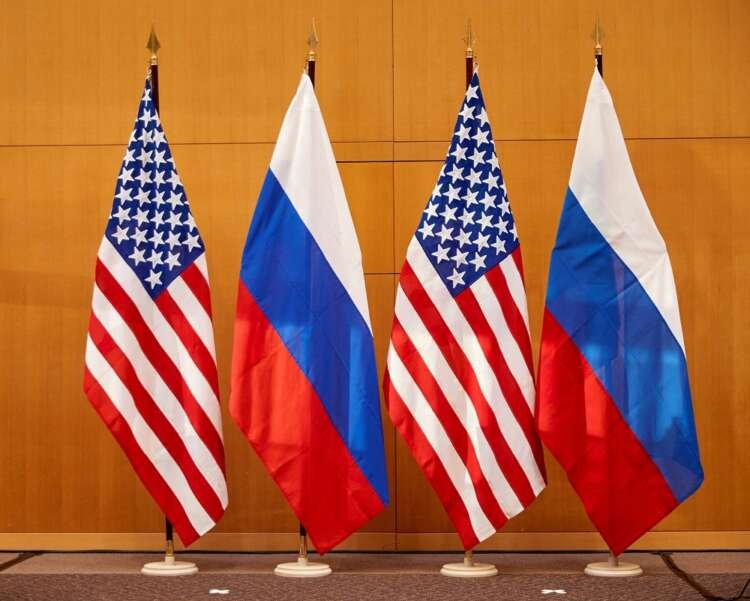
    The U.S. Treasury building, representing financial authority, highlights the sanctions imposed on Russia, pushing the country closer to a historic default on its sovereign debt amid the Ukraine crisis.
    U.S. Treasury building with flags, symbolizing sanctions affecting Russia's debt - Global Banking & Finance Review
    Why waste money on news and opinion when you can access them for free?

    Take advantage of our newsletter subscription and stay informed on the go!

    Subscribe

    Tags:debt sustainabilityfinancial crisisinternational capital

    By Daphne Psaledakis and Karin Strohecker

    WASHINGTON/LONDON (Reuters) -The United States pushed Russia closer to the brink of a historic debt default on Wednesday by not extending its license to pay bondholders, as Washington ramps up pressure on the country following its invasion of Ukraine.

    The U.S. Treasury Department late on Tuesday it would not extend the license, set to expire at 12:01 am ET (0401 GMT) on Wednesday, which allowed Russia to make interest and maturity payments on its sovereign debt to U.S. persons.

    That waiver has allowed Russia to keep up government debt payments, but its expiry now appears to make default inevitable – the country’s first major one on international sovereign bonds in more than a century.

    Almost $2 billion worth of payments on Russian international bonds fall due before year-end.

    Western sanctions imposed after the Kremlin’s Feb. 24 invasion of Ukraine, and countermeasures from Moscow, have complicated the movement of money across borders, yet Russia has made a conscious effort to keep paying bondholders.

    “If the bondholders don’t get their money when the money is due, factoring in any grace periods that apply, Russia will be in default on a sovereign debt,” said Jay Auslander, a partner at law firm Wilk Auslander. “With the waiver gone, there seems to be no way for bondholders to get paid.”

    While the license only applies to U.S. persons, its lapse will make it challenging for Russia to pay other holders given the integral part U.S. institutions play in the global financial system and the complexity of such payment processes.

    On Friday, Russia had rushed forward payments on two international bonds – one denominated in euros and one in dollars – a week before the due date.

    But its dash to get the money into creditors’ bank accounts ahead of the waiver’s expiry might not have left enough time for what is often a multi-day and complex payment process.

    One Asia-based bondholder said the payment had not arrived in the firm’s account by Wednesday.

    Russia has a 30-day grace period on the two payments.

    The country’s $40 billion of international bonds have come under the spotlight in recent weeks as debate raged over whether or not to extend the license.

    Deputy U.S. Treasury Secretary Wally Adeyemo previously said the payments siphoned funds away from Moscow’s Ukraine war effort and were a “sign of success” for U.S. sanctions policy.

    But Treasury Secretary Janet Yellen last week said Washington was unlikely to extend the license.

    Unlike in most default situations, Moscow is not short of money. Debt repayment dues pale in comparison to oil and gas export earnings – in April alone, soaring energy prices enabled Russia to reap $28 billion in revenues.

    Russia’s most senior lawmaker on Tuesday told the lower house of parliament to study the possibility of stopping the servicing of foreign debt, saying voters were unhappy that Moscow was continuing to pay while its national reserves held abroad were frozen.

    WAR IN EUROPE

    Bonds are not the only flashpoint, however, as the financial tit-for-tat ratchets up.

    Sanctions imposed on Russia for launching the largest land war in Europe since World War Two include freezing roughly half of Russia’s $640 billion foreign currency reserves.

    The European Union looks likely agree an embargo on Russian oil imports “within days” according to Germany.

    Moscow calls its nearly three-month-old invasion a “special military operation” to rid Ukraine of fascists, an assertion Kyiv and its Western allies say is a baseless pretext for an unprovoked war.

    Russian lawmakers also have a bill underway to allow the takeover of foreign companies that have left the market there in opposition to Moscow’s actions in Ukraine.

    Russia was previously rated as investment-grade by credit rating agencies, but since the Ukraine conflict major ratings agencies have stopped assessing the country.

    Now a default could increase tensions further as it will prevent Russia from regaining access to international capital markets until creditors are fully repaid and any legal cases stemming from the default are settled.

    Previous debt defaults, such as by Argentina, have prompted creditors to go after physical assets such as a navy vessel and the country’s presidential aircraft.

    It could also throw up barriers to trade, if countries or companies that would normally transact with Russia have self-imposed rules that bar them from doing business with an entity in default.

    (Reporting by Daphne Psaledakis and Rami Ayyub in Washington, Karin Strohecker in London and Emily Chan in Taipei; Editing by Jane Merriman, Chris Reese and Catherine Evans)

    Frequently Asked Questions about Russia pushed closer to brink of default after U.S. payment license expires

    1What are U.S. sanctions?

    U.S. sanctions are restrictions imposed by the United States on countries or entities to influence their behavior, often related to national security or foreign policy.

    2What is a debt default?

    A debt default occurs when a borrower fails to meet the legal obligations or conditions of a loan, such as missing a payment.

    3What is a grace period in finance?

    A grace period is a set time after a payment is due during which a borrower can make the payment without incurring penalties.

    More from Top Stories

    Explore more articles in the Top Stories category

    Image for Lessons From the Ring and the Deal Table: How Boxing Shapes Steven Nigro’s Approach to Banking and Life
    Lessons From the Ring and the Deal Table: How Boxing Shapes Steven Nigro’s Approach to Banking and Life
    Image for Joe Kiani in 2025: Capital, Conviction, and a Focused Return to Innovation
    Joe Kiani in 2025: Capital, Conviction, and a Focused Return to Innovation
    Image for Marco Robinson – CLOSE THE DEAL AND SUDDENLY GROW RICH
    Marco Robinson – CLOSE THE DEAL AND SUDDENLY GROW RICH
    Image for Digital Tracing: Turning a regulatory obligation into a commercial advantage
    Digital Tracing: Turning a regulatory obligation into a commercial advantage
    Image for Exploring the Role of Blockchain and the Bitcoin Price Today in Education
    Exploring the Role of Blockchain and the Bitcoin Price Today in Education
    Image for Inside the World’s First Collection Industry Conglomerate: PCA Global’s Platform Strategy
    Inside the World’s First Collection Industry Conglomerate: PCA Global’s Platform Strategy
    Image for Chase Buchanan Private Wealth Management Highlights Key Autumn 2025 Budget Takeaways for Expats
    Chase Buchanan Private Wealth Management Highlights Key Autumn 2025 Budget Takeaways for Expats
    Image for PayLaju Strengthens Its Position as Malaysia’s Trusted Interest-Free Sharia-Compliant Loan Provider
    PayLaju Strengthens Its Position as Malaysia’s Trusted Interest-Free Sharia-Compliant Loan Provider
    Image for A Notable Update for Employee Health Benefits:
    A Notable Update for Employee Health Benefits:
    Image for Creating Equity Between Walls: How Mohak Chauhan is Using Engineering, Finance, and Community Vision to Reengineer Affordable Housing
    Creating Equity Between Walls: How Mohak Chauhan is Using Engineering, Finance, and Community Vision to Reengineer Affordable Housing
    Image for Upcoming Book on Real Estate Investing: Harvard Grace Capital Founder Stewart Heath’s Puts Lessons in Print
    Upcoming Book on Real Estate Investing: Harvard Grace Capital Founder Stewart Heath’s Puts Lessons in Print
    Image for ELECTIVA MARKS A LANDMARK FIRST YEAR WITH MAJOR SENIOR APPOINTMENTS AND EXPANSION MILESTONES
    ELECTIVA MARKS A LANDMARK FIRST YEAR WITH MAJOR SENIOR APPOINTMENTS AND EXPANSION MILESTONES
    View All Top Stories Posts
    Previous Top Stories PostStocks edge up before Fed minutes, dollar off 1-month low
    Next Top Stories PostSterling regains some lost ground vs euro, steady against dollar