
Banking
Poland’s Glapinski Says Central Bank Will Do All It Takes to Cut CPI
Published by maria gbaf
Posted on February 17, 2022
2 min readLast updated: February 8, 2026
Add as preferred source on Google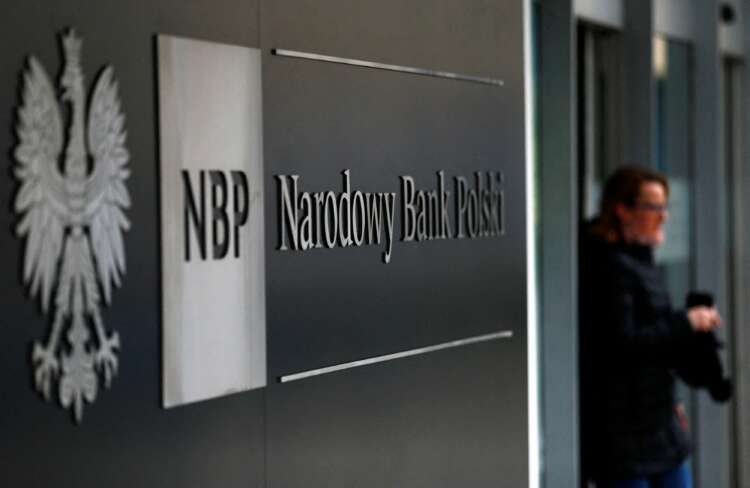
Published by maria gbaf
Posted on February 17, 2022
2 min readLast updated: February 8, 2026
Add as preferred source on GoogleWARSAW (Reuters) – The National Bank of Poland (NBP) will do everything it can to ensure that inflation falls, its governor said in comments published on Wednesday, after CPI again jumped to its highest level in over two decades.
WARSAW (Reuters) – The National Bank of Poland (NBP) will do everything it can to ensure that inflation falls, its governor said in comments published on Wednesday, after CPI again jumped to its highest level in over two decades.
Poland’s central bank hiked its main interest rate by 50 basis points to 2.75% in February, its highest level since 2013, and Glapinski has indicated there is more tightening to come.
“The NBP will take all necessary steps towards a lasting reduction of inflation,” Adam Glapinski was quoted as saying by the Super Express tabloid. “Our next decisions will continue to be geared towards ensuring medium-term price stability, while supporting sustainable economic growth.”
Rising interest rates have squeezed the household budgets of many Polish mortgage-holders, whose instalments rise along with the WIBOR interbank rate.
However, while in Hungary mortgage rates have been frozen, Glapinski said the Polish central bank was against any suggestion of freezing WIBOR.
“A possible freezing of the WIBOR rate would constitute an interference in private legal relations, unacceptable in the modern market economy,” he was quoted as saying.
“At the same time, freezing the WIBOR rate would also undermine the principles of the financial market. As a result, confidence in the proper functioning of the legal system and the market economy would be undermined.”
(Reporting by Alan Charlish; Editing by Peter Graff, William Maclean)
Inflation is the rate at which the general level of prices for goods and services rises, eroding purchasing power. It is typically measured by the Consumer Price Index (CPI).
A central bank is a financial institution that manages a country's currency, money supply, and interest rates. It also oversees the banking system and implements monetary policy.
Interest rates are the cost of borrowing money or the return on savings, expressed as a percentage. They are influenced by central bank policies and economic conditions.
Monetary policy refers to the actions taken by a central bank to control the money supply and achieve economic goals such as controlling inflation, consumption, growth, and liquidity.
Financial stability refers to a condition where the financial system operates effectively, allowing for the smooth functioning of financial markets and institutions, minimizing the risk of financial crises.
Explore more articles in the Banking category









