Search
00
GBAF Logo
trophy
Top StoriesInterviewsBusinessFinanceBankingTechnologyInvestingTradingVideosAwardsMagazinesHeadlinesTrends

Subscribe to our newsletter

Get the latest news and updates from our team.

Global Banking and Finance Review

Global Banking & Finance Review

Company

    GBAF Logo
    • About Us
    • Profile
    • Privacy & Cookie Policy
    • Terms of Use
    • Contact Us
    • Advertising
    • Submit Post
    • Latest News
    • Research Reports
    • Press Release
    • Awards▾
      • About the Awards
      • Awards TimeTable
      • Submit Nominations
      • Testimonials
      • Media Room
      • Award Winners
      • FAQ
    • Magazines▾
      • Global Banking & Finance Review Magazine Issue 79
      • Global Banking & Finance Review Magazine Issue 78
      • Global Banking & Finance Review Magazine Issue 77
      • Global Banking & Finance Review Magazine Issue 76
      • Global Banking & Finance Review Magazine Issue 75
      • Global Banking & Finance Review Magazine Issue 73
      • Global Banking & Finance Review Magazine Issue 71
      • Global Banking & Finance Review Magazine Issue 70
      • Global Banking & Finance Review Magazine Issue 69
      • Global Banking & Finance Review Magazine Issue 66
    Top StoriesInterviewsBusinessFinanceBankingTechnologyInvestingTradingVideosAwardsMagazinesHeadlinesTrends

    Global Banking & Finance Review® is a leading financial portal and online magazine offering News, Analysis, Opinion, Reviews, Interviews & Videos from the world of Banking, Finance, Business, Trading, Technology, Investing, Brokerage, Foreign Exchange, Tax & Legal, Islamic Finance, Asset & Wealth Management.
    Copyright © 2010-2025 GBAF Publications Ltd - All Rights Reserved.

    ;
    Editorial & Advertiser disclosure

    Global Banking and Finance Review is an online platform offering news, analysis, and opinion on the latest trends, developments, and innovations in the banking and finance industry worldwide. The platform covers a diverse range of topics, including banking, insurance, investment, wealth management, fintech, and regulatory issues. The website publishes news, press releases, opinion and advertorials on various financial organizations, products and services which are commissioned from various Companies, Organizations, PR agencies, Bloggers etc. These commissioned articles are commercial in nature. This is not to be considered as financial advice and should be considered only for information purposes. It does not reflect the views or opinion of our website and is not to be considered an endorsement or a recommendation. We cannot guarantee the accuracy or applicability of any information provided with respect to your individual or personal circumstances. Please seek Professional advice from a qualified professional before making any financial decisions. We link to various third-party websites, affiliate sales networks, and to our advertising partners websites. When you view or click on certain links available on our articles, our partners may compensate us for displaying the content to you or make a purchase or fill a form. This will not incur any additional charges to you. To make things simpler for you to identity or distinguish advertised or sponsored articles or links, you may consider all articles or links hosted on our site as a commercial article placement. We will not be responsible for any loss you may suffer as a result of any omission or inaccuracy on the website.

    Home > Top Stories > OVER AND OVER AGAIN: THE MINING SECTOR CYCLE
    Top Stories

    OVER AND OVER AGAIN: THE MINING SECTOR CYCLE

    OVER AND OVER AGAIN: THE MINING SECTOR CYCLE

    Published by Gbaf News

    Posted on January 8, 2016

    Featured image for article about Top Stories

    Matías Braun, MD of Strategy, Credicorp Capital
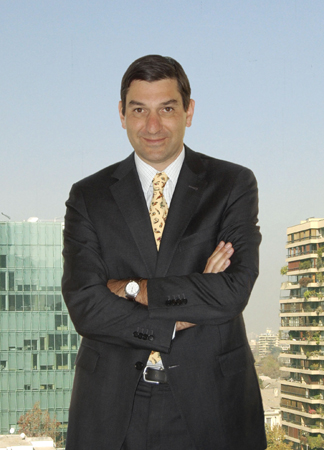
    Matías Braun

    Matías Braun

    No matter how you measure it –as a share of GDP, exports, fiscal revenue, etc. – with their ups and downs, commodities have been a key component of what our Latin-American economies are. And, as a consequence, they are also a relevant determinant of the character of our institutions. Unfortunately, the great boom in commodity prices seems to be over. The values of natural resources have fallen around 50% compared with the levels they were just a couple of years ago.

    In the case of base metals the reason is mainly a negative demand shock coming from lower-than-expected growth in China. Not only because it grows slower but also due to the changing pattern of this growth. The transition of this economy from one based on investment and the export sector into one fueled by domestic consumption does not benefit us since the non-tradable sector is much less demanding of metals than the tradable one. And the situation is not likely to improve anytime soon. Nevertheless prices should not fall more but rather stay constant in real terms in the coming years. This is because of the measures the Bank of China has been undertaking–and more importantly, the signals it is sending- to allow it’s over appreciated currency to converge to market levels. Such depreciation will help contain the large deceleration that the export sector is experiencing.

    The drop in oil prices is the other side of the coin. The services sector of the economy is more intensive in oil and, therefore, the structural transformation should have benefited it. For a while, it seemed to be working fine and prices stayed relatively high when compared to other commodities. Unfortunately, the process was not going smoothly: the modest pick-up of the non-tradable part of the economy was not being able to counteract the fast pace of deceleration of the tradable one. Indeed, one can interpret the recent changes in the Chinese exchange rate policy as recognition that the conversion will not happen so rapidly and that to pause for a while is a sensible thing to do. However, the main driver of the low prices of oil is supply rather than demand. A new technology has arrived and has changed the dynamics of the traditional industry. Currently the costs of shale production are significantly higher than those of the old-fashioned producers. But their rapid decline triggered a strategic response and destroyed whatever was left of the market power that the OPEC enjoyed.

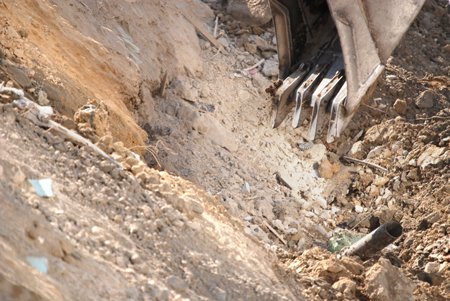
    Investment in mining has collapsed. The capital expenditures of the mining companies are very sensitive to changes in prices. When these are high, investment explodes and when they are low it falls very much. This timing is not at all good. Contrary to other sectors, here investment pays way in the future. As a consequence, prices typically have already fallen when production starts increasing and the returns are much lower than expected. Of course, this dynamics contributes to further decrease the prices in the low part of the cycle.

    How can this happen over and over again? Why don’t miners moderate investment in booms to increase it in bad times? One possibility is that they don’t realize what is going on. It is not difficult to convince ourselves that prices will remain high for a long time because that is what would make us happy (and wealthier). There are, however, other reasons. One is perfectly rational: capital expenditures not only depend on investment opportunities but also on the capacity to finance them. The sums needed are very large and, as we said, they have to be available for many years. Also, uncertainty is high, not only because it is never obvious what´s under the ground but, especially, because the viability and the ex-post returns are very sensitive to the political context in which these outlays are supposed to happen. All this results in that it is quite difficult to raise funds to undertake the investments. Then, the only way to finance them is using internal funds: rather than giving the astonishing amounts of cash produced during price booms back to shareholders, they are used to finance new mines and improvement of old ones. The timing may not be the best but it is the only way to do it.

    Whatever the reasons, oversupply is already here and the fall in profits has been dramatic. Fortunately, they should not fall much further because when prices go down costs also do and, therefore, margins fall less than one would think. Energy costs have dropped quite a bit thanks to lower oil prices, and labor costs are contained as investment declines and firing starts. The exchange rate also contributes by lowering the burden of the costs in local currency.

    One should be cautiously optimistic about the mining sector. The worst may already be over. In the same way that it is unreasonable to think that prices will be high forever, is also awkward to think that they will continue dropping at the pace we have been seeing recently. Now, understanding the forces that are behind the cycles in the sector, to promote large investments in the sector, one should focus on trying to develop capital markets able to finance investment during downturns and to generate a stable institutional environment to ensure funds will go back to financiers.

    Related Posts
    Chase Buchanan Private Wealth Management Highlights Key Autumn 2025 Budget Takeaways for Expats
    Chase Buchanan Private Wealth Management Highlights Key Autumn 2025 Budget Takeaways for Expats
    PayLaju Strengthens Its Position as Malaysia’s Trusted Interest-Free Sharia-Compliant Loan Provider
    PayLaju Strengthens Its Position as Malaysia’s Trusted Interest-Free Sharia-Compliant Loan Provider
    A Notable Update for Employee Health Benefits:
    A Notable Update for Employee Health Benefits:
    Creating Equity Between Walls: How Mohak Chauhan is Using Engineering, Finance, and Community Vision to Reengineer Affordable Housing
    Creating Equity Between Walls: How Mohak Chauhan is Using Engineering, Finance, and Community Vision to Reengineer Affordable Housing
    Upcoming Book on Real Estate Investing: Harvard Grace Capital Founder Stewart Heath’s Puts Lessons in Print
    Upcoming Book on Real Estate Investing: Harvard Grace Capital Founder Stewart Heath’s Puts Lessons in Print
    ELECTIVA MARKS A LANDMARK FIRST YEAR WITH MAJOR SENIOR APPOINTMENTS AND EXPANSION MILESTONES
    ELECTIVA MARKS A LANDMARK FIRST YEAR WITH MAJOR SENIOR APPOINTMENTS AND EXPANSION MILESTONES
    Hebbia Processes One Billion Pages as Financial Institutions Deploy AI Infrastructure at Unprecedented Scale
    Hebbia Processes One Billion Pages as Financial Institutions Deploy AI Infrastructure at Unprecedented Scale
    Beyond Governance Fatigue: Making ESG Integration Work in Financial Markets
    Beyond Governance Fatigue: Making ESG Integration Work in Financial Markets
    Why I-9 Verification Matters for Financial Institutions: Building a Culture of Compliance and Trust
    Why I-9 Verification Matters for Financial Institutions: Building a Culture of Compliance and Trust
    Curvestone AI partners with The White Rose Finance Group to enhance compliance file reviews
    Curvestone AI partners with The White Rose Finance Group to enhance compliance file reviews
    LinkedIn Influence in 2025: Insights from Stevo Jokic on Building Authority and Trust
    LinkedIn Influence in 2025: Insights from Stevo Jokic on Building Authority and Trust
    Should You Take the Dealer’s Bike Insurance or Buy Online Yourself? Here’s the Real Difference
    Should You Take the Dealer’s Bike Insurance or Buy Online Yourself? Here’s the Real Difference

    Why waste money on news and opinions when you can access them for free?

    Take advantage of our newsletter subscription and stay informed on the go!

    Subscribe

    Previous Top Stories PostSTANDARD DATABASES ARE FAILING IN THE FIGHT AGAINST FRAUD
    Next Top Stories PostBACK TO THE FUTURE – 2016

    More from Top Stories

    Explore more articles in the Top Stories category

    ID-Pal Unveils ID-Detect Enhancements to Counter Surge in Digital Manipulation and Deepfakes

    ID-Pal Unveils ID-Detect Enhancements to Counter Surge in Digital Manipulation and Deepfakes

    TRUST TAKES THE LEAD: HALF OF UK SHOPPERS HAVE ABANDONED ONLINE PURCHASES OVER SECURITY CONCERNS

    TRUST TAKES THE LEAD: HALF OF UK SHOPPERS HAVE ABANDONED ONLINE PURCHASES OVER SECURITY CONCERNS

    Why Choose Premium Driver Service in Miami Over Rideshare Apps for Business Travel and Special Events?

    Why Choose Premium Driver Service in Miami Over Rideshare Apps for Business Travel and Special Events?

    Over 30 Million Users Benefit From Ant International’s Bettr Credit Tech Solutions

    Over 30 Million Users Benefit From Ant International’s Bettr Credit Tech Solutions

    Side-Hustle Economics: How Part-Time Service Work Can Strengthen Your Financial Plan

    Side-Hustle Economics: How Part-Time Service Work Can Strengthen Your Financial Plan

    London to Host Major Summit on “New Horizons” for Islamic Economy in the UK

    London to Host Major Summit on “New Horizons” for Islamic Economy in the UK

    BLOXX Launches World’s First Home Equity Subscription, Creating a New Residential Asset Class

    BLOXX Launches World’s First Home Equity Subscription, Creating a New Residential Asset Class

    LiaFi Addresses Gap Between Business Transaction and Savings Accounts

    LiaFi Addresses Gap Between Business Transaction and Savings Accounts

    Ant Group Chairman Eric Jing Outlines Strategy for Inclusive AI, Collaboration on Tokenised Settlement

    Ant Group Chairman Eric Jing Outlines Strategy for Inclusive AI, Collaboration on Tokenised Settlement

    Deeply Cultivating the Syndicated Loan and Cross-Border Financing Fields: Empowering Chinese Banks’ Global Expansion with Professional Excellence

    Deeply Cultivating the Syndicated Loan and Cross-Border Financing Fields: Empowering Chinese Banks’ Global Expansion with Professional Excellence

    Ant International’s Antom Launches AI‑Powered MSME App for Finance and Business Operations

    Ant International’s Antom Launches AI‑Powered MSME App for Finance and Business Operations

    A Gateway for U.S. Capital: Inside Kazakhstan’s Expanding Financial Hub

    A Gateway for U.S. Capital: Inside Kazakhstan’s Expanding Financial Hub

    View All Top Stories Posts