Search
00
GBAF Logo
trophy
Top StoriesInterviewsBusinessFinanceBankingTechnologyInvestingTradingVideosAwardsMagazinesHeadlinesTrends

Subscribe to our newsletter

Get the latest news and updates from our team.

Global Banking & Finance Review®

Global Banking & Finance Review® - Subscribe to our newsletter

Company

    GBAF Logo
    • About Us
    • Profile
    • Privacy & Cookie Policy
    • Terms of Use
    • Contact Us
    • Advertising
    • Submit Post
    • Latest News
    • Research Reports
    • Press Release
    • Awards▾
      • About the Awards
      • Awards TimeTable
      • Submit Nominations
      • Testimonials
      • Media Room
      • Award Winners
      • FAQ
    • Magazines▾
      • Global Banking & Finance Review Magazine Issue 79
      • Global Banking & Finance Review Magazine Issue 78
      • Global Banking & Finance Review Magazine Issue 77
      • Global Banking & Finance Review Magazine Issue 76
      • Global Banking & Finance Review Magazine Issue 75
      • Global Banking & Finance Review Magazine Issue 73
      • Global Banking & Finance Review Magazine Issue 71
      • Global Banking & Finance Review Magazine Issue 70
      • Global Banking & Finance Review Magazine Issue 69
      • Global Banking & Finance Review Magazine Issue 66
    Top StoriesInterviewsBusinessFinanceBankingTechnologyInvestingTradingVideosAwardsMagazinesHeadlinesTrends

    Global Banking & Finance Review® is a leading financial portal and online magazine offering News, Analysis, Opinion, Reviews, Interviews & Videos from the world of Banking, Finance, Business, Trading, Technology, Investing, Brokerage, Foreign Exchange, Tax & Legal, Islamic Finance, Asset & Wealth Management.
    Copyright © 2010-2026 GBAF Publications Ltd - All Rights Reserved. | Sitemap | Tags | Developed By eCorpIT

    Editorial & Advertiser disclosure

    Global Banking & Finance Review® is an online platform offering news, analysis, and opinion on the latest trends, developments, and innovations in the banking and finance industry worldwide. The platform covers a diverse range of topics, including banking, insurance, investment, wealth management, fintech, and regulatory issues. The website publishes news, press releases, opinion and advertorials on various financial organizations, products and services which are commissioned from various Companies, Organizations, PR agencies, Bloggers etc. These commissioned articles are commercial in nature. This is not to be considered as financial advice and should be considered only for information purposes. It does not reflect the views or opinion of our website and is not to be considered an endorsement or a recommendation. We cannot guarantee the accuracy or applicability of any information provided with respect to your individual or personal circumstances. Please seek Professional advice from a qualified professional before making any financial decisions. We link to various third-party websites, affiliate sales networks, and to our advertising partners websites. When you view or click on certain links available on our articles, our partners may compensate us for displaying the content to you or make a purchase or fill a form. This will not incur any additional charges to you. To make things simpler for you to identity or distinguish advertised or sponsored articles or links, you may consider all articles or links hosted on our site as a commercial article placement. We will not be responsible for any loss you may suffer as a result of any omission or inaccuracy on the website.

    Home > Banking > Open banking –it’s time for banking that matters
    Banking

    Open banking –it’s time for banking that matters

    Published by Gbaf News

    Posted on August 31, 2019

    5 min read

    Last updated: January 21, 2026

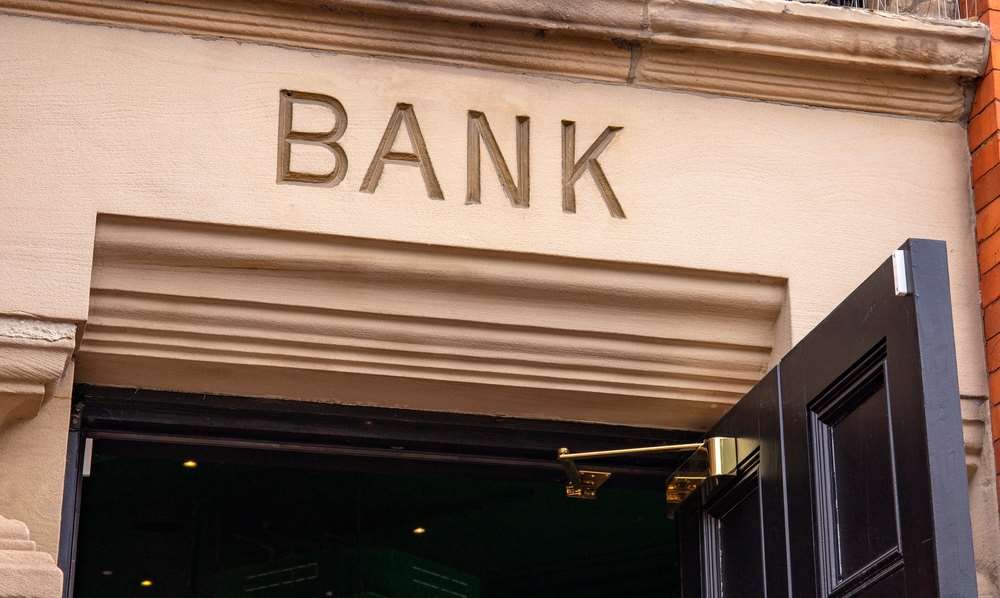
    An image depicting the growing distrust in digital banking communications among British consumers, highlighting concerns about fraud and security in the paperless banking era.
    Illustration of digital banking communications showing trust issues - Global Banking & Finance Review
    Why waste money on news and opinion when you can access them for free?

    Take advantage of our newsletter subscription and stay informed on the go!

    Subscribe

    By Deepanker Venkatesh, Senior Manager, Wealth Management Practice Head, Wipro Technologies Limited and Ankur Dani, Senior Consultant, Wipro Technologies Limited

    Deepanker Venkatesh

    Deepanker Venkatesh

    Customer data is to banks what blood is to the human body. It is due to this criticality and competitive advantage associated with customer data that means banks become reluctant to share it with third parties. There is a constant fear of losing customers and business to other institutions who can use customer data better than the bank which owns the customer relationship.

    But today the question is, whether banks get to decide who controls the flow of data? It is at this juncture that the concept of open banking comes into play, and in doing so it is putting control back into the customer’s hands.

    Open Banking

    Open banking helps financial services customers to securely share their financial data with other financial institutions. It provides an opportunity to transform the value chain of banking – in how banks engage customers, provide products and services, and work with third parties.

    Ankur Dani

    Ankur Dani

    Open banking requires opening up banks’ application program interfaces (APIs) to third parties, who can use the shared consumer data to create innovative products and services.These third parties can also showcase ways for banks to create new revenue sources and generate value for all members of their ecosystem. It’s worth reviewing some examples to see how this could work in practice.

    Open banking capabilities – Use cases

    1. Better credit scoring by means of account aggregation

    Third party apps could help lenders get a 360-degree view of the customer’s financial situation and risk level. This will allow lending decisions to become more robust and new credit uptake will happen in accordance with customers’ overall financial health. Questions like “how much are my total assets worth?”, “how much can I spend?” and “where can I get better interest rates?” become answerable with a higher degree of certainty.

    1. Better up-sell and cross-sell opportunities suiting individual behavior and lifestyles

    A third party app could look at all data which customers give permission for it to view and then offer the best suited price for the product the customer is interested in. If the app results in selling the product to the customer, it would increase the bank’s revenue via increased distribution of services and new revenue streams.

    Conservative assumptions to quantify the bank revenue in above case:

    • Value of insurance product is $50,000
    • Bank pays referral fee = 0.05% of insurance value (i.e. $25) to a trusted third-party
    • Size of bank’s customer base = 1 million
    • Only 1% of customers (i.e. 10,000 customers) have mobile banking access,
    • Only 10% of those customers (i.e. 1,000 customers) take the insurance product.

    So for every deal which is captured on the third party app, banks are paying a referral fee of $25 * 1,000 deals = $25,000 only. Against this the bank is generating a revenue of $50,000 * 1,000 = $50,000,000.

    1. Access to superior product offerings via comparison

    A third party app could link a customer’s primary banking relationship with their secondary banking relationship and see how their investments in the primary relationship are performing as compared to the investment avenues available in the secondary relationship, with similar product risk levels. If a better alternative is found, the secondary relationship could be switched using a quick and easy “single button switch” process and by following a step-by-step guide on how to liquidate the existing investment.

    This will result in the customer getting better returns with the new product, increase in the AUM (assets under management) of the secondary relationship and the primary relationship would be eventually forced to improve their product catalogue. The typical market efficiency scenario would play out here. 

    Monetizing open banking the right way

    1. Direct Revenue:Bank(s) sell or license transaction data APIs to third party.
    2. Indirect Revenue: Bank(s) pay a referral fee to the third party, or take a cut of transactions from the market place.

    Benefits to banks and customers

    1. Expanding customer reach – Open banking helps banks in expanding customer reach to un-served and underserved customers.
    2. Increased distribution of services – Open banking helps banks to create new revenue from increased distribution of services via third-parties.
    3. Increased transparency – It increases customer transparency and satisfaction, and integrates the banking experience closely with the life of customer.

    Implementation across globe

    Open banking draws its momentum from regulation and governmental drive. It is gaining momentum worldwide but the extent to which different markets are ready to support the success of open banking varies widely.

    Developed markets have started to implement relevant use cases and certain geographies have started reaping the benefits described in this article. To align fully with consumer expectations it is pivotal in today’s society that financial services firms monitor these trends and review appropriateness to their business in order to achieve success.

    More from Banking

    Explore more articles in the Banking category

    Image for Latin Securities Named Winner of Two Prestigious 2026 Global Banking & Finance Awards
    Latin Securities Named Winner of Two Prestigious 2026 Global Banking & Finance Awards
    Image for Pix at five years: how Brazil built one of the world’s most advanced public payments infrastructures - and why other countries are paying attention
    Pix at five years: how Brazil built one of the world’s most advanced public payments infrastructures - and why other countries are paying attention
    Image for Idle Stablecoins Are Becoming a Systemic Efficiency Problem — and Banks Should Pay Attention
    Idle Stablecoins Are Becoming a Systemic Efficiency Problem — and Banks Should Pay Attention
    Image for Banking Without Boundaries: A More Practical Approach to Global Banking
    Banking Without Boundaries: A More Practical Approach to Global Banking
    Image for Lessons From the Ring and the Deal Table: How Boxing Shapes Steven Nigro’s Approach to Banking and Life
    Lessons From the Ring and the Deal Table: How Boxing Shapes Steven Nigro’s Approach to Banking and Life
    Image for The Key to Unlocking ROI from GenAI
    The Key to Unlocking ROI from GenAI
    Image for The Changing Landscape of Small Business Lending: What Traditional Finance Models Miss
    The Changing Landscape of Small Business Lending: What Traditional Finance Models Miss
    Image for VestoFX.net Expands Education-Oriented Content as Focus on Risk Awareness Grows in CFD Trading
    VestoFX.net Expands Education-Oriented Content as Focus on Risk Awareness Grows in CFD Trading
    Image for The Hybrid Banking Model That Digital-Only Providers Cannot Match
    The Hybrid Banking Model That Digital-Only Providers Cannot Match
    Image for INTERPOLITAN MONEY ANNOUNCES RECORD GROWTH ACROSS 2025
    INTERPOLITAN MONEY ANNOUNCES RECORD GROWTH ACROSS 2025
    Image for Alter Bank Wins Two Prestigious Awards in the 2025 Global Banking & Finance Awards®
    Alter Bank Wins Two Prestigious Awards in the 2025 Global Banking & Finance Awards®
    Image for CIBC wins two Global Banking and Finance Awards for student banking
    CIBC wins two Global Banking and Finance Awards for student banking
    View All Banking Posts
    Previous Banking PostGlobal Banking and Finance Review is pleased to announce Kuwait Finance House Bahrain B.SC. as the Global Banking & Finance Awards® winner for Best Islamic Retail Bank Bahrain 2019
    Next Banking PostHow can banks rise to the omnichannel challenge?