
Top Stories
More Than 3,000 Civilians Killed in Ukraine so Far: UN
Published by Wanda Rich
Posted on May 2, 2022
1 min readLast updated: February 7, 2026
Add as preferred source on Google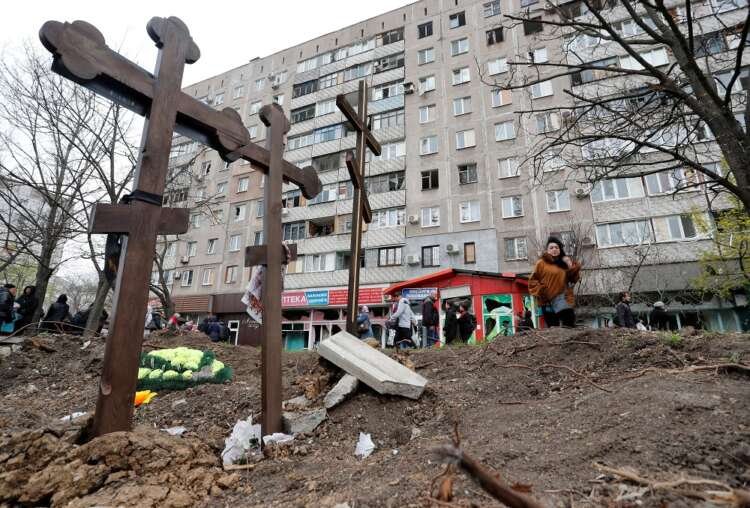
Published by Wanda Rich
Posted on May 2, 2022
1 min readLast updated: February 7, 2026
Add as preferred source on GoogleGENEVA (Reuters) – The U.N. human rights office (OHCHR) said on Monday that the death toll of civilians killed in Ukraine since the start of the Russian invasion on Feb. 24 had exceeded 3,000 people.
GENEVA (Reuters) – The U.N. human rights office (OHCHR) said on Monday that the death toll of civilians killed in Ukraine since the start of the Russian invasion on Feb. 24 had exceeded 3,000 people.
The toll of 3,153 killed so far represents an increase of 254 from Friday. OHCHR said that the real toll was likely to be considerably higher, citing access difficulties and ongoing corroboration efforts.
Most of the victims were killed by explosive weapons with a wide impact area, such as missile strikes and air strikes, the rights office said, without attributing responsibility.
Russia calls its actions in Ukraine a “special operation” to disarm Ukraine and protect it from fascists — an allegation Ukraine and the West say is baseless.
(Reporting by Emma Farge, Editing by William Maclean)
The United Nations (UN) is an international organization founded in 1945, aimed at promoting peace, security, and cooperation among countries. It addresses global issues such as human rights, humanitarian aid, and international law.
Civilian casualties refer to non-combatant individuals who are killed or injured during conflicts or military operations. This includes deaths and injuries among the general population not directly involved in hostilities.
Explosive weapons are munitions that detonate to cause destruction, including bombs, shells, and missiles. They can have wide-area effects, leading to significant civilian casualties in populated areas.
The Office of the United Nations High Commissioner for Human Rights (OHCHR) is responsible for promoting and protecting human rights globally. It monitors human rights violations and provides assistance to countries in implementing human rights standards.
A military operation is a coordinated military action undertaken by armed forces to achieve specific objectives, such as disarming an enemy, securing territory, or providing humanitarian assistance.
Explore more articles in the Top Stories category











