
Top Stories
Moldovan Prime Minister Announces Government Resignation
Published by Uma Rajagopal
Posted on February 10, 2023
2 min readLast updated: February 2, 2026
Add as preferred source on Google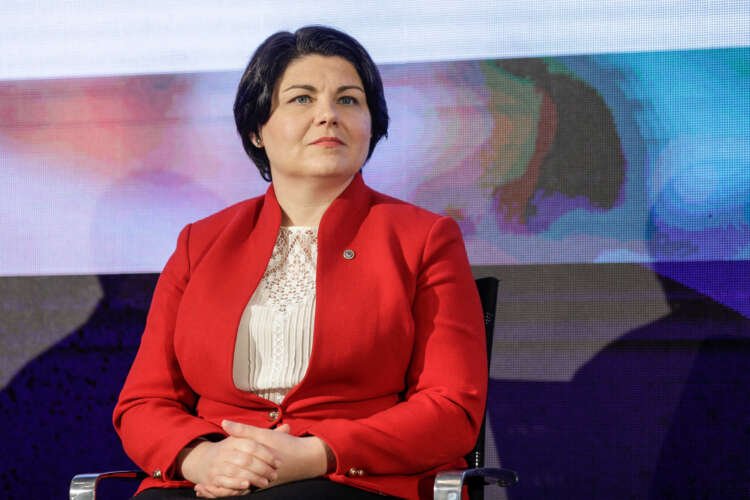
Published by Uma Rajagopal
Posted on February 10, 2023
2 min readLast updated: February 2, 2026
Add as preferred source on GoogleCHISINAU (Reuters) -Moldovan Prime Minister Natalia Gavrilita announced on Friday that her government was resigning, after a turbulent 18 months in power marked by economic turmoil and the aftershocks of Russia’s war on neighbouring Ukraine.
CHISINAU (Reuters) -Moldovan Prime Minister Natalia Gavrilita announced on Friday that her government was resigning, after a turbulent 18 months in power marked by economic turmoil and the aftershocks of Russia’s war on neighbouring Ukraine.
“I believe in the Moldovan people. I believe in Moldova,” she told a news briefing. “I believe that we will be able to make it through all the difficulties and challenges.”
The former Soviet republic country of 2.5 million has suffered from soaring inflation and was strained last year by an influx of Ukrainian refugees.
It also suffered power cuts following Russian air attacks on Ukrainian energy infrastructure and has struggled to break its dependence on Russian gas.
Protests erupted over rising prices, particularly for gas from Moscow, in what Chisinau has described as part of a Kremlin-sponsored campaign to destabilise the government.
Gavrilita assumed the post in August 2021 after her pro-European Party of Action and Solidarity secured a majority in parliament with a mandate to clean up corruption.
European Union leaders accepted Moldova as a membership candidate last year in a diplomatic triumph for President Maia Sandu, who was elected in 2020.
(Reporting by Alexander Tanas, Writing by Dan Peleschuk, Editing by Timothy Heritage)
Inflation is the rate at which the general level of prices for goods and services rises, eroding purchasing power. It is often measured by the Consumer Price Index (CPI).
Economic growth refers to the increase in the production of goods and services in an economy over a period of time, typically measured by the rise in Gross Domestic Product (GDP).
A central bank is a national institution that manages a country's currency, money supply, and interest rates. It oversees the banking system and implements monetary policy.
Explore more articles in the Top Stories category











