
Top Stories
Material Shortages Ease in German Industry but Carmakers Struggling
Published by Uma Rajagopal
Posted on November 30, 2022
1 min readLast updated: February 3, 2026
Add as preferred source on Google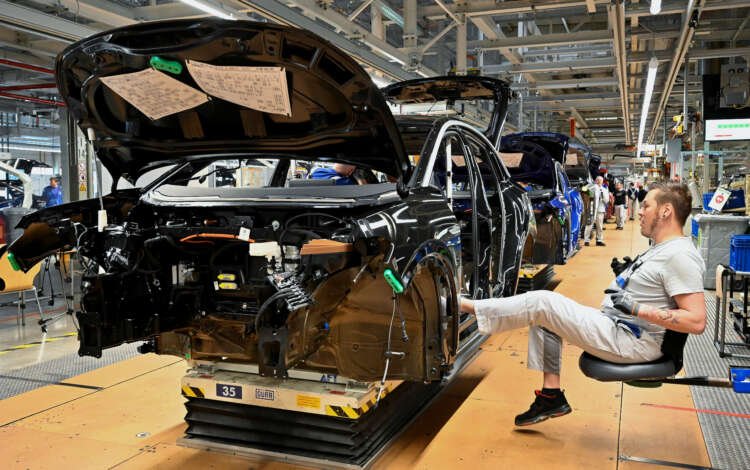
Published by Uma Rajagopal
Posted on November 30, 2022
1 min readLast updated: February 3, 2026
Add as preferred source on GoogleBERLIN (Reuters) – Material supply problems in German industry have fallen to their lowest level in over a year and a half, according to a survey released on Wednesday, although many orders still cannot be processed with well over half of companies reporting issues.
BERLIN (Reuters) – Material supply problems in German industry have fallen to their lowest level in over a year and a half, according to a survey released on Wednesday, although many orders still cannot be processed with well over half of companies reporting issues.
In November, 59.3% of companies surveyed reported material shortages, the Ifo economic institute said, the lowest level since April 2021. This compared with 63.8% in October.
“The numbers give us hope. Nevertheless, it’s too early to say that the situation has fundamentally eased,” Klaus Wohlrabe, head of surveys at Ifo, said in a statement.
In the automotive industry, the share of companies facing shortages in fact rose from 74.9% to 83.2%, the survey showed. The situation eased for manufacturers of machinery and equipment but 78.7% of those companies still faced problems.
Manufacturers of basic metals saw fewest supply problems in November at 16.1%.
(Writing by Rachel More; Editing by Andrew Heavens)
A material shortage occurs when the demand for a specific material exceeds its supply, leading to delays in production and fulfillment of orders.
The automotive industry encompasses all companies and activities involved in the design, development, manufacturing, marketing, and selling of motor vehicles.
Economic growth refers to the increase in the production of goods and services in an economy over a period, typically measured by the rise in Gross Domestic Product (GDP).
The manufacturing sector includes industries that produce goods through the transformation of raw materials into finished products, often involving various processes and technologies.
Explore more articles in the Top Stories category











