
Top Stories
Marketmind: “Super Bad Feeling”
Published by Wanda Rich
Posted on June 6, 2022
2 min readLast updated: February 6, 2026
Add as preferred source on Google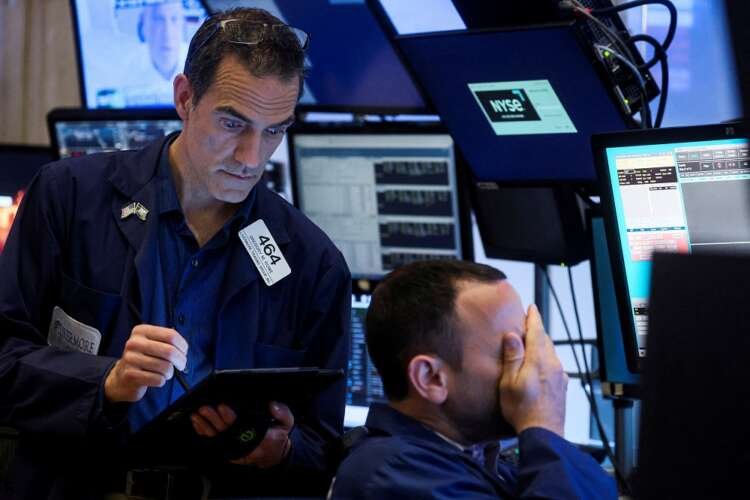
Published by Wanda Rich
Posted on June 6, 2022
2 min readLast updated: February 6, 2026
Add as preferred source on GoogleA look at the day ahead in markets from Julien Ponthus.
A look at the day ahead in markets from Julien Ponthus.
With the Nasdaq losing about a quarter of its value since the beginning of the year, no doubt some investors will share Elon Musk’s “super bad feeling” about the economy.
But the Tesla CEO’s sentiment, shared with his executives in an email, might be taken by others with a generous pinch of salt, given Friday’s data showing the American economy generated more jobs jobs in May than expected.
Asked by Reuters about Musk’s comments, Joe Biden suggested the issue lay with Tesla, and pointed to investments made by Ford to compete with the electric car maker.
But with the jury still out on whether the world’s biggest economy is heading towards a hard or a soft landing, this Friday’s U.S. consumer price report could shape expectations for the pace of the Federal Reserve’s policy tightening.
What is already clear this morning, however, is that the Bank of Japan remains a firmly on the doves’ side, with Governor Haruhiko Kuroda stressing his top priority was to support the economy through “powerful” monetary stimulus.
The European Central Bank’s meeting on Thursday will be a key one where the bank may draw a line under its years of bond-buying stimulus and signal a first rate hike in July, after May’s record 8.1% euro zone inflation print.
And while there are signs the European economy’s post-COVID-19 rebound may be sputtering, France’s finance minister said on Sunday, that despite the war in Ukraine and high inflation, he expected positive growth for 2022.
Bruno Le Maire’s optimism seems to match the mood across markets on Monday. Asia closed with gains, while European and U.S. futures point towards a positive open.
Musk’s “super bad feeling” might be shared instead by British prime minister Boris Johnson — he may be in for a tough week, as Conservative lawmakers prepare to challenge his leadership.
Key developments that should provide more direction to markets on Monday:
-China May services activity contracts for third straight month
-British finance minister Rishi Sunak faces a parliamentary committee hearing on the cost of living
-Italy’s TIM aims to maximise value and cut debt in break-up
-U.S. to let Eni, Repsol ship Venezuela oil to Europe for debt
-Czech central bank chief: another rate hike is likely, by 75 bps or more
(Reporting by Julien Ponthus)
Monetary policy refers to the actions taken by a country's central bank to control the money supply and interest rates to achieve macroeconomic goals such as controlling inflation, consumption, growth, and liquidity.
Economic growth is the increase in the production of goods and services in an economy over a period of time, typically measured as the percentage increase in real gross domestic product (GDP).
Financial markets are marketplaces where buyers and sellers engage in the trade of assets such as stocks, bonds, currencies, and derivatives, facilitating the transfer of funds and risk management.
A central bank is a national institution that manages a country's currency, money supply, and interest rates, overseeing the banking system and implementing monetary policy.
Consumer spending is the total amount of money spent by households on goods and services, which is a key driver of economic activity and a significant component of a country's GDP.
Explore more articles in the Top Stories category











