Search
00
GBAF Logo
trophy
Top StoriesInterviewsBusinessFinanceBankingTechnologyInvestingTradingVideosAwardsMagazinesHeadlinesTrends

Subscribe to our newsletter

Get the latest news and updates from our team.

Global Banking & Finance Review®

Global Banking & Finance Review® - Subscribe to our newsletter

Company

    GBAF Logo
    • About Us
    • Profile
    • Privacy & Cookie Policy
    • Terms of Use
    • Contact Us
    • Advertising
    • Submit Post
    • Latest News
    • Research Reports
    • Press Release
    • Awards▾
      • About the Awards
      • Awards TimeTable
      • Submit Nominations
      • Testimonials
      • Media Room
      • Award Winners
      • FAQ
    • Magazines▾
      • Global Banking & Finance Review Magazine Issue 79
      • Global Banking & Finance Review Magazine Issue 78
      • Global Banking & Finance Review Magazine Issue 77
      • Global Banking & Finance Review Magazine Issue 76
      • Global Banking & Finance Review Magazine Issue 75
      • Global Banking & Finance Review Magazine Issue 73
      • Global Banking & Finance Review Magazine Issue 71
      • Global Banking & Finance Review Magazine Issue 70
      • Global Banking & Finance Review Magazine Issue 69
      • Global Banking & Finance Review Magazine Issue 66
    Top StoriesInterviewsBusinessFinanceBankingTechnologyInvestingTradingVideosAwardsMagazinesHeadlinesTrends

    Global Banking & Finance Review® is a leading financial portal and online magazine offering News, Analysis, Opinion, Reviews, Interviews & Videos from the world of Banking, Finance, Business, Trading, Technology, Investing, Brokerage, Foreign Exchange, Tax & Legal, Islamic Finance, Asset & Wealth Management.
    Copyright © 2010-2026 GBAF Publications Ltd - All Rights Reserved. | Sitemap | Tags | Developed By eCorpIT

    Editorial & Advertiser disclosure

    Global Banking & Finance Review® is an online platform offering news, analysis, and opinion on the latest trends, developments, and innovations in the banking and finance industry worldwide. The platform covers a diverse range of topics, including banking, insurance, investment, wealth management, fintech, and regulatory issues. The website publishes news, press releases, opinion and advertorials on various financial organizations, products and services which are commissioned from various Companies, Organizations, PR agencies, Bloggers etc. These commissioned articles are commercial in nature. This is not to be considered as financial advice and should be considered only for information purposes. It does not reflect the views or opinion of our website and is not to be considered an endorsement or a recommendation. We cannot guarantee the accuracy or applicability of any information provided with respect to your individual or personal circumstances. Please seek Professional advice from a qualified professional before making any financial decisions. We link to various third-party websites, affiliate sales networks, and to our advertising partners websites. When you view or click on certain links available on our articles, our partners may compensate us for displaying the content to you or make a purchase or fill a form. This will not incur any additional charges to you. To make things simpler for you to identity or distinguish advertised or sponsored articles or links, you may consider all articles or links hosted on our site as a commercial article placement. We will not be responsible for any loss you may suffer as a result of any omission or inaccuracy on the website.

    Home > Top Stories > Market stress indicators react sharply after U.S. bank failures
    Top Stories

    Market stress indicators react sharply after U.S. bank failures

    Published by Jessica Weisman-Pitts

    Posted on March 13, 2023

    4 min read

    Last updated: February 2, 2026

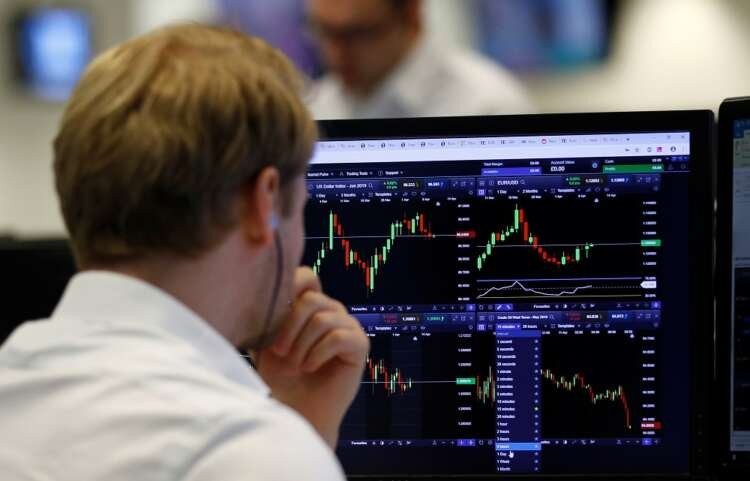
    A financial trader at CMC Markets in London monitors market stress indicators following recent U.S. bank failures, reflecting heightened volatility in global finance.
    Financial trader analyzing market stress indicators post U.S. bank failures - Global Banking & Finance Review
    Why waste money on news and opinion when you can access them for free?

    Take advantage of our newsletter subscription and stay informed on the go!

    Subscribe

    Tags:financial marketsinvestment portfolios

    By Amanda Cooper, Yoruk Bahceli and Naomi Rovnick

    LONDON (Reuters) – Financial market stress indicators reacted sharply on Monday after the failure of three U.S. banks within five days, which prompted a rethink among investors on the outlook for U.S. rates and triggered the biggest rush into bonds since at least 2008.

    State regulators closed New York-based Signature Bank on Sunday, two days after California authorities shuttered Silicon Valley Bank, a lender that focused predominantly on start-ups. Crypto-focused bank Silvergate said last week it would also have to wind down its operations.

    SVB is the largest bank to fail since the 2008 financial crisis last week, sending shockwaves across global markets.

    U.S. regulators stepped in over the weekend to guarantee the deposits of SVB, but this did little to reassure investors that there will be no more fallout.

    Investors reeled in their expectations for global central bank rate hikes, and bank stocks tumbled once again.

    The cost of insuring exposure to European junk bonds soared to two-month highs, while various gauges of equity and bond market volatility shot to their highest since October and even gold hit a six-week peak.

    “I would define the moves we’re having today as an old-fashioned flight to quality, this is what normally happens in times of stress. Credit spreads widen, equity markets come off and safe havens provide capital appreciation,” Juan Valenzuela, a bond fund manager at Artemis, said.

    (Graphic: Moving higher – https://www.reuters.com/graphics/MARKETS-VOLATILITY/myvmoaeqyvr/chart.png)

    In the money markets, a closely watched indicator of credit risk in the U.S. banking system edged up on Monday, as did other indicators of credit risk in the euro zone.

    The so-called FRA-OIS spread, which measures the gap between the U.S. three-month forward rate agreement and the overnight index swap rate, edged to its widest since Feb. 21, to 11.4 basis points. This spread is widely seen as a proxy for banking sector risk and a higher reading reflects rising interbank lending risk.

    “It’d be unrealistic to think that banks aren’t being more discerning about who they’re going to lend money to,” said Lyn Graham-Taylor, senior rates strategist at Rabobank.

    U.S. banking stocks came under fire in early trading. An index of major bank shares dropped by as much as 8.7%, in one of the largest one-day falls since the onset of the COVID-19 crisis in March 2020.

    “If banks start to be more cautious and credit standards tighten a lot more, that drives more risk of recession down the road,” Frederik Ducrozet, head of macroeconomic research at Pictet Wealth Management, said.

    “The more immediate risk is from the U.S., but in both (regions) we have quarterly surveys that show banks are already planning to tighten credit standards. Now we have more risk that this tightening becomes disorderly at some point,” he said.

    European banks were heading for their largest one-day slide in a year as well, down over 5%.

    Euro swap spreads, another risk gauge, widened sharply.

    The gap between two-year euro swap rates and two-year German bond yields widened by around 20 basis points to 83 basis points, to the highest since Nov. 11.

    Analysts said that was a result of strong demand for safe-haven bonds.

    A swap spread measures the premium on the fixed-leg of an interest rate swap, used by investors to hedge against rates risk, relative to bond yields.

    (Graphic: Signs of stress – https://www.reuters.com/graphics/MARKETS-SWAPS/gkplwlrmxvb/chart.png)

    In Germany, two-year bond yields were last down over 40 basis points, much more than a drop of 24 basis points on swap rates.

    Cross-currency basis swaps, a measure of non-U.S. investor demand for the dollar, another safe-haven, reached their widest in three years.

    Three-month euro swaps reached minus 65 bps, the most since March 2020. Back in late 2008, when failed investment bank Lehman Brothers collapsed, this swap rate went as negative as 300 bps.

    As dramatic as some of the moves in bond and stock prices were on Monday, analysts agreed that it was unlikely to be a function of direct contagion from SVB, but rather, more driven by sentiment.

    “This move we’re seeing right now is more of a stress indication than anything else,” Piet Christiansen, chief analyst at Danske Bank, said.

    (Graphic: Seismic shift in Fed expectations – https://www.reuters.com/graphics/MARKETS-FUTURES/egpbyorzdvq/chart.png)

    (Additional reporting by Naomi Rovnick; Editing by Hugh Lawson and Sharon Singleton)

    Frequently Asked Questions about Market stress indicators react sharply after U.S. bank failures

    1What is financial market volatility?

    Financial market volatility refers to the degree of variation in trading prices over time. It indicates the level of uncertainty or risk in the market, often influenced by economic events.

    2What is credit risk?

    Credit risk is the possibility of loss due to a borrower's failure to repay a loan or meet contractual obligations. It is a key consideration for lenders and investors.

    3What are investment portfolios?

    Investment portfolios are collections of financial assets such as stocks, bonds, and cash equivalents held by an individual or institution, aimed at achieving specific financial goals.

    4What is a central bank?

    A central bank is a national institution that manages a country's currency, money supply, and interest rates. It oversees the banking system and implements monetary policy.

    More from Top Stories

    Explore more articles in the Top Stories category

    Image for Lessons From the Ring and the Deal Table: How Boxing Shapes Steven Nigro’s Approach to Banking and Life
    Lessons From the Ring and the Deal Table: How Boxing Shapes Steven Nigro’s Approach to Banking and Life
    Image for Joe Kiani in 2025: Capital, Conviction, and a Focused Return to Innovation
    Joe Kiani in 2025: Capital, Conviction, and a Focused Return to Innovation
    Image for Marco Robinson – CLOSE THE DEAL AND SUDDENLY GROW RICH
    Marco Robinson – CLOSE THE DEAL AND SUDDENLY GROW RICH
    Image for Digital Tracing: Turning a regulatory obligation into a commercial advantage
    Digital Tracing: Turning a regulatory obligation into a commercial advantage
    Image for Exploring the Role of Blockchain and the Bitcoin Price Today in Education
    Exploring the Role of Blockchain and the Bitcoin Price Today in Education
    Image for Inside the World’s First Collection Industry Conglomerate: PCA Global’s Platform Strategy
    Inside the World’s First Collection Industry Conglomerate: PCA Global’s Platform Strategy
    Image for Chase Buchanan Private Wealth Management Highlights Key Autumn 2025 Budget Takeaways for Expats
    Chase Buchanan Private Wealth Management Highlights Key Autumn 2025 Budget Takeaways for Expats
    Image for PayLaju Strengthens Its Position as Malaysia’s Trusted Interest-Free Sharia-Compliant Loan Provider
    PayLaju Strengthens Its Position as Malaysia’s Trusted Interest-Free Sharia-Compliant Loan Provider
    Image for A Notable Update for Employee Health Benefits:
    A Notable Update for Employee Health Benefits:
    Image for Creating Equity Between Walls: How Mohak Chauhan is Using Engineering, Finance, and Community Vision to Reengineer Affordable Housing
    Creating Equity Between Walls: How Mohak Chauhan is Using Engineering, Finance, and Community Vision to Reengineer Affordable Housing
    Image for Upcoming Book on Real Estate Investing: Harvard Grace Capital Founder Stewart Heath’s Puts Lessons in Print
    Upcoming Book on Real Estate Investing: Harvard Grace Capital Founder Stewart Heath’s Puts Lessons in Print
    Image for ELECTIVA MARKS A LANDMARK FIRST YEAR WITH MAJOR SENIOR APPOINTMENTS AND EXPANSION MILESTONES
    ELECTIVA MARKS A LANDMARK FIRST YEAR WITH MAJOR SENIOR APPOINTMENTS AND EXPANSION MILESTONES
    View All Top Stories Posts
    Previous Top Stories PostSwiss regulator monitoring banks and insurers after SVB collapse
    Next Top Stories PostBritain’s tax take risks blowing green energy off target