
American University of Sharjah
Keynote address at Arab Forum for Environment and Development outlines importance of oil and gas and private sector involvement in driving efficiency in the region’s energy sector
Majid Jafar's Vision for Middle East Energy
Majid jafar outlines vision for sustainable energy future in the middle east
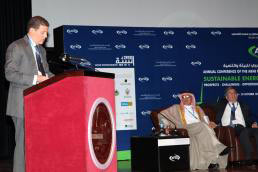
Majid Jafar, CEO of Crescent Petroleum, has delivered a keynote address to the Annual Conference of the Arab Forum for Environment and Development (AFED) in Sharjah, in which he describes the challenges and opportunities in realizing a sustainable energy future for the region. The annual conference, which this year is taking place at the American University of Sharjah , aims to present a situational analysis of the current state of energy in the Arab region and is attended by Ministers from across the Arab World, as well as academic experts and business leaders.
Delivering a keynote speech at the American University of Sharjah in the opening session on 28th October in the presence of His Highness Dr Sheikh Sultan Bin Mohammad Al Qasimi, Supreme Council Member and Ruler of Sharjah, Mr Jafar reminded the audience that energy, specifically oil and gas production, has long been the economic power of the Arab region, providing the basis for development at home and trade with the abroad. As the region relies on the electricity, water and gasoline it creates to power its urban lives and industrial activities, it relies too on the export revenues these industries create to provide the capital for investment and the funding of social policies.
Balancing Abundance and Dependency Risks
However, he warned, this central role of energy in the Arab region cuts both ways: “The abundance of energy resources has been a benefit; but it also creates a dependency that requires careful long term polices for sustainability development.”
Taking advantage of the region’s energy resources without limiting development,”, is therefore crucial. And so Mr. Jafar posed a question: How can we ensure that we continue to take full advantage of the region’s resources? How can we combine our energy endowment with the other advantages our region has, like its youthful population and its central geographic position for global trade? And how do we create a resilient energy supply base on which to build a diversified economy?
“It is important to consider the global context”, he told the audience. “As international trade continues to grow, the Arab region must remain sustainably competitive with the rest of the world in its energy policy, just as it seeks to be competitive in its industrial and business policy.”
Defining a Sustainable Energy System
And so, what does a sustainable competitive energy system look like? “It is one which maximises affordability, reliability and environmental responsibility in balance”.
Mr. Jafar drew an important international comparison. “In China, a heavy reliance on coal ensures low energy costs and reliability but comes at a high environmental cost, with visible pollutions in many Chinese cities. In Europe hundreds of billions of dollars are being invested on a renewable energy that has raised prices for energy in Europe and affected the competiveness of European products. In North America a strong free market has resulted in the shale oil and gas, resulting lower costs, high reliability and a lower environmental impact”.
The Ongoing Role of Oil and Gas
Mr Jafar explained that the Arab world should not neglect its core energy strengths in oil and gas production. Even with efforts to diversify the region’s energy supplies, oil and gas will remain these economies’ main energy and export revenue sources.
And secondly, the private sector, in partnership with the government and national oil companies offers the best way to deliver the necessary investment to spur all areas of the energy sector”
Challenges from Subsidies and Efficiency
“In particular the region’s large subsidies for oil, gas, water and electricity suppress supply, increase energy inefficiency and carry a substantial economic opportunity cost“, Mr. Jafar concluded. While any reform must be sensitive to the legitimate social needs of citizens and competitiveness of industry, a better balance must and can be struck.
© Copyright Zawya. All Rights Reserved.
American University of Sharjah
Keynote address at Arab Forum for Environment and Development outlines importance of oil and gas and private sector involvement in driving efficiency in the region’s energy sector
Majid jafar outlines vision for sustainable energy future in the middle east
Majid Jafar, CEO of Crescent Petroleum, has delivered a keynote address to the Annual Conference of the Arab Forum for Environment and Development (AFED) in Sharjah, in which he describes the challenges and opportunities in realizing a sustainable energy future for the region. The annual conference, which this year is taking place at the American University of Sharjah , aims to present a situational analysis of the current state of energy in the Arab region and is attended by Ministers from across the Arab World, as well as academic experts and business leaders.
Delivering a keynote speech at the American University of Sharjah in the opening session on 28th October in the presence of His Highness Dr Sheikh Sultan Bin Mohammad Al Qasimi, Supreme Council Member and Ruler of Sharjah, Mr Jafar reminded the audience that energy, specifically oil and gas production, has long been the economic power of the Arab region, providing the basis for development at home and trade with the abroad. As the region relies on the electricity, water and gasoline it creates to power its urban lives and industrial activities, it relies too on the export revenues these industries create to provide the capital for investment and the funding of social policies.
However, he warned, this central role of energy in the Arab region cuts both ways: “The abundance of energy resources has been a benefit; but it also creates a dependency that requires careful long term polices for sustainability development.”
Taking advantage of the region’s energy resources without limiting development,”, is therefore crucial. And so Mr. Jafar posed a question: How can we ensure that we continue to take full advantage of the region’s resources? How can we combine our energy endowment with the other advantages our region has, like its youthful population and its central geographic position for global trade? And how do we create a resilient energy supply base on which to build a diversified economy?
“It is important to consider the global context”, he told the audience. “As international trade continues to grow, the Arab region must remain sustainably competitive with the rest of the world in its energy policy, just as it seeks to be competitive in its industrial and business policy.”
And so, what does a sustainable competitive energy system look like? “It is one which maximises affordability, reliability and environmental responsibility in balance”.
Mr. Jafar drew an important international comparison. “In China, a heavy reliance on coal ensures low energy costs and reliability but comes at a high environmental cost, with visible pollutions in many Chinese cities. In Europe hundreds of billions of dollars are being invested on a renewable energy that has raised prices for energy in Europe and affected the competiveness of European products. In North America a strong free market has resulted in the shale oil and gas, resulting lower costs, high reliability and a lower environmental impact”.
Mr Jafar explained that the Arab world should not neglect its core energy strengths in oil and gas production. Even with efforts to diversify the region’s energy supplies, oil and gas will remain these economies’ main energy and export revenue sources.
And secondly, the private sector, in partnership with the government and national oil companies offers the best way to deliver the necessary investment to spur all areas of the energy sector”
“In particular the region’s large subsidies for oil, gas, water and electricity suppress supply, increase energy inefficiency and carry a substantial economic opportunity cost“, Mr. Jafar concluded. While any reform must be sensitive to the legitimate social needs of citizens and competitiveness of industry, a better balance must and can be struck.
© Copyright Zawya. All Rights Reserved.