
Top Stories
London’s West End Regains Pre-Pandemic Buzz, Boosting Sales
Published by Jessica Weisman-Pitts
Posted on November 29, 2022
2 min readLast updated: February 3, 2026
Add as preferred source on Google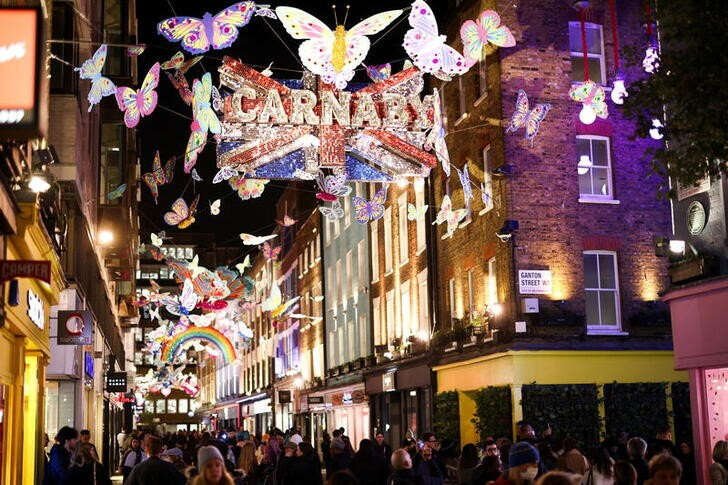
Published by Jessica Weisman-Pitts
Posted on November 29, 2022
2 min readLast updated: February 3, 2026
Add as preferred source on GoogleBy Aby Jose Koilparambil and Suban Abdulla
(Reuters) -London’s West End has seen retail, hospitality and leisure venue sales return to pre-pandemic levels, boosting rent and property demand, commercial landlord Shaftesbury said on Tuesday.
From Carnaby Street to Piccadilly Circus and China Town, shoppers, diners, drinkers and theatre-goers have been packing central London’s streets in the build-up to Christmas, with many drawn by the festive decorations.
London had lagged other parts of Britain in recovering from COVID-19 as workers were slow to return to offices, but pubs have reported stronger demand in the run up to Christmas and international tourists have returned since the summer.
Shaftesbury said it had not yet seen a “significant impact” on the number of shoppers or visitors to its properties from a downturn in Britain’s economy but noted that inflation rates at a 41-year high could hit consumer confidence over time.
“Although London and the West End cannot be immune from the unprecedented range of challenges which are now dominating the national outlook, their long-term prospects remain bright,” Chief Executive Brian Bickell said.
The property firm said in its full-year results that its retail and hospitality tenants were reporting average monthly sales 6% ahead of pre-crisis levels.
Surveys and official data shows that British consumer confidence is near an all-time low and overall sales volumes are below pre-pandemic levels as inflation limits shopping.
Shaftesbury said that restaurants and pubs in the central London hotspot were primed to benefit from a Christmas season free of lockdowns and crowds watching the World Cup.
Earlier in November, pubs group Fuller, Smith & Turner reported a 67% jump in comparable sales in central London in the first half. Pub group JD Wetherspoon posted a 9.6% rise in like-for-like sales for the first quarter.
Shaftesbury owns around 600 buildings in the heart of the West End. More than a third of the FTSE 250 firm’s property portfolio is occupied by hospitality and leisure firms, while about 27% is retail.
This year Shaftesbury announced a merger with Capital & Counties Properties to create a 5 billion pound ($6 billion) estate.
($1 = 0.8328 pounds)
(Reporting by Aby Jose Koilparambil in Bengaluru, additional reporting by Suban Abdulla; Editing by Saumyadeb Chakrabarty and Alexander Smith)
Consumer confidence is a measure of how optimistic or pessimistic consumers are regarding their expected financial situation and the overall economic environment. It influences their spending and saving behaviors.
Inflation is the rate at which the general level of prices for goods and services rises, eroding purchasing power. It is typically measured by the Consumer Price Index (CPI).
A commercial landlord is an individual or entity that owns and leases out commercial properties, such as office buildings, retail spaces, and industrial facilities, to businesses and organizations.
The retail market refers to the sector of the economy that sells goods and services directly to consumers. It includes various formats like stores, e-commerce, and direct sales.
Property demand refers to the desire and need for real estate, influenced by factors such as economic conditions, population growth, and consumer preferences. High demand often leads to increased property prices.
Explore more articles in the Top Stories category











