
Top Stories
Lme Board to Evaluate Lessons From Nickel Halt – Hkex
Published by Wanda Rich
Posted on March 29, 2022
3 min readLast updated: February 8, 2026
Add as preferred source on Google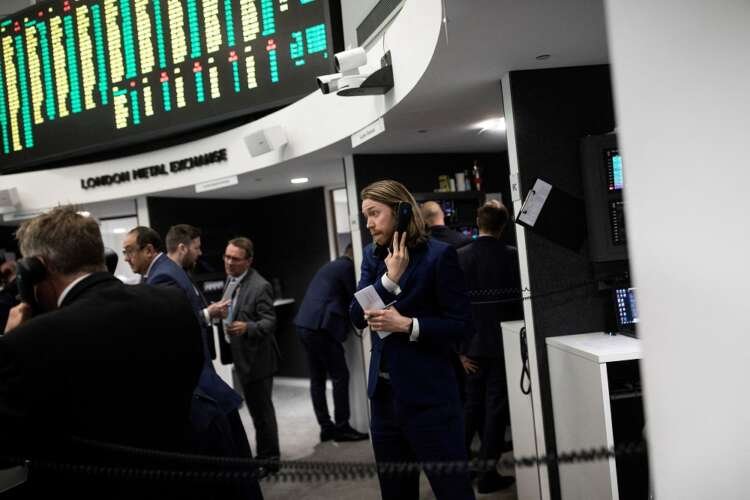
Published by Wanda Rich
Posted on March 29, 2022
3 min readLast updated: February 8, 2026
Add as preferred source on GoogleBy Alun John and Selena Li
HONG KONG (Reuters) -The London Metal Exchange board will see what lessons can be learned from this month’s chaotic nickel trading, the chief executive of its parent company Hong Kong Exchanges and Clearing (HKEX) said on Tuesday.
The LME suspended activity and cancelled nickel trades earlier this month due to volatility that saw prices double to more than $100,000 a tonne within hours. A spate of technical glitches after trading resumed left traders fuming.
“In terms of the way forward of course, the LME board is responsible for understanding the full impact on the market, and what actions can be taken,” said HKEX CEO Nicolas Aguzin, speaking to media after an HKEX investor day.
“I’m sure the board of the LME will take the necessary steps to evaluate what are the lessons learned and how we can continue improving the market structure of the commodities market.”
HKEX acquired the LME in 2012, and Aguzin is an LME board member.
Earlier in the day, Aguzin re-emphasised that HKEX’s strategy is to focus its attention on connecting Chinese and global capital markets, and said the bourse was working on a series of initiatives to enhance the vibrancy of its markets.
These included a new digital trading exchange named Diamond to facilitate 24 hour-a-day trading of assets benefitting from “mega trends” such as environmental, social, and governance concerns, though the bourse gave few specifics about the plan.
HKEX has seen a decline in trading volumes so far this year, with an average daily turnover of HK$130.4 billion ($16.7 billion) in February compared to HK$233.9 billion a year earlier.
Aguzin attributed this, and a slowdown in IPO volumes, to a combination of China-U.S. tensions exacerbated by the Russia-Ukraine conflict, the tightening regulatory environment for tech and platform companies, and persistent inflation concerns.
He also acknowledged that the number of people leaving Hong Kong was affecting financial markets in the city.
“We’re seeing limited inflows of talent and an increasing number of individuals leaving the city, which has resulted in a talent war in the financial industry,” he said.
He added that Hong Kong had shown its resilience in the past, and that China’s expanding capital markets offered a “once-in-a-generation” opportunity.
Hong Kong has recently begun easing stringent anti-COVID measures, which business lobby groups warned were undermining the business environment in the financial hub and causing an exodus of professionals.
Restrictions on daily life and quarantine for inbound travellers remain in place, however.
($1 = 7.8273 Hong Kong dollars)
(Reporting by Alun John; Editing by Richard Pullin, Kenneth Maxwell and Jan Harvey)
Market volatility refers to the rate at which the price of a security increases or decreases for a given set of returns. It is often measured by the standard deviation of returns.
A trading platform is software that allows investors and traders to place trades and monitor accounts through financial intermediaries. It can be web-based or desktop-based.
A commodities market is a marketplace for buying, selling, and trading raw materials and primary products, such as metals, oil, and agricultural products.
An IPO, or Initial Public Offering, is the process through which a private company offers shares to the public for the first time to raise capital.
An investment strategy is a plan designed to guide an investor's decisions on how to allocate assets in order to achieve specific financial goals.
Explore more articles in the Top Stories category











