
Top Stories
Japan Intervenes to Stop Yen Slide, After BOJ Holds Rates Super Low
Published by Jessica Weisman-Pitts
Posted on September 22, 2022
5 min readLast updated: February 4, 2026
Add as preferred source on Google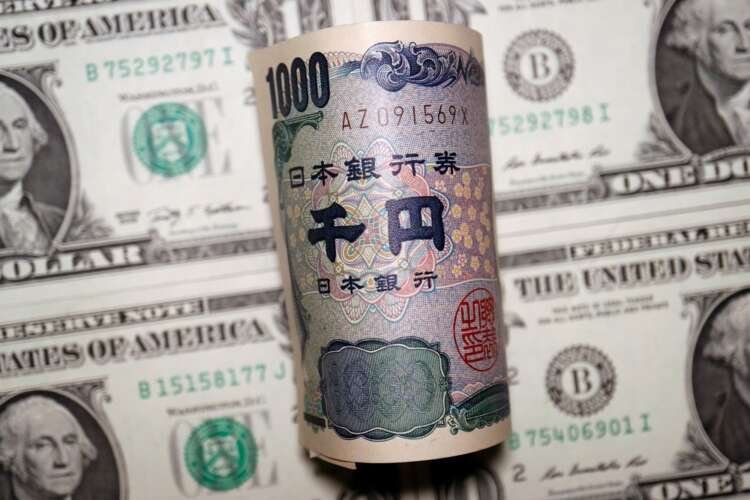
Published by Jessica Weisman-Pitts
Posted on September 22, 2022
5 min readLast updated: February 4, 2026
Add as preferred source on GoogleBy Leika Kihara and Daniel Leussink
TOKYO (Reuters) – Japan intervened in the foreign exchange market on Thursday to buy yen for the first time since 1998, in an attempt to shore up the battered currency after the Bank of Japan stuck with ultra-low interest rates.
The move, which occurred in late Asia hours, saw the dollar plunge more than 2% to around 140.3 yen. There were no subsequent signs of further intervention or help for the BOJ from other central banks and the dollar was last around 1.2% lower at 142.31 yen at 1421 ET/1821 GMT.[FRX/].
It had earlier traded more than 1% higher on the BOJ’s decision to stick to its super-loose policy stance, bucking a global tide of monetary tightening by central banks fighting soaring inflation.
“We have taken decisive action,” vice finance minister for international affairs Masato Kanda told reporters, responding in the affirmative when asked if that meant intervention.
Analysts, however, doubted whether the move would halt the yen’s prolonged slide for long. The currency has depreciated nearly 20% this year, sinking to 24-year lows, largely as aggressive U.S. interest rate hikes push the dollar higher.
“The market was expecting some intervention at some point, given the increasing verbal interventions we have been hearing over the past few weeks,” said Stuart Cole, head macro economist at Equiti Capital in London.
“But currency interventions are rarely successful and I expect today’s move will only provide a temporary reprieve (for the yen).”
Finance Minister Shunichi Suzuki declined to disclose how much authorities had spent buying yen and whether other countries had consented to the move.
On Thursday the U.S. Treasury acknowledged the BOJ’s move but stopped short of endorsing the intervention.
Two months ago U.S. Treasury Secretary Janet Yellen said of the yen’s depreciation that Washington remained convinced that currency intervention was warranted only in “rare and exceptional circumstances”, and that the market should determine exchange rates for G7 countries.
Joining Suzuki at the briefing, Kanda said Japan has “good communication” with the United States, but declined to say whether Washington had consented to Tokyo’s intervention.
As a protocol, currency intervention requires informal consent by Japan’s G7 counterparts, notably the United States, if it were to be conducted against the dollar/yen.
The Bank of Canada said on Thursday it had not participated in any currency market intervention.
“You can make the argument that the dollar is too strong and it needs to be weakened, but at this time I think there has been an unofficial understanding from a few years ago that all central banks should refrain from any form of intervention to weaken or strengthen their currency,” said Paresh Upadhyaya, director of fixed income and currency strategy at Amundi US.
“I think at least at this point in time we are unlikely to see coordinated intervention unless we see another dramatic rise in the dollar.”
Confirmation of intervention came hours after the BOJ’s decision to hold rates at near zero to support the country’s fragile economic recovery, a position many analysts believe to be increasingly untenable given the global shift to higher borrowing costs.
BOJ Governor Haruhiko Kuroda told reporters the central bank could hold off on hiking rates or changing its dovish policy guidance for years.
“There’s absolutely no change to our stance of maintaining easy monetary policy for the time being. We won’t be raising interest rates for some time,” Kuroda said after the policy decision.
The BOJ’s decision came after the U.S. Federal Reserve delivered its third straight rate increase of 75 basis points on Wednesday and signalled more hefty hikes ahead, underscoring its resolve not to let up in its battle against inflation and giving a further boost to the dollar.
Japan also stood alone among major economies in keeping short-term rates in negative territory after the Swiss National Bank on Thursday raised its policy rate by 75 basis points, ending years of negative rates aimed at taming the appreciation of its currency.
SNB Chairman Thomas Jordan told a briefing his bank was not taking part in any coordinated measures to support the yen.
WEAPON OF LAST RESORT
With the BOJ having ruled out a near-term rate hike, currency intervention was the most powerful — and last-resort — weapon that Japan had left to arrest sharp yen falls that were pushing up import costs and threatening to hurt consumption.
Graphic: Japan’s history of yen interventions https://fingfx.thomsonreuters.com/gfx/mkt/xmpjoykbovr/Pasted%20image%201650518854154.png
“The first Japanese currency intervention in near a quarter century is a significant, but ultimately doomed step to defend the yen,” said Ben Laidler, global markets strategist at Etoro in London.
“As long as the Fed stays on the hawkish, rate-raising front foot, any yen intervention is likely to only slow, not halt, the yen slide.”
Yen-buying intervention has been very rare. The last time Japan intervened to support its currency was in 1998, when the Asian financial crisis triggered a yen sell-off and a rapid capital outflow from the region. Before that, Tokyo intervened to counter yen falls in 1991-1992.
Intervening by buying yen is also considered more difficult than by selling it.
In an yen-selling intervention, Japan can keep printing yen to sell to the market. But to buy, it needs to tap its $1.33 trillion of foreign reserves which, while abundant, could quickly dwindle if huge sums are required to influence rates.
(Reporting by Leika Kihara; Additional reporting by Andrea Shalal in Washington, Julie Gordon in Ottowa, Saqib Ahmed, Gertrude Chavez and Alden Bentley in New York,, Tetsushi Kajimoto, Kantaro Komiya, Daniel Leussink, Kaori Kaneko and Takaya Yamaguchi in Tokyo and Bansari Mayur Kamdar in Bangalore; Editing by Richard Pullin, Sam Holmes, Kirsten Donovan and Chizu Nomiyama)
Currency intervention refers to actions taken by a country's central bank to influence the value of its currency in the foreign exchange market, often to stabilize or increase its value.
The Bank of Japan (BOJ) is Japan's central bank, responsible for implementing monetary policy, issuing currency, and maintaining financial stability in the country.
Interest rates are the cost of borrowing money, expressed as a percentage of the amount borrowed. They influence economic activity by affecting consumer spending and investment.
Foreign exchange, or forex, is the global marketplace for trading national currencies against one another, determining exchange rates based on supply and demand.
Monetary policy is the process by which a central bank manages the supply of money and interest rates to achieve specific economic objectives, such as controlling inflation and stabilizing the currency.
Explore more articles in the Top Stories category











