Search
00
GBAF Logo
trophy
Top StoriesInterviewsBusinessFinanceBankingTechnologyInvestingTradingVideosAwardsMagazinesHeadlinesTrends

Subscribe to our newsletter

Get the latest news and updates from our team.

Global Banking and Finance Review

Global Banking & Finance Review

Company

    GBAF Logo
    • About Us
    • Profile
    • Privacy & Cookie Policy
    • Terms of Use
    • Contact Us
    • Advertising
    • Submit Post
    • Latest News
    • Research Reports
    • Press Release
    • Awards▾
      • About the Awards
      • Awards TimeTable
      • Submit Nominations
      • Testimonials
      • Media Room
      • Award Winners
      • FAQ
    • Magazines▾
      • Global Banking & Finance Review Magazine Issue 79
      • Global Banking & Finance Review Magazine Issue 78
      • Global Banking & Finance Review Magazine Issue 77
      • Global Banking & Finance Review Magazine Issue 76
      • Global Banking & Finance Review Magazine Issue 75
      • Global Banking & Finance Review Magazine Issue 73
      • Global Banking & Finance Review Magazine Issue 71
      • Global Banking & Finance Review Magazine Issue 70
      • Global Banking & Finance Review Magazine Issue 69
      • Global Banking & Finance Review Magazine Issue 66
    Top StoriesInterviewsBusinessFinanceBankingTechnologyInvestingTradingVideosAwardsMagazinesHeadlinesTrends

    Global Banking & Finance Review® is a leading financial portal and online magazine offering News, Analysis, Opinion, Reviews, Interviews & Videos from the world of Banking, Finance, Business, Trading, Technology, Investing, Brokerage, Foreign Exchange, Tax & Legal, Islamic Finance, Asset & Wealth Management.
    Copyright © 2010-2025 GBAF Publications Ltd - All Rights Reserved.

    ;
    Editorial & Advertiser disclosure

    Global Banking and Finance Review is an online platform offering news, analysis, and opinion on the latest trends, developments, and innovations in the banking and finance industry worldwide. The platform covers a diverse range of topics, including banking, insurance, investment, wealth management, fintech, and regulatory issues. The website publishes news, press releases, opinion and advertorials on various financial organizations, products and services which are commissioned from various Companies, Organizations, PR agencies, Bloggers etc. These commissioned articles are commercial in nature. This is not to be considered as financial advice and should be considered only for information purposes. It does not reflect the views or opinion of our website and is not to be considered an endorsement or a recommendation. We cannot guarantee the accuracy or applicability of any information provided with respect to your individual or personal circumstances. Please seek Professional advice from a qualified professional before making any financial decisions. We link to various third-party websites, affiliate sales networks, and to our advertising partners websites. When you view or click on certain links available on our articles, our partners may compensate us for displaying the content to you or make a purchase or fill a form. This will not incur any additional charges to you. To make things simpler for you to identity or distinguish advertised or sponsored articles or links, you may consider all articles or links hosted on our site as a commercial article placement. We will not be responsible for any loss you may suffer as a result of any omission or inaccuracy on the website.

    Home > Banking > Italy’s problem bank casts shadow over Draghi’s summer break
    Banking

    Italy’s problem bank casts shadow over Draghi’s summer break

    Italy’s problem bank casts shadow over Draghi’s summer break

    Published by maria gbaf

    Posted on August 18, 2021

    Featured image for article about Banking

    By Silvia Ognibene, Valentina Za and Gavin Jones

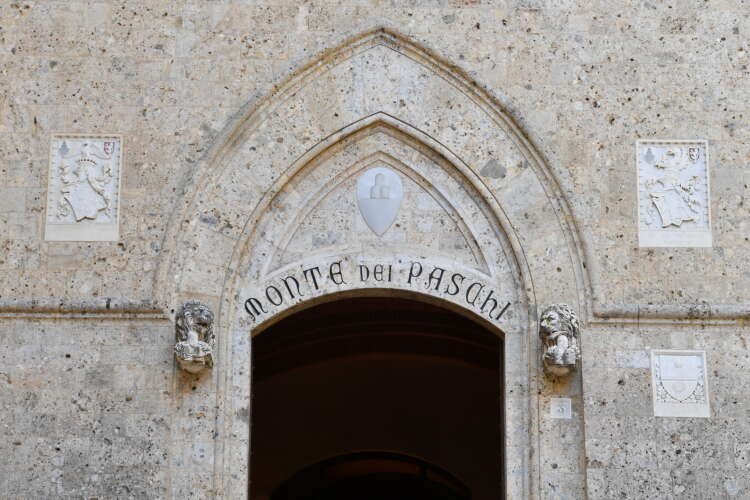
    SIENA (Reuters) – When Italian Prime Minister Mario Draghi returns from his brief summer break one of the thorniest items on his “to do” list will be finally fixing the woes of the world’s oldest bank, Monte dei Paschi di Siena (MPS).

    The Tuscan lender’s decline has tarnished Draghi’s record ever since 2008 when, as Bank of Italy chief, he approved its purchase of rival Antonveneta at an inflated price that analysts say contributed to its financial meltdown.

    Thirteen years of scandals, crisis management and state help to keep MPS afloat have turned the country’s fourth largest lender into Rome’s No.1 banking headache, with failure seen risking Italy’s financial stability.

    Selling the bank would complete a restructuring of the country’s banking industry which has shed 250 billion euros in impaired loans over the past five years, as lenders brace for a new wave of bankruptcies due to the COVID-19 crisis.

    The government thought it had found a solution this summer by brokering a merger with top Italian peer UniCredit, only for a political pushback to get in the way.

    Parties of all stripes in Draghi’s national unity coalition are protesting over job losses as a result of the proposed tie-up with Milan-based UniCredit.

    “MPS’ territorial roots, its workers and its brand must be safeguarded,” Antonio Misiani, economics chief of the centre-left Democratic Party (PD) told Reuters as battle lines are drawn ahead of what are set to be complex talks.

    Politics and MPS have long been intertwined.

    Siena, like the rest of the central region of Tuscany, is a traditional bastion of the PD, which has often been criticised for contributing to the bank‘s troubles by using it as a source of patronage, jobs and votes.

    Rightwing League leader Matteo Salvini, keen to make political capital ahead of a crucial by-election in the city in the autumn, calls MPS “a PD disaster,” and opposes the tie-up.

    He wants the state to help MPS join forces with other medium-sized lenders to act as a counterweight, with strong local roots, to the “big players” UniCredit and Intesa Sanpaolo.

    The PD has presented no alternative to the UniCredit merger.

    It is hard to exaggerate the role MPS has played in the history of Siena, where it was founded in 1472 to help the needy with cheap loans. It has long been the city’s biggest employer and locals who traditionally referred to it as “Daddy Monte” have looked on in horror at its demise.

    Processions in Siena’s annual medieval pageant have always made three stops to bow before the city institutions: at the city hall, at the archbishopric and at the MPS headquarters.

    “The people of Siena fell into three big categories,” Mayor Luigi De Mossi told Reuters. “Those who worked at MPS, those who wanted to work at MPS and those who used to work at MPS.”

    STATE BAILOUT

    As Italy hobbled through three deep recessions since 2008, the bank lost 31 billion euros ($36 billion) on its loan book for a cumulated net loss of 21 billion euros. A state bailout in 2017 cost taxpayers 5.4 billion euros.

    A solution won’t come cheap.

    UniCredit doesn’t want MPS’ branches in Italy’s poor south, and has only agreed to consider buying “selected parts” of the smaller partner on condition its capital buffers are unaffected and its earnings per share rise by at least 10%.

    Moreover the state, which owns 64% of MPS, will keep all legal risks stemming from its mismanagement and any loans already in trouble or which UniCredit deems likely to turn sour.

    What UniCredit CEO Andrea Orcel – who as a Merrill Lynch banker in 2007 advised MPS on the Antonveneta deal – describes as the best M&A option on the table, entails state-funded job cuts that sources say may reach a third of MPS’ 21,000 staff.

    Andrea Granai, head of a Siena trade union branch, says his four phones ring “from morning to night” with calls from fearful MPS workers. “The more job losses there are the worse the consequences will be for the government and all the parties that back it,” he warned.

    So how will Draghi square the circle? So far, he has tried to keep a safe distance by saying he is not personally following the dossier and deflecting reporters’ questions to the Treasury.

    That may be increasingly difficult as MPS’ problems rise to the top of his government’s agenda and the front pages of the country’s newspapers.

    The UniCredit deal could cost Italian taxpayers more than 5 billion euros in state support for layoffs, tax incentives and a commitment to reinforce the merged bank‘s capital, while MPS’ future is fuelling tensions in Draghi’s ruling majority.

    DEAL NEARLY DONE?

    Italy’s Treasury sees a merger with a healthier peer as the only way to stop MPS from becoming a permanent drain on state finances and two people close to the negotiation said a final deal was just a matter of hammering out technical details.

    The due diligence phase formally runs until early September but at least another two or three weeks could be necessary, a third source said, with a fourth person adding that an accord is unlikely before October.

    Politicians, however, are demanding to know from Draghi the precise price tag of the merger.

    Raising the political stakes even higher is the fact the PD’s leader, Enrico Letta, who has no seat in parliament, has chosen the upcoming by-election in Siena to try to get one. He says he will quit as party leader if he loses.

    The seat, to be contested on Oct. 3-4, was left empty when former Economy Minister Pier Carlo Padoan, also from the PD, was named UniCredit chairman in April.

    Salvini’s League and its rightist ally Brothers of Italy sense the chance of delivering a fatal blow to the left.

    Their joint candidate against Letta is a local wine producer, Tommaso Marzi, who owns 220 hectares of vineyards in the Sienese countryside and depicts the PD chief as an outsider only interested in national power politics.

    In Siena’s sun-baked streets, semi-deserted during the August holidays, locals shrug off the by-election and say all they care about is saving jobs.

    “It’s clear the bank can’t stand on its own feet,” the Siena mayor said. “But a solution must protect workers and suppliers. Politics has taken a lot from MPS and Siena, now it’s time for us to get something back.”

    ($1 = 0.8527 euros)

    (Additional reporting by Giuseppe Fonte; Writing by Gavin Jones and Valentina Za; Editing by Elaine Hardcastle)

    By Silvia Ognibene, Valentina Za and Gavin Jones

    SIENA (Reuters) – When Italian Prime Minister Mario Draghi returns from his brief summer break one of the thorniest items on his “to do” list will be finally fixing the woes of the world’s oldest bank, Monte dei Paschi di Siena (MPS).

    The Tuscan lender’s decline has tarnished Draghi’s record ever since 2008 when, as Bank of Italy chief, he approved its purchase of rival Antonveneta at an inflated price that analysts say contributed to its financial meltdown.

    Thirteen years of scandals, crisis management and state help to keep MPS afloat have turned the country’s fourth largest lender into Rome’s No.1 banking headache, with failure seen risking Italy’s financial stability.

    Selling the bank would complete a restructuring of the country’s banking industry which has shed 250 billion euros in impaired loans over the past five years, as lenders brace for a new wave of bankruptcies due to the COVID-19 crisis.

    The government thought it had found a solution this summer by brokering a merger with top Italian peer UniCredit, only for a political pushback to get in the way.

    Parties of all stripes in Draghi’s national unity coalition are protesting over job losses as a result of the proposed tie-up with Milan-based UniCredit.

    “MPS’ territorial roots, its workers and its brand must be safeguarded,” Antonio Misiani, economics chief of the centre-left Democratic Party (PD) told Reuters as battle lines are drawn ahead of what are set to be complex talks.

    Politics and MPS have long been intertwined.

    Siena, like the rest of the central region of Tuscany, is a traditional bastion of the PD, which has often been criticised for contributing to the bank‘s troubles by using it as a source of patronage, jobs and votes.

    Rightwing League leader Matteo Salvini, keen to make political capital ahead of a crucial by-election in the city in the autumn, calls MPS “a PD disaster,” and opposes the tie-up.

    He wants the state to help MPS join forces with other medium-sized lenders to act as a counterweight, with strong local roots, to the “big players” UniCredit and Intesa Sanpaolo.

    The PD has presented no alternative to the UniCredit merger.

    It is hard to exaggerate the role MPS has played in the history of Siena, where it was founded in 1472 to help the needy with cheap loans. It has long been the city’s biggest employer and locals who traditionally referred to it as “Daddy Monte” have looked on in horror at its demise.

    Processions in Siena’s annual medieval pageant have always made three stops to bow before the city institutions: at the city hall, at the archbishopric and at the MPS headquarters.

    “The people of Siena fell into three big categories,” Mayor Luigi De Mossi told Reuters. “Those who worked at MPS, those who wanted to work at MPS and those who used to work at MPS.”

    STATE BAILOUT

    As Italy hobbled through three deep recessions since 2008, the bank lost 31 billion euros ($36 billion) on its loan book for a cumulated net loss of 21 billion euros. A state bailout in 2017 cost taxpayers 5.4 billion euros.

    A solution won’t come cheap.

    UniCredit doesn’t want MPS’ branches in Italy’s poor south, and has only agreed to consider buying “selected parts” of the smaller partner on condition its capital buffers are unaffected and its earnings per share rise by at least 10%.

    Moreover the state, which owns 64% of MPS, will keep all legal risks stemming from its mismanagement and any loans already in trouble or which UniCredit deems likely to turn sour.

    What UniCredit CEO Andrea Orcel – who as a Merrill Lynch banker in 2007 advised MPS on the Antonveneta deal – describes as the best M&A option on the table, entails state-funded job cuts that sources say may reach a third of MPS’ 21,000 staff.

    Andrea Granai, head of a Siena trade union branch, says his four phones ring “from morning to night” with calls from fearful MPS workers. “The more job losses there are the worse the consequences will be for the government and all the parties that back it,” he warned.

    So how will Draghi square the circle? So far, he has tried to keep a safe distance by saying he is not personally following the dossier and deflecting reporters’ questions to the Treasury.

    That may be increasingly difficult as MPS’ problems rise to the top of his government’s agenda and the front pages of the country’s newspapers.

    The UniCredit deal could cost Italian taxpayers more than 5 billion euros in state support for layoffs, tax incentives and a commitment to reinforce the merged bank‘s capital, while MPS’ future is fuelling tensions in Draghi’s ruling majority.

    DEAL NEARLY DONE?

    Italy’s Treasury sees a merger with a healthier peer as the only way to stop MPS from becoming a permanent drain on state finances and two people close to the negotiation said a final deal was just a matter of hammering out technical details.

    The due diligence phase formally runs until early September but at least another two or three weeks could be necessary, a third source said, with a fourth person adding that an accord is unlikely before October.

    Politicians, however, are demanding to know from Draghi the precise price tag of the merger.

    Raising the political stakes even higher is the fact the PD’s leader, Enrico Letta, who has no seat in parliament, has chosen the upcoming by-election in Siena to try to get one. He says he will quit as party leader if he loses.

    The seat, to be contested on Oct. 3-4, was left empty when former Economy Minister Pier Carlo Padoan, also from the PD, was named UniCredit chairman in April.

    Salvini’s League and its rightist ally Brothers of Italy sense the chance of delivering a fatal blow to the left.

    Their joint candidate against Letta is a local wine producer, Tommaso Marzi, who owns 220 hectares of vineyards in the Sienese countryside and depicts the PD chief as an outsider only interested in national power politics.

    In Siena’s sun-baked streets, semi-deserted during the August holidays, locals shrug off the by-election and say all they care about is saving jobs.

    “It’s clear the bank can’t stand on its own feet,” the Siena mayor said. “But a solution must protect workers and suppliers. Politics has taken a lot from MPS and Siena, now it’s time for us to get something back.”

    ($1 = 0.8527 euros)

    (Additional reporting by Giuseppe Fonte; Writing by Gavin Jones and Valentina Za; Editing by Elaine Hardcastle)

    Related Posts
    DeFi and banking are converging. Here’s what banks can do.
    DeFi and banking are converging. Here’s what banks can do.
    Are Neo Banks Offering Better Metal Debit Cards Than Traditional Banks?
    Are Neo Banks Offering Better Metal Debit Cards Than Traditional Banks?
    Banking at the Intersection: From Nashville to Cannes, A Strategic Call to Action
    Banking at the Intersection: From Nashville to Cannes, A Strategic Call to Action
    Driving Efficiency and Profit Through Customer-Centric Banking
    Driving Efficiency and Profit Through Customer-Centric Banking
    How Ecosystem Partnerships Are Redefining Deposit Products
    How Ecosystem Partnerships Are Redefining Deposit Products
    CIBC Private Banking wins four 2025 Global Banking & Finance Awards
    CIBC Private Banking wins four 2025 Global Banking & Finance Awards
    How Banks Can Put AI to Work Now and Prove ROI in 90 Days
    How Banks Can Put AI to Work Now and Prove ROI in 90 Days
    Top 5 AI quality assurance framework providers for Banks and Financial Services firms.
    Top 5 AI quality assurance framework providers for Banks and Financial Services firms.
    The Unbanked Paradox: How Banking Access Creates Economic Resilience
    The Unbanked Paradox: How Banking Access Creates Economic Resilience
    Hyper-Personalised Banking - Shaping the Future of Finance
    Hyper-Personalised Banking - Shaping the Future of Finance
    The End of Voice Trust: How AI Deepfakes Are Forcing Banks to Rethink Authentication
    The End of Voice Trust: How AI Deepfakes Are Forcing Banks to Rethink Authentication
    Predicting and Preventing Customer Churn in Retail Banking
    Predicting and Preventing Customer Churn in Retail Banking

    Why waste money on news and opinions when you can access them for free?

    Take advantage of our newsletter subscription and stay informed on the go!

    Subscribe

    Previous Banking PostTop earning bankers moved to EU from Britain ahead of Brexit – report
    Next Banking PostSaudi Aramco aims to raise at least $17 billion from gas pipeline -sources

    More from Banking

    Explore more articles in the Banking category

    Growth and Impact: Banreservas Leads Dominican Republic Economic Expansion

    Growth and Impact: Banreservas Leads Dominican Republic Economic Expansion

    Turning Insight into Impact: Making AI and Analytics Work in Retail Banking

    Turning Insight into Impact: Making AI and Analytics Work in Retail Banking

    KeyBank Embraces Next-Generation AI Platform to Transform Fraud and Financial Crime Prevention

    KeyBank Embraces Next-Generation AI Platform to Transform Fraud and Financial Crime Prevention

    Understanding Association Banking: Financial Solutions for Community Success

    Understanding Association Banking: Financial Solutions for Community Success

    Applying Symbiosis for advantage in APAC banking

    Applying Symbiosis for advantage in APAC banking

    AmBank Islamic Berhad Earns Triple Recognition for Excellence in Islamic Banking

    AmBank Islamic Berhad Earns Triple Recognition for Excellence in Islamic Banking

    FinTok Strategy: How Banks Are Reaching Gen Z Through Social Media

    FinTok Strategy: How Banks Are Reaching Gen Z Through Social Media

    Rethinking Retail Banking Sustainability: Why the ATM is an Asset in the Sustainable Transition

    Rethinking Retail Banking Sustainability: Why the ATM is an Asset in the Sustainable Transition

    How private banks can survive the neo-broker revolution

    How private banks can survive the neo-broker revolution

    Next-Gen Bank Branches: The Evolution from Transaction Hubs to Experience Centers

    Next-Gen Bank Branches: The Evolution from Transaction Hubs to Experience Centers

    The Banking Talent Crunch: How Financial Institutions Are Competing for Digital-Native Skills

    The Banking Talent Crunch: How Financial Institutions Are Competing for Digital-Native Skills

    Beyond Interest: How Banks Are Reimagining Revenue in the Digital Age

    Beyond Interest: How Banks Are Reimagining Revenue in the Digital Age

    View All Banking Posts