Search
00
GBAF Logo
trophy
Top StoriesInterviewsBusinessFinanceBankingTechnologyInvestingTradingVideosAwardsMagazinesHeadlinesTrends

Subscribe to our newsletter

Get the latest news and updates from our team.

Global Banking and Finance Review

Global Banking & Finance Review

Company

    GBAF Logo
    • About Us
    • Profile
    • Privacy & Cookie Policy
    • Terms of Use
    • Contact Us
    • Advertising
    • Submit Post
    • Latest News
    • Research Reports
    • Press Release
    • Awards▾
      • About the Awards
      • Awards TimeTable
      • Submit Nominations
      • Testimonials
      • Media Room
      • Award Winners
      • FAQ
    • Magazines▾
      • Global Banking & Finance Review Magazine Issue 79
      • Global Banking & Finance Review Magazine Issue 78
      • Global Banking & Finance Review Magazine Issue 77
      • Global Banking & Finance Review Magazine Issue 76
      • Global Banking & Finance Review Magazine Issue 75
      • Global Banking & Finance Review Magazine Issue 73
      • Global Banking & Finance Review Magazine Issue 71
      • Global Banking & Finance Review Magazine Issue 70
      • Global Banking & Finance Review Magazine Issue 69
      • Global Banking & Finance Review Magazine Issue 66
    Top StoriesInterviewsBusinessFinanceBankingTechnologyInvestingTradingVideosAwardsMagazinesHeadlinesTrends

    Global Banking & Finance Review® is a leading financial portal and online magazine offering News, Analysis, Opinion, Reviews, Interviews & Videos from the world of Banking, Finance, Business, Trading, Technology, Investing, Brokerage, Foreign Exchange, Tax & Legal, Islamic Finance, Asset & Wealth Management.
    Copyright © 2010-2025 GBAF Publications Ltd - All Rights Reserved.

    ;
    Editorial & Advertiser disclosure

    Global Banking and Finance Review is an online platform offering news, analysis, and opinion on the latest trends, developments, and innovations in the banking and finance industry worldwide. The platform covers a diverse range of topics, including banking, insurance, investment, wealth management, fintech, and regulatory issues. The website publishes news, press releases, opinion and advertorials on various financial organizations, products and services which are commissioned from various Companies, Organizations, PR agencies, Bloggers etc. These commissioned articles are commercial in nature. This is not to be considered as financial advice and should be considered only for information purposes. It does not reflect the views or opinion of our website and is not to be considered an endorsement or a recommendation. We cannot guarantee the accuracy or applicability of any information provided with respect to your individual or personal circumstances. Please seek Professional advice from a qualified professional before making any financial decisions. We link to various third-party websites, affiliate sales networks, and to our advertising partners websites. When you view or click on certain links available on our articles, our partners may compensate us for displaying the content to you or make a purchase or fill a form. This will not incur any additional charges to you. To make things simpler for you to identity or distinguish advertised or sponsored articles or links, you may consider all articles or links hosted on our site as a commercial article placement. We will not be responsible for any loss you may suffer as a result of any omission or inaccuracy on the website.

    Home > Banking > Iran urges Japan to release billions in blocked funds amid U.S. sanctions
    Banking

    Iran urges Japan to release billions in blocked funds amid U.S. sanctions

    Iran urges Japan to release billions in blocked funds amid U.S. sanctions

    Published by maria gbaf

    Posted on August 23, 2021

    Featured image for article about Banking

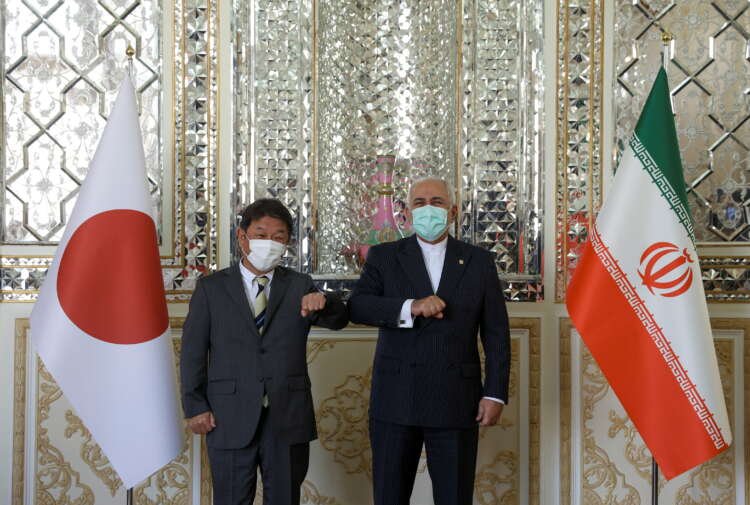
    DUBAI (Reuters) – Iran’s President Ebrahim Raisi called on Japan to release Iranian funds frozen in the country because of U.S. sanctions, Iranian state TV reported after the president met on Sunday with the visiting Japanese foreign minister.

    Iran has been unable to obtain tens of billions of dollars of its assets mainly from exports of oil and gas in foreign banks, including $3 billion of its funds in Japan, due to U.S. sanctions on its banking and energy sectors. The sanctions were reimposed in 2018 after Washington abandoned Tehran’s 2015 nuclear deal with six world powers.

    “The improvement of ties with Japan is of great importance for Iran … Any delay in unblocking Iranian assets in Japanese banks is not justified,” Raisi said in his meeting with Toshimitsu Motegi, who arrived in Tehran late on Sunday for a two-day visit.

    Iran and six powers have been in talks since April to reinstate the nuclear pact, under which Tehran agreed to curb its nuclear programme to make it harder to obtain fissile material for a weapon, in return for relief from sanctions. Tehran denies seeking nuclear weapons.

    However, Iranian and Western officials have said significant gaps remain to reinstating the pact. A sixth round of indirect talks between Tehran and Washington in Vienna adjourned on June 20, two days after hardline cleric Raisi won the presidential election in Iran.

    Iran and six powers have yet to announce when they will resume the negotiations. Raisi, who has presented his cabinet to parliament for a vote of confidence, is expected to adopt a “hard line” approach in the Vienna talks, according to people familiar with the matter.

    Raisi, like Iran’s top authority Supreme Leader Ayatollah Ali Khamenei, has backed the nuclear talks in Vienna.

    “Iran has no problem with the principle of negotiation … What is the justification for keeping the U.S. sanctions against Iran in place?” Iran’s state media quoted Raisi as telling Japan’s Motegi as saying.

    In 2019, Iran’s Khamenei refused to reply to a message Japanese prime minister Shinzo Abe had brought to Tehran from then-U.S. President Donald Trump, as a peacemaking visit was overshadowed by attacks on tankers in the Gulf of Oman. One of the tankers was Japanese.

    (Writing by Parisa Hafezi; Editing by Susan Fenton)

    DUBAI (Reuters) – Iran’s President Ebrahim Raisi called on Japan to release Iranian funds frozen in the country because of U.S. sanctions, Iranian state TV reported after the president met on Sunday with the visiting Japanese foreign minister.

    Iran has been unable to obtain tens of billions of dollars of its assets mainly from exports of oil and gas in foreign banks, including $3 billion of its funds in Japan, due to U.S. sanctions on its banking and energy sectors. The sanctions were reimposed in 2018 after Washington abandoned Tehran’s 2015 nuclear deal with six world powers.

    “The improvement of ties with Japan is of great importance for Iran … Any delay in unblocking Iranian assets in Japanese banks is not justified,” Raisi said in his meeting with Toshimitsu Motegi, who arrived in Tehran late on Sunday for a two-day visit.

    Iran and six powers have been in talks since April to reinstate the nuclear pact, under which Tehran agreed to curb its nuclear programme to make it harder to obtain fissile material for a weapon, in return for relief from sanctions. Tehran denies seeking nuclear weapons.

    However, Iranian and Western officials have said significant gaps remain to reinstating the pact. A sixth round of indirect talks between Tehran and Washington in Vienna adjourned on June 20, two days after hardline cleric Raisi won the presidential election in Iran.

    Iran and six powers have yet to announce when they will resume the negotiations. Raisi, who has presented his cabinet to parliament for a vote of confidence, is expected to adopt a “hard line” approach in the Vienna talks, according to people familiar with the matter.

    Raisi, like Iran’s top authority Supreme Leader Ayatollah Ali Khamenei, has backed the nuclear talks in Vienna.

    “Iran has no problem with the principle of negotiation … What is the justification for keeping the U.S. sanctions against Iran in place?” Iran’s state media quoted Raisi as telling Japan’s Motegi as saying.

    In 2019, Iran’s Khamenei refused to reply to a message Japanese prime minister Shinzo Abe had brought to Tehran from then-U.S. President Donald Trump, as a peacemaking visit was overshadowed by attacks on tankers in the Gulf of Oman. One of the tankers was Japanese.

    (Writing by Parisa Hafezi; Editing by Susan Fenton)

    Related Posts
    DeFi and banking are converging. Here’s what banks can do.
    DeFi and banking are converging. Here’s what banks can do.
    Are Neo Banks Offering Better Metal Debit Cards Than Traditional Banks?
    Are Neo Banks Offering Better Metal Debit Cards Than Traditional Banks?
    Banking at the Intersection: From Nashville to Cannes, A Strategic Call to Action
    Banking at the Intersection: From Nashville to Cannes, A Strategic Call to Action
    Driving Efficiency and Profit Through Customer-Centric Banking
    Driving Efficiency and Profit Through Customer-Centric Banking
    How Ecosystem Partnerships Are Redefining Deposit Products
    How Ecosystem Partnerships Are Redefining Deposit Products
    CIBC Private Banking wins four 2025 Global Banking & Finance Awards
    CIBC Private Banking wins four 2025 Global Banking & Finance Awards
    How Banks Can Put AI to Work Now and Prove ROI in 90 Days
    How Banks Can Put AI to Work Now and Prove ROI in 90 Days
    Top 5 AI quality assurance framework providers for Banks and Financial Services firms.
    Top 5 AI quality assurance framework providers for Banks and Financial Services firms.
    The Unbanked Paradox: How Banking Access Creates Economic Resilience
    The Unbanked Paradox: How Banking Access Creates Economic Resilience
    Hyper-Personalised Banking - Shaping the Future of Finance
    Hyper-Personalised Banking - Shaping the Future of Finance
    The End of Voice Trust: How AI Deepfakes Are Forcing Banks to Rethink Authentication
    The End of Voice Trust: How AI Deepfakes Are Forcing Banks to Rethink Authentication
    Predicting and Preventing Customer Churn in Retail Banking
    Predicting and Preventing Customer Churn in Retail Banking

    Why waste money on news and opinions when you can access them for free?

    Take advantage of our newsletter subscription and stay informed on the go!

    Subscribe

    Previous Banking PostFor bank regulators, tech giants are now too big to fail
    Next Banking PostTimeline: Decline and near fall of Italy’s Monte dei Paschi, the world’s oldest bank

    More from Banking

    Explore more articles in the Banking category

    Growth and Impact: Banreservas Leads Dominican Republic Economic Expansion

    Growth and Impact: Banreservas Leads Dominican Republic Economic Expansion

    Turning Insight into Impact: Making AI and Analytics Work in Retail Banking

    Turning Insight into Impact: Making AI and Analytics Work in Retail Banking

    KeyBank Embraces Next-Generation AI Platform to Transform Fraud and Financial Crime Prevention

    KeyBank Embraces Next-Generation AI Platform to Transform Fraud and Financial Crime Prevention

    Understanding Association Banking: Financial Solutions for Community Success

    Understanding Association Banking: Financial Solutions for Community Success

    Applying Symbiosis for advantage in APAC banking

    Applying Symbiosis for advantage in APAC banking

    AmBank Islamic Berhad Earns Triple Recognition for Excellence in Islamic Banking

    AmBank Islamic Berhad Earns Triple Recognition for Excellence in Islamic Banking

    FinTok Strategy: How Banks Are Reaching Gen Z Through Social Media

    FinTok Strategy: How Banks Are Reaching Gen Z Through Social Media

    Rethinking Retail Banking Sustainability: Why the ATM is an Asset in the Sustainable Transition

    Rethinking Retail Banking Sustainability: Why the ATM is an Asset in the Sustainable Transition

    How private banks can survive the neo-broker revolution

    How private banks can survive the neo-broker revolution

    Next-Gen Bank Branches: The Evolution from Transaction Hubs to Experience Centers

    Next-Gen Bank Branches: The Evolution from Transaction Hubs to Experience Centers

    The Banking Talent Crunch: How Financial Institutions Are Competing for Digital-Native Skills

    The Banking Talent Crunch: How Financial Institutions Are Competing for Digital-Native Skills

    Beyond Interest: How Banks Are Reimagining Revenue in the Digital Age

    Beyond Interest: How Banks Are Reimagining Revenue in the Digital Age

    View All Banking Posts