
Top Stories
Invisible Payments: From Uber to IoT—What Does a Frictionless Future Look Like?
Published by Wanda Rich
Posted on August 14, 2025
19 min readLast updated: February 26, 2026
Add as preferred source on Google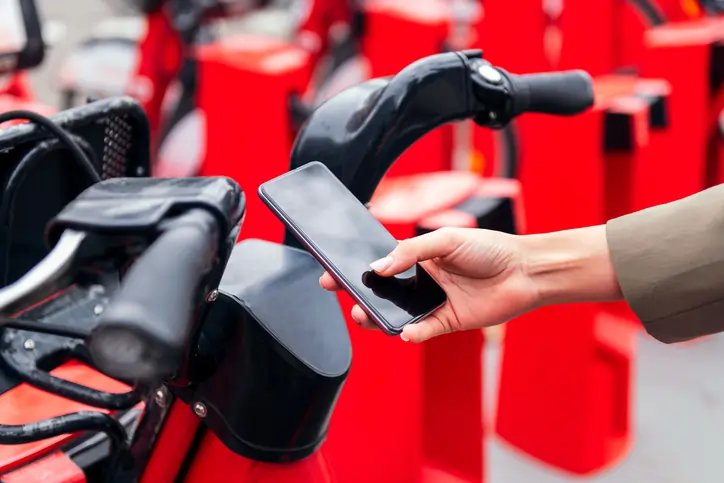
Published by Wanda Rich
Posted on August 14, 2025
19 min readLast updated: February 26, 2026
Add as preferred source on GoogleInvisible payments are financial transactions that happen without any deliberate action at the time of purchase. There’s no card swipe, tap, PIN entry, or confirmation screen. Instead, payment is triggered automatically through stored credentials, sensors, biometric ID, or app-based logic—removing t...
Invisible payments are financial transactions that happen without any deliberate action at the time of purchase. There’s no card swipe, tap, PIN entry, or confirmation screen. Instead, payment is triggered automatically through stored credentials, sensors, biometric ID, or app-based logic—removing the visible step we traditionally associate with paying.
Uber was one of the first services to make this model feel intuitive. Riders complete a trip and exit the car; the app handles the charge in the background. Amazon Go uses a similar system in retail: customers scan in, select items, and leave. Shelf sensors and cameras track what is taken, and their account is billed automatically, as detailed by Global Payments Integrated.
Subscription services like Netflix, Spotify, and HelloFresh also use this format. After an initial opt-in, billing continues without further approval. These invisible flows have become so routine that some analysts describe them as the foundation of modern payment infrastructure, as noted by Prove.
More advanced examples are emerging through biometrics and IoT. Alipay’s Smile to Pay system enables facial recognition payments in China, while smart fridges and connected cars are starting to transact autonomously—a direction some fintechs refer to as “ambient finance,” as described by Praxis Tech.
These systems make spending feel effortless. But as payment becomes less visible, users may lose track of what they’ve authorized. Reduced visibility can also make it harder to spot errors or dispute a charge as flagged by the Atlanta Fed.
Invisible payments are likely to become the default in many industries. But how they’re designed—and how well they balance convenience with clarity—will determine whether they build long-term trust or erode it.
Invisible payments are the result of decades of changes in how people transact. Plastic cards replaced cash, digital wallets streamlined in-person checkout, and embedded systems removed the need for visible confirmation. Each step reduced friction, making the payment process less noticeable. What was once a distinct action has become something that happens quietly in the background.
To understand how invisible payments took hold, it’s helpful to trace the gradual disappearance of traditional payment touchpoints.
From Cash to Card to Contactless
The first significant change in payment behavior occurred with the widespread adoption of magnetic stripe cards, which enabled merchants to process transactions more efficiently than with cash on hand. By the 1980s, debit and credit cards had become the standard payment method across retail environments. Chip-and-PIN authentication replaced signatures in the following decades, introducing PIN verification and encrypted microprocessors to reduce fraud. In the UK, this system became the default by 2006, resulting in a measurable decline in counterfeit card fraud following its rollout.
As payment security advanced, so did speed. Tap-to-pay technology using RFID first gained traction in sectors such as transit and fuel, eventually becoming more prevalent in the retail sector. Card-based payments overtook cash globally by 2016, and adoption accelerated further during the COVID-19 pandemic as contactless methods became the preferred option for speed and hygiene.
Digital Wallets and Embedded Checkout
Mobile wallets expanded the shift away from physical cards by turning smartphones into secure payment tools. Apple Pay launched in 2014, allowing iPhone 6 users to make in-store and in-app purchases using fingerprint authentication and tokenized card credentials. Within three days of launch, over one million cards were activated, reflecting strong early adoption and public interest in secure mobile payments.
Android Pay followed in 2015, bringing similar functionality to Android users with support for contactless NFC payments and in-app transactions. These platforms helped normalize mobile payments and set new expectations for speed and convenience at checkout.
In e-commerce, Amazon’s one-click checkout patent—granted in 1999—allowed users to bypass traditional checkouts by storing shipping and payment credentials. When the patent expired in 2017, competitors like Shopify and Bolt rapidly adopted the model, embedding instant-purchase functionality into retail flows and further streamlining the online shopping experience.
APIs and Background Payments
Behind these interfaces, the real shift was architectural. Payment APIs allowed businesses to embed checkout directly into websites, apps, and devices, handling tokenization, authentication, and billing in the background. This infrastructure reduced merchant exposure to sensitive data and turned payment into a seamless service layer. API-first providers have enabled these capabilities to scale across verticals, from ride-hailing and food delivery to SaaS billing and mobile marketplaces.
As a result, the payment step increasingly disappeared. Purchases could be completed without redirects, form fields, or even conscious approval, especially for services that operated on subscription or usage-based billing models.
A growing number of payments now happen without any visible interaction. There's no tap, no swipe, and no checkout step. Charges are triggered automatically—after a ride ends, when you walk out of a store, or during a subscription renewal. In this model, payment becomes an integral part of the system’s background logic, rather than a distinct action.
Invisible systems rely on tokenized credentials, embedded APIs, contextual triggers, and biometric verification. They eliminate friction—but also raise questions around visibility and control. As these systems scale, financial researchers have warned that consumers may lose track of spending, struggle to identify unauthorized charges, or miss cues that a payment occurred at all—concerns that have been highlighted in regulatory commentary.
Each leap in interface design—cash to card, card to mobile, mobile to invisible—has moved payments closer to background automation. The challenge now is to preserve clarity, trust, and consent in a system designed to be as unobtrusive as possible.
Invisible payments have become central to how people move, shop, subscribe, and interact with smart devices, eliminating checkout as a visible event across various sectors and geographies.
Mobility & Ridesharing
In ridesharing, invisible payments are already the default. When a ride ends on platforms like Uber or Lyft, the fare is automatically charged to the user’s stored card—no cash exchange, no checkout screen. This payment model helped establish a user experience where booking and payment are decoupled, setting a precedent for embedded finance design in app-based mobility.
In Switzerland, commuters using SBB’s EasyRide tap their phone to check in and are automatically billed based on distance when they check out. No physical tickets are issued, and no payment step is presented in the journey—just a notification once the transaction is complete using sensor-based billing.
Retail & Smart Checkout
Amazon Go’s “Just Walk Out” system allows customers to enter a store, pick up items, and leave. The moment they exit, the system completes the transaction using computer vision and shelf sensors to determine what was taken and trigger billing invisibly. This cashierless model has since expanded to smaller retail formats, including those in airports, stadiums, and business parks.
In Australia, Canada, and the UK, this approach is being localized across Amazon Fresh and Amazon Go sites. At the same time, Uniqlo has integrated RFID technology into its fitting rooms to enable self-checkout without barcode scanning via tag-based detection.
In the U.S., Starbucks has layered invisible payment into its loyalty app. By 2023, more than 31% of transactions were processed through the mobile platform, where users earn rewards and complete payments without needing to tap or scan at the counter through app-based settlement.
Subscription Economy
Media, delivery, and software platforms now run entirely on invisible billing. Once a payment method is stored, services like Netflix, Spotify, or DoorDash renew automatically. No checkout step is presented; only access or cancellation options are available. While convenient, this model has raised concerns around disengaged billing, where users are charged long after they’ve stopped using a service.
In 2024, research showed that UK consumers lost an estimated £688 million to forgotten subscriptions, with complaints doubling from the previous year. The data prompted regulatory proposals aimed at improving cancellation flows and billing visibility in subscription finance models.
IoT-Driven Payments
Smart devices are enabling autonomous commerce. Fridges that reorder groceries when stock is low, cars that pay tolls automatically, and thermostats that adjust energy usage all remove the consumer from the transaction. These payments occur via background logic tied to real-time data, location, or usage thresholds in IoT payment applications.
In the UAE, tolling systems charge vehicles automatically as they pass beneath RFID-equipped gates. In the U.S., smart parking systems use license plate recognition to trigger billing as drivers enter or exit garages—no buttons, no confirmation screens. Hotels and stadiums have also adopted invisible flows: Hilton guests can check in, access rooms, and bill in-room purchases to their account without front-desk interaction via fully tokenized guest credentials.
Voice assistants are extending this to conversational commerce. Alexa, Siri, and Google Assistant can complete transactions via stored credentials, with purchases confirmed only after the payment is processed—bringing invisible payments into homes through voice alone.
Invisible payments depend not just on design—but on a layered technology stack that enables seamless, secure, and real-time transactions. APIs, tokenization, AI, and edge infrastructure all work together behind the scenes to remove friction from the payment experience.
APIs, Tokenization, and Real-Time Payment Rails
At the core of invisible payment flows are payment APIs, which enable apps, devices, and platforms to connect directly with payment processors without requiring user redirection. These APIs enable transactions to be initiated in the background, whether it's after completing a ride, walking out of a store, or triggering a reorder from a smart fridge—without interrupting the customer journey through frictionless integration.
Tokenization ensures that sensitive card data is never exposed during these invisible flows. Instead, each transaction utilizes a unique, time-limited token that replaces actual account details, minimizing the risk of interception or fraud and enabling background billing for subscriptions, retail purchases, or IoT-triggered payments using token-based architecture.
Powering the movement of funds behind the scenes are real-time payment (RTP) rails, which settle transactions instantly, 24/7. These rails provide the infrastructure for immediate payment confirmation, which is essential for IoT scenarios such as tolling, mobility, or vending, where latency is unacceptable. Modern RTP systems are now API-first and support global peer-to-peer transactions through infrastructure layers, like Thunes.
AI and Machine Learning for Fraud Detection and Personalization
Invisible payments remove visible confirmation steps—which means the system must detect fraud without interrupting the experience. AI and machine learning accomplish this by analyzing behavioral data in real-time to distinguish legitimate patterns from suspicious activity. These systems continuously adapt to new threats, flagging anomalies without requiring manual review using real-time risk modeling.
Leading processors now use AI to score each transaction in milliseconds. Large networks analyze hundreds of attributes—such as geolocation, device fingerprint, velocity, and network behavior—to instantly identify and block fraudulent attempts, as seen in Mastercard’s deployment.
But AI’s role extends beyond security. These systems also personalize payments by automating preferred payment methods, optimizing routing, and offering contextual recommendations. AI-based payment orchestration enhances UX and efficiency without requiring user input by adapting in real- time.
Cloud Infrastructure, Edge Computing, and 5G for IoT Payments
Invisible payments triggered by IoT devices—like connected cars or smart appliances—require ultra-fast, highly distributed infrastructure. Cloud platforms provide the scale to support millions of background transactions, while edge computing brings real-time processing closer to the device. Processing data closer to where the payment happens cuts down delays. That speed matters when a device is handling something like a toll charge, a vending transaction, or a parking exit. When these systems run on 5G, they can respond almost instantly, even in environments with lots of traffic or movement.
Whether a vehicle is paying for fuel, a vending machine is triggering a product reorder, or a smart city sensor is collecting tolls, this infrastructure ensures payments occur with minimal delay under ultra-low-latency conditions.
As commerce increasingly flows through connected objects and AI agents, the combination of cloud orchestration, local edge intelligence, and 5G communication becomes critical. Invisible payments will depend on this hybrid environment to operate smoothly, securely, and at scale.
Removing payment steps from customer experience doesn’t just help users—it also improves how businesses run. Transactions move faster, renewals happen without interruption, and fewer errors reach customer service. For subscription services, mobility platforms, and retailers alike, background billing means fewer drop-offs and smoother operations.
Frictionless Customer Experience
Checkout is often where friction slows things down. Even brief delays—reaching for a wallet, confirming a screen, waiting in line—can disrupt the moment. Invisible payments remove these steps. The transaction completes without being the focus, helping customers stay engaged and move through the experience without interruption.
This simplicity matters. On mobile, especially, extra steps can cause people to drop out before finishing a purchase. Research has shown that complex checkout flows are responsible for more than 70 percent of abandoned carts due to payment friction. When checkout disappears, people are more likely to complete the transaction and report greater satisfaction.
Higher Engagement and Loyalty
Invisible payments also support long-term engagement. Subscription and usage-based billing models rely on stored payment credentials to provide uninterrupted access to services. This model reduces churn due to failed renewals or manual input errors and supports predictable, recurring revenue for platforms built on automated billing.
The value goes beyond mechanics. Seamless transactions foster loyalty by removing friction that can otherwise disrupt the customer journey. Research shows that when payments are invisible and personalized, customer lifetime value increases significantly, especially when integrated with loyalty or rewards programs designed around seamless engagement. These systems also collect data on how people pay and what they respond to. That information can help businesses identify when a customer might cancel, or adjust billing and offers based on past behavior by using behavioral signals to improve retention.
Operational Efficiency
For businesses, invisible payments streamline operations by reducing manual intervention and overhead. Payment steps are fully automated, lowering demands on POS infrastructure, reducing customer service inquiries, and minimizing input errors. This is particularly beneficial in high-volume sectors like mobility, quick-service retail, and SaaS, where scale demands minimal friction and rapid throughput.
Operational benefits extend across industries. In healthcare, hospitality, and utilities, invisible payments help reduce disputes, speed up billing cycles, and improve collections. These systems also support lower cost-to-serve models, as automation reduces cashier workload and billing errors across channels through embedded, backend processing.
By removing manual steps, businesses can process more payments with fewer delays, errors, or support interventions. These systems scale efficiently, supporting high-volume environments without straining staff or infrastructure, while customers benefit from faster and more consistent service.
Balancing Ease with Oversight
As payments disappear from view, the challenge becomes less about speed and more about control. Without a visible prompt or confirmation step, users may not realize when they’re being charged—or even remember what they’ve subscribed to. These seamless flows, while convenient, can erode a customer’s sense of awareness, especially in services that bill passively or renew automatically.
Design plays a critical role here. Invisible payments demand systems that communicate clearly, not just perform silently. That means surfacing key billing terms, offering real-time alerts, and making cancellations straightforward—so the absence of friction doesn’t result in the absence of consent.
The same applies in connected environments. IoT-triggered payments—from fridges to toll roads—require strong safeguards to ensure users can track what’s been charged, reverse mistakes, and understand who authorized the transaction. In this new model, accountability isn’t removed—it’s relocated into the architecture of the system.
Invisible payments don’t eliminate the need for trust. They raise the bar for it.
Invisible payments are gaining traction globally—but not uniformly. The maturity, scale, and design of these systems reflect each region’s infrastructure, consumer behavior, and regulatory stance. From the wallet-first super apps of Asia to mobile-powered public transit in the Nordics, and from the privacy-driven frameworks in Europe to infrastructure-leapfrogging in emerging markets, global momentum is clear—even if the paths are distinct.
Asia-Pacific: WeChat Pay, Alipay, and the Super App Economy
China is widely recognized as a global leader in the adoption of invisible payments. Nearly 70% of Chinese consumers use WeChat Pay daily, and Alipay has achieved similar market penetration—together they dominate both in-person and mobile commerce. These platforms allow users to pay via QR codes, facial recognition, or even by walking through sensor-equipped stores—no checkout required. What makes them exceptional is their role as multi-service ecosystems: messaging, food delivery, ride-hailing, digital identity, and financial services are all integrated into a single app supporting frictionless daily use.
Chinese tourists now expect to use these wallets abroad. WeChat Pay’s overseas transaction volume has grown nearly 240%, driven by cross-border mini-programs embedded into foreign retail, ride-hailing, and transit systems, demonstrating global wallet portability.
Nordic Countries: Mobile Pay as the Default
The Nordic region—comprising Finland, Sweden, Norway, Denmark, and Estonia—has quietly become a global showcase for invisible payments. In Sweden and Norway, only around 10% of transactions are still made in cash, and mobile apps like Swish, Vipps, and Mobile Pay have become the default for peer-to-peer and retail payments, used by more than 75% of residents.
Mass transit systems in Helsinki, Copenhagen, and Oslo now allow passengers to board buses and trains using contactless mobile payments—with no advance ticket or paper trail. These systems are increasingly offline-capable, offering resilience during service disruptions or in low-connectivity zones through integrated offline fallback infrastructure.
Despite high-tech adoption, some Nordic governments have introduced laws requiring merchants to accept cash, ensuring that society remains resilient to digital outages or inclusion gaps as part of national contingency plans.
Invisible Payments in the U.S. and EU: Two Diverging Paths
The U.S. and the European Union represent two distinct philosophies regarding the rollout of invisible payments.
In the U.S., the focus is on speed and seamlessness. Invisible billing is embedded in ridesharing (Uber), retail apps (Starbucks), and subscription models (Amazon, Netflix). The regulatory environment emphasizes market-led innovation, giving platforms freedom to deploy background billing, app-based payment triggers, and loyalty integration with limited friction.
In contrast, the EU imposes stricter protections around data privacy and user consent. Platforms must obtain explicit opt-ins, clearly communicate billing terms, and offer straightforward opt-out mechanisms. These requirements stem from legal frameworks that treat payment behavior and billing data as personal information—subject to full user control and protection under consent-first design principles.
This divergence shapes global product design. U.S. systems prioritize invisible speed; EU systems prioritize visible accountability. Developers must build with entirely different assumptions about what users must see—and when they must approve it.
Emerging Markets: Leapfrogging the Visible Phase
In many emerging economies, invisible payments are not a luxury, they are the payment infrastructure. In India, the Unified Payments Interface (UPI) handled over 130 billion transactions in FY2023, supporting 24/7 instant payments via QR code, app triggers, and API-based merchant flows. UPI enables even informal workers to receive payments instantly, using nothing but a mobile number or QR code, serving both banked and unbanked populations.
In Brazil, Pix has revolutionized real-time settlement. Since its launch in 2020, it now processes over six billion transactions monthly, used for everything from government transfers to embedded e-commerce purchases. The upcoming “Pix Automático” feature will allow background recurring billing—enabling utility subscriptions and invisible charges in a market where many consumers lack credit cards via national real-time infrastructure.
In Africa, platforms like M‑Pesa allow users in Kenya and beyond to pay bills, transfer money, and even trigger microloans using mobile phones—with no need for cards or bank accounts. These systems have evolved into invisible payment layers powered by SMS triggers and device-embedded wallets supporting financial inclusion at scale.
Emerging markets are not just catching up—they are pioneering invisible payment models that reflect local constraints and leapfrog legacy infrastructure entirely.
Invisible payments are evolving from convenience features into a foundational layer of smart infrastructure. In tomorrow’s cities, you won’t just make payments; they’ll happen for you, automatically, as part of how digital services work.
In multi-modal transit systems, users will move between bikes, buses, tollways, and trains without opening an app or scanning a code. Instead, contactless sensors, biometrics, or contextual triggers will link the journey into a single background transaction—transforming transportation into an ambient financial flow built into urban infrastructure through seamless mobility integration.
As embedded finance merges with ambient computing, financial services will vanish into the tools and environments we already use. Banking payments, lending, insurance—will embed within rideshare apps, e-commerce platforms, and SaaS interfaces. Users will not interact with their bank; instead, the service will act on their behalf, invisibly facilitating everyday tasks like paying utility bills based on real-time usage or initiating checkout before a customer reaches the counter as part of adaptive, intelligent commerce.
But the frictionless future requires more than speed—it needs trust. As systems automate increasingly complex decisions, consumers must believe their data is safe, their charges are accurate, and their ability to intervene is preserved. Trust becomes the currency of invisible payments: the foundation that allows automation to scale responsibly, as emphasized in infrastructure-grade design models.
Financial institutions that serve as the back end for these flows—handling regulatory compliance, identity verification, and audits—will remain invisible to users but essential for system integrity. Invisible doesn’t mean unregulated; it means users don’t see the complexity, but benefit from its presence within embedded finance frameworks.
The future of invisible payments will be defined not just by what users don’t do—but by how securely and intuitively their systems act on their behalf.
The Delicate Balance
Invisible payments offer a compelling vision: effortless transactions, embedded commerce, and real-time financial interaction that feels natural, seamless, and even invisible. But delivering this vision requires vigilance.
The very strengths of invisible systems—automation, convenience, and abstraction—can quickly become risks if not paired with consent, visibility, and accountability. As spending becomes passive, users risk losing track of how money moves. Systems that remove friction must also preserve control.
Designing for the future means anchoring innovation in ethics: giving users clear ways to understand, authorize, and dispute transactions without needing to reintroduce friction. In this next chapter of commerce, the challenge is to build systems that are invisible only in execution—not in oversight.
Can we create a world where payments occur without prompting, yet always with our consent? The success of invisible payments will depend not on how little users interact—but on how they can intervene when needed.
Explore more articles in the Top Stories category











